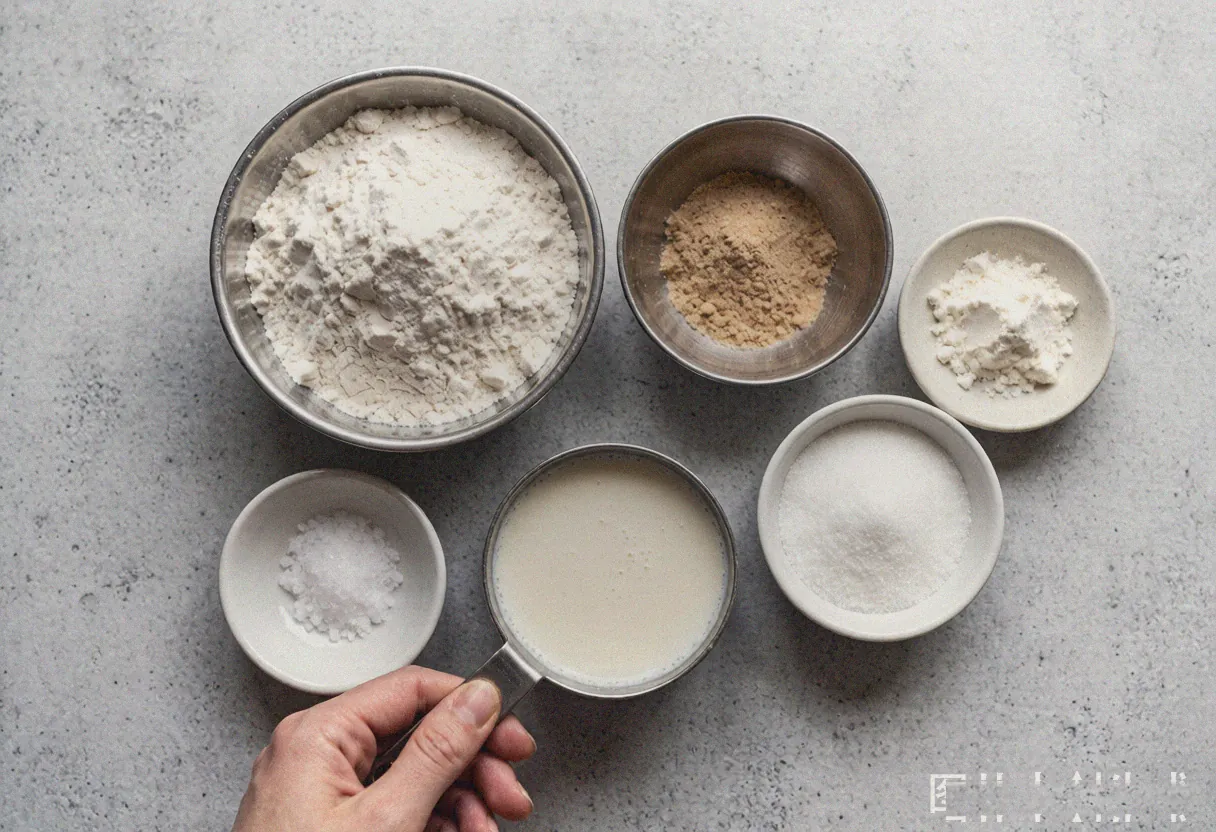
Step 1: Run the Dough Cycle: Add ingredients to the bread machine pan in the recommended order: warm milk and water, then the room-temperature egg, then the melted butter, then the flour, then sugar and salt in opposite corners, and finally the yeast in a small well in the center of the flour. Select the "Dough" cycle and press start. The machine will knead for 10–15 minutes and then complete a 1–1½-hour rise. When it beeps, the dough should have doubled in volume and a finger poked into it should leave an indentation that doesn't spring back.
Step 2: Turn Out and Deflate: Tip the dough onto a lightly floured work surface. Press down across the entire surface with the heel of your palm to deflate the large air pockets — this is called punching down, and it redistributes the yeast and evens out the crumb structure so you don't end up with a single cavernous hole in one roll and dense bread in another. Shape the dough into a rough rectangle about an inch thick and let it rest for 5 minutes. This brief rest relaxes the gluten, making the dough easier to shape without springing back.
Step 3: Divide and Shape: Use a bench scraper or sharp knife to divide the dough into 12 equal pieces — each should weigh about 60g. To shape a roll: cup your palm over a dough piece on an un-floured section of your work surface and move your hand in small, tight circles. The friction between the dough and the counter pulls the surface taut and seals the bottom seam. The finished ball should be round, smooth, and free of cracks. Arrange all 12 balls in a parchment-lined 9×13-inch baking pan, spacing them about ¾ inch (2cm) apart — they'll expand during the second rise and bake into each other, creating that classic pull-apart effect.
Step 4: Second Rise: Cover the pan loosely with plastic wrap and place it in a warm, draft-free spot for 30–40 minutes. The ideal proofing temperature is 95–100°F (35–38°C). If your kitchen is cool, turn on your oven light and place the pan inside with the door closed — the bulb alone generates enough ambient warmth. The rolls should nearly double in size, puffing up until they're just touching each other. Press a fingertip gently into the side of one roll: the indentation should slowly spring back halfway. If it springs back instantly, it needs more time; if it doesn't spring back at all, it's over-proofed — bake immediately.
Step 5: Egg Wash and Bake: Preheat your oven to 350°F (180°C). Beat the egg with 1 tablespoon of water and, using a pastry brush, lightly coat the tops of the proofed rolls. Use a gentle touch — don't let egg wash drip down the sides, as it can glue the rolls to the pan and inhibit their oven spring. Bake on the middle rack for 15–18 minutes, until the tops are a uniform deep golden brown. Immediately after pulling the pan from the oven, brush the hot rolls with a little melted butter for extra shine and flavor. Let them cool in the pan for 5 minutes, then transfer to a wire rack — or serve them warm straight from the pan.