Step 1: Roast the Garlic: Slice the top third off a whole head of garlic, exposing the tops of the cloves inside. Drizzle with 1 tablespoon of olive oil, letting it seep down between the cloves, then wrap the whole thing tightly in aluminum foil. Roast at 400°F (200°C) for 35–40 minutes, until the cloves are soft, golden, and fragrant. Let it cool until you can handle it, then squeeze the soft garlic paste out from the bottom of each clove. Roasted garlic is nothing like raw — it's sweet, mellow, and deeply savory, and it's the single most important flavor builder in this recipe.
Step 2: Boil the Potatoes: Place the peeled, chunked Russet potatoes in a large pot and cover with cold water by about 2 inches. Bring to a boil over high heat, then reduce to medium and cook for 15–20 minutes. The potatoes are done when a fork slides through the center of a chunk with zero resistance. And here's the key difference from every other mashed potato recipe you've made: do not salt the water. The potatoes will absorb whatever is in the cooking water, and since we're keeping sodium low, the water stays plain.
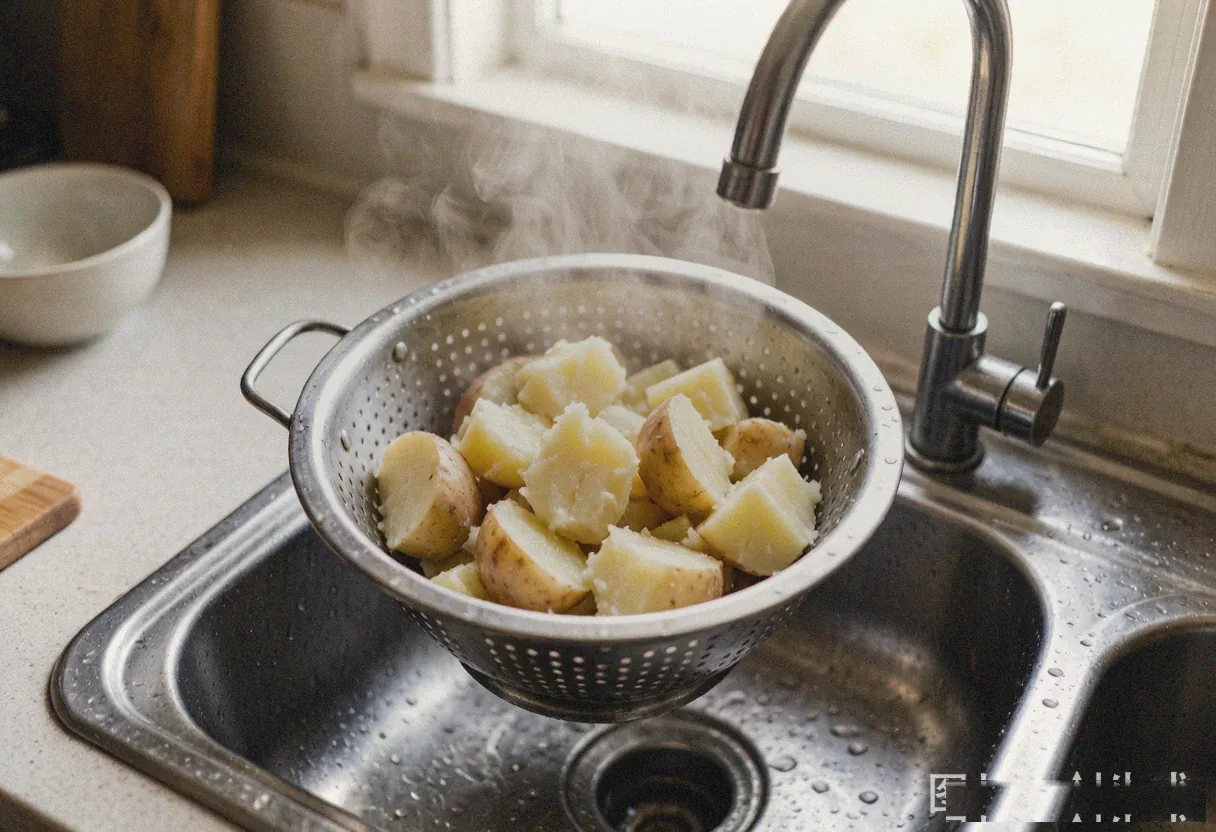
Step 3: Drain and Dry: Drain the potatoes into a colander, then return them to the hot pot. Place the pot back on the stove with the burner turned off — the residual heat will steam off any surface moisture clinging to the potatoes. Let them sit for 1–2 minutes. This step sounds fussy but it's not optional: excess water is the enemy of fluffy mashed potatoes. The drier your potatoes are when you start mashing, the lighter and airier the final texture will be.
Step 4: Mash and Season: Using a potato masher — never a food processor or blender — mash the hot potatoes until they reach your preferred consistency. Some people like them completely smooth, others prefer a few small lumps for texture. Add the softened butter, roasted garlic paste, white pepper, and the pinch of nutmeg. Fold everything together with a wooden spoon. The butter must be at room temperature; cold butter won't incorporate evenly and you'll end up with greasy streaks instead of a creamy mash.
Step 5: Add Warm Milk and Finish: Add the warm milk in stages — about 2 tablespoons at a time — stirring after each addition until the potatoes reach the consistency you like. The milk must be warm: cold milk drops the temperature of the mash instantly, which causes the butter to seize up and the texture to turn grainy. Once the consistency is right, fold in the chopped chives, give everything one final stir, and transfer to a serving bowl. Do not overmix — the more you stir mashed potatoes, the more starch is activated, and overworked potatoes turn gummy.