Step 1: Slice and Marinate the Chicken: Slice the chicken breasts against the grain into pieces about 3mm thick — thin enough to cook quickly and stay tender. Toss the slices in a bowl with 1 teaspoon of cornstarch, 1 teaspoon of low-sodium soy sauce, and a pinch of white pepper. Use your hands to coat every piece evenly. The cornstarch forms a protective layer around the meat, locking in moisture so the chicken stays juicy through high-heat cooking. Let it marinate for 10 minutes while you prep everything else.
Step 2: Mix the Low-Sodium Sauce: In a small bowl, combine the remaining 1 tablespoon of low-sodium soy sauce, 1 tablespoon of rice vinegar, and 1 teaspoon of cornstarch. Whisk until the cornstarch dissolves completely — no lumps. This sauce is the heart of the dish. The rice vinegar's acidity amplifies your perception of savoriness, which means your palate registers "well-seasoned" even though the sodium content is a fraction of what you'd get from a regular stir fry. Set the bowl next to the stove so you can grab it fast when the wok is screaming hot.
Step 3: Sear the Chicken Over High Heat: Set a wok or large skillet over high heat until it's just starting to smoke. Add the cooking oil and swirl to coat the surface. Lay the marinated chicken in a single layer — don't pile it up or it'll steam instead of sear. Stir-fry for 2–3 minutes, moving the pieces constantly, until the chicken turns opaque and develops light golden edges. Transfer to a plate immediately. The chicken doesn't need to be fully cooked through yet; it'll finish cooking when it goes back in.
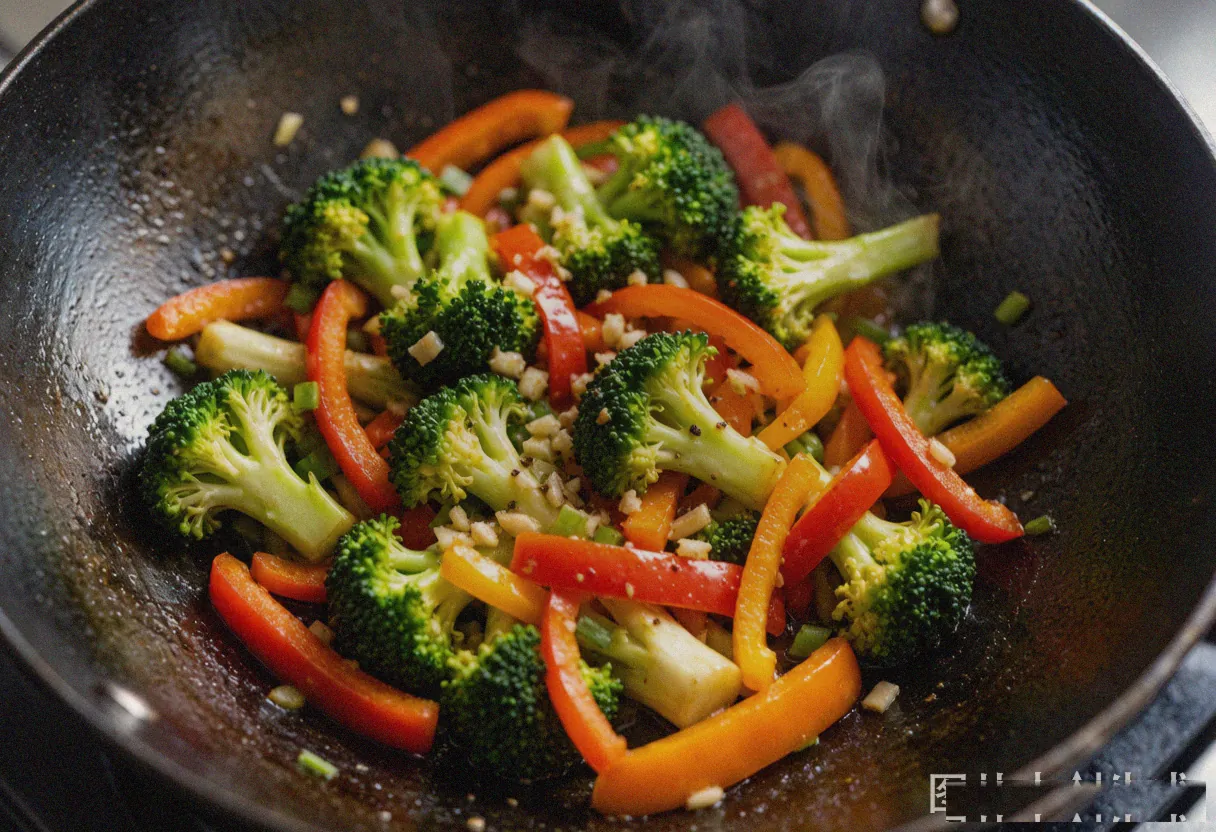
Step 4: Stir-Fry the Aromatics and Vegetables: Add another splash of oil to the same wok if it looks dry. Toss in the minced garlic, ginger, and scallion whites. Stir for about 15 seconds — just long enough for the fragrance to bloom, not so long that the garlic burns. Add the broccoli florets and bell pepper strips. Stir-fry over high heat for 2–3 minutes. You want the vegetables to soften slightly while staying crisp. The broccoli should turn bright, vivid green — that's your visual cue that it's perfectly cooked.
Step 5: Return the Chicken and Glaze: Return the seared chicken to the wok. Give your sauce bowl one last stir (the cornstarch settles), then pour it over everything. Toss rapidly for about 30 seconds — the sauce will thicken almost immediately, turning glossy and clinging to every piece of chicken and every vegetable. Drizzle the sesame oil over the top, toss once more, and kill the heat. Sesame oil loses its aroma when cooked too long, so adding it at the very end preserves its nutty fragrance. Plate and garnish with the reserved scallion greens.