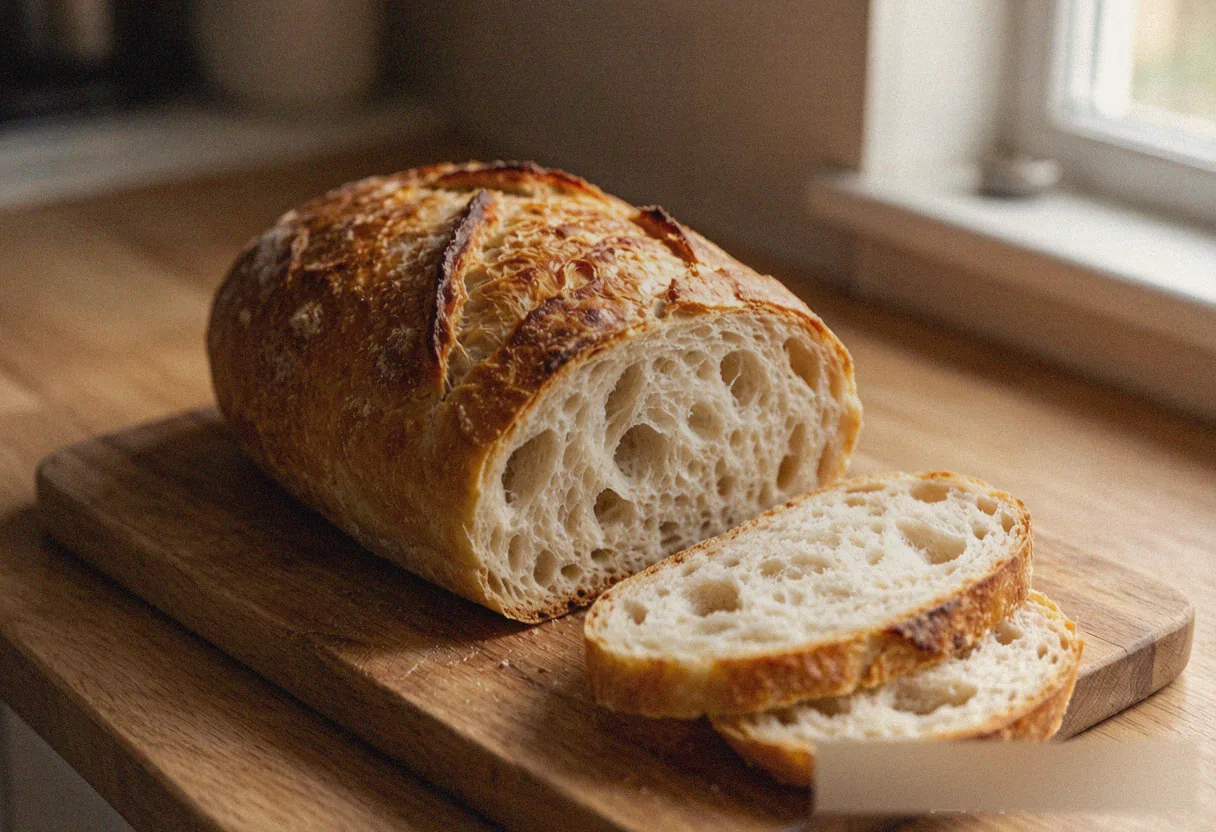
French bread’s soul is the contrast: a crackly crust and a soft, holey crumb. Store-bought baguettes are sodium bombs — 400–600mg each, enough to blow half a day’s sodium budget in one loaf. With the bread machine kneading the dough and your oven finishing it with steam, this bread machine low sodium french bread lands under 15mg per slice while keeping the crusty shell and open interior. It is the bistro loaf, minus the sodium.
Why You’ll Love This Bread Machine Low Sodium French Bread
A supermarket baguette can carry 400–600mg of sodium — half a day’s allowance in one loaf. This bread machine low sodium french bread drops that to under 15mg per slice and keeps the crusty, airy character. Here is why it works.
- Under 15mg sodium per slice. No salt is added, so the sodium is only the trace in flour and yeast. Dip it in soup or make garlic bread without counting sodium.
- The crust comes from steam, not salt. A French crust forms when oven steam keeps the surface wet long enough to expand fully, then crackles dry at the end. This recipe makes steam with a pan of hot water — bakery-level crisp.
- Bread machine knead + oven shape. The Dough cycle kneads to a windowpane; you shape the baguette, score it, and bake. Far better layers than a machine-baked square loaf.
- Guilt-free garlic bread. Slice the low sodium baguette, brush with unsalted garlic oil, and bake — a “sinful” snack a low sodium eater can actually have.
Ingredients
- 1 cup + 1 tablespoon warm water (about 40°C / 105°F)
- 3 cups bread flour
- 1.5 tablespoons unsalted butter, softened (optional, for aroma)
- 1.5 tablespoons white sugar
- 2 teaspoons active dry yeast
- 0 salt — the key to low sodium
- 1/2 teaspoon salt substitute (potassium chloride; optional, restores the salty note)
- For brushing: 1 tablespoon melted unsalted butter (after baking)
Why the “Dough” cycle for French bread? A real baguette needs shaping, final proof, and steam baking, which the machine cannot do for the last two stages, and its square pan cannot form a long loaf. The right method: the machine kneads and does the first rise (Dough cycle), then you shape, pan, proof, and bake with steam — giving the signature cracked crust and big holes.
Instructions
Step 1: Load the Pan and Start the Dough Cycle
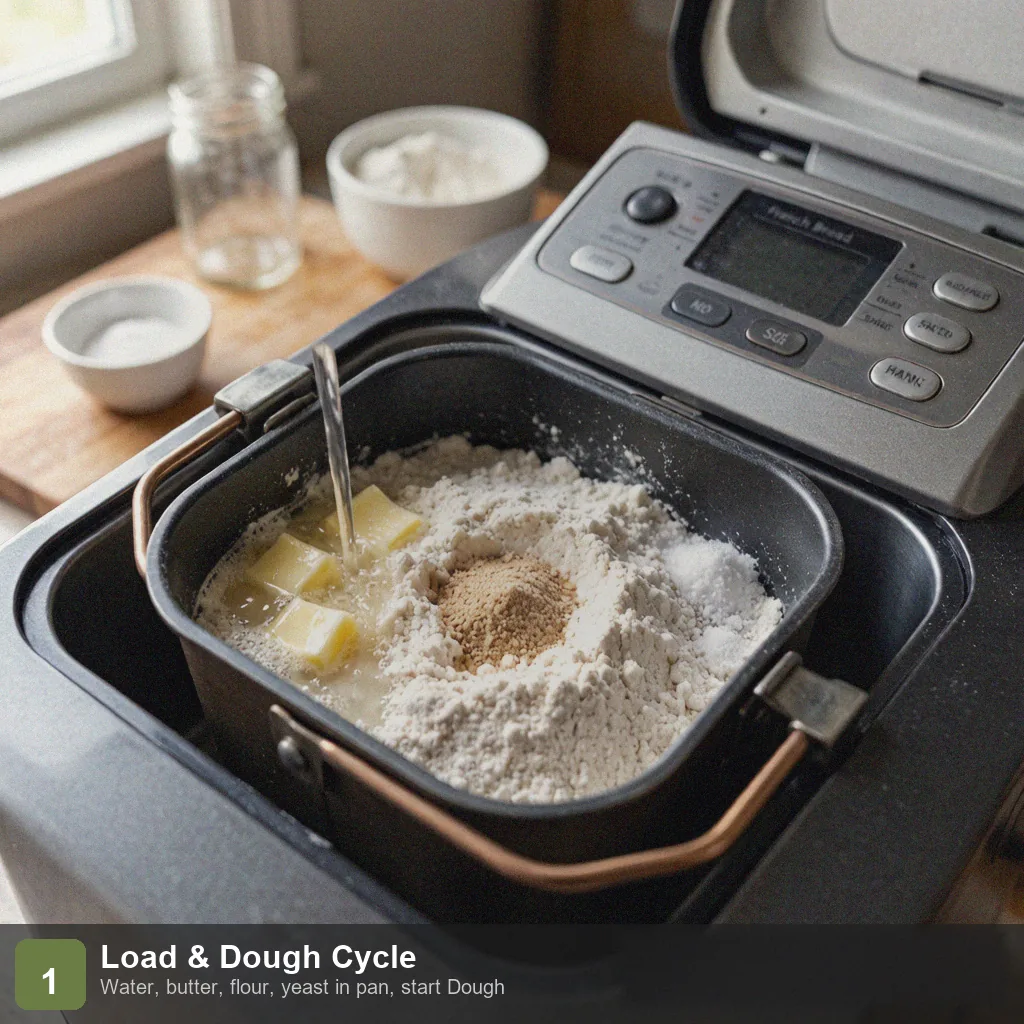
Pour the warm water and softened butter into the pan. Add the flour, dig a well and drop in the yeast, and place the sugar and salt substitute in a corner away from the yeast. Select the “Dough” cycle and press start. About 1.5 hours later the beep signals knead and first rise are done.
Step 2: Deflate and Shape the Baguette
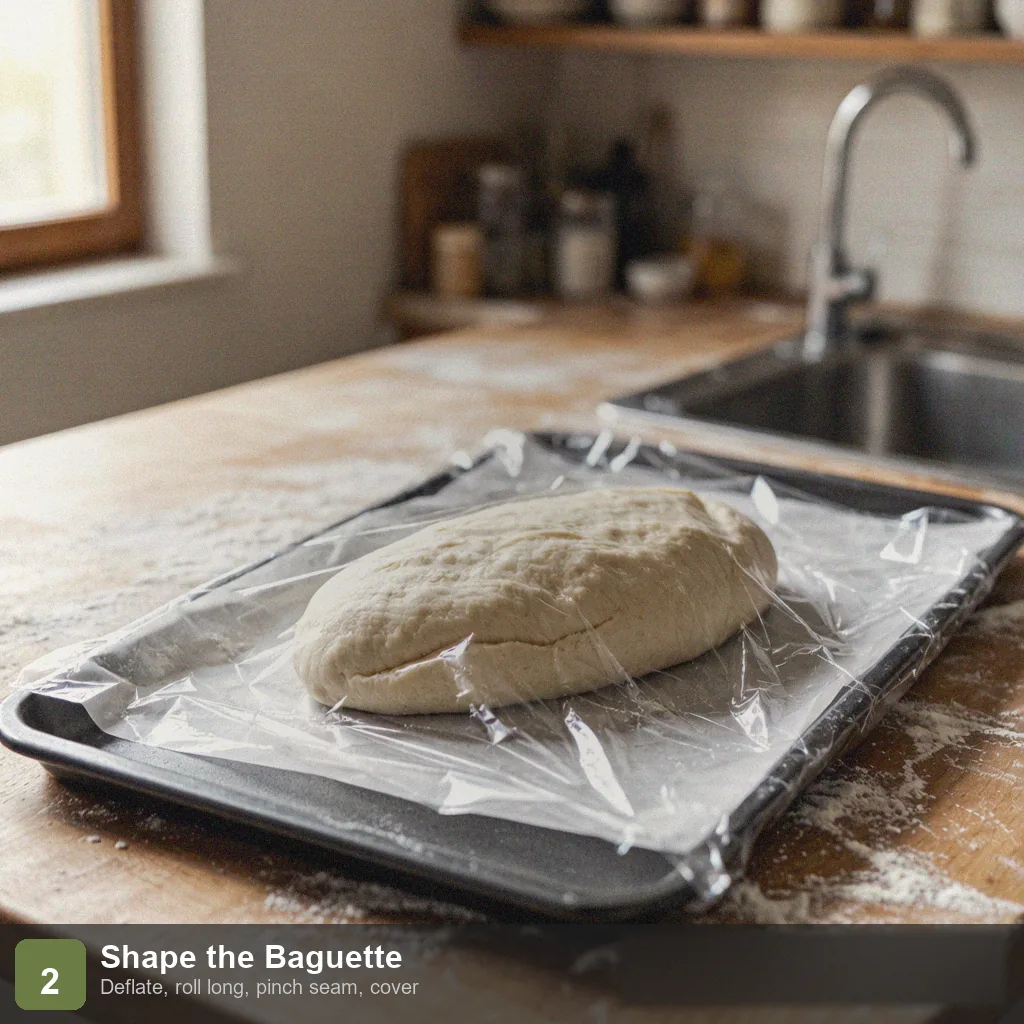
Turn the dough onto a floured board, deflate gently, and shape it into one long loaf (about 30–35cm): roll it into an oval, roll up from the long side into a cylinder, pinch the seam shut underneath, then roll and stretch from the center outward with both hands. Set it on a parchment-lined sheet or baguette pan, seam side down, and cover with plastic wrap.
Step 3: Proof and Preheat with a Steam Pan
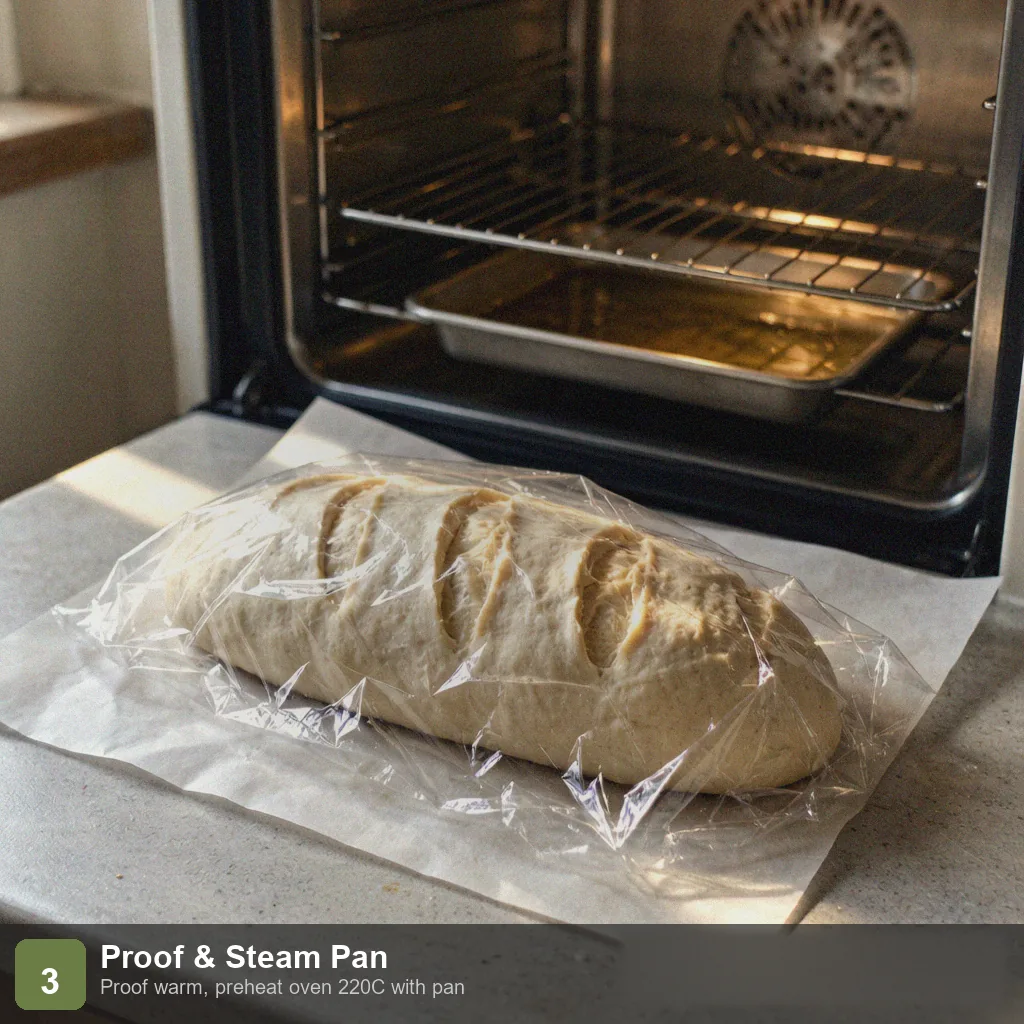
Proof in a warm, humid spot (oven proof setting, or microwave with hot water) for 30–40 minutes, until the dough reaches 1.5 times its size and a light press slowly springs back. Meanwhile preheat the oven to 220°C (425°F) and place an empty pan on the lower rack to heat up (you will pour water into it for steam).
Step 4: Score and Bake with Steam
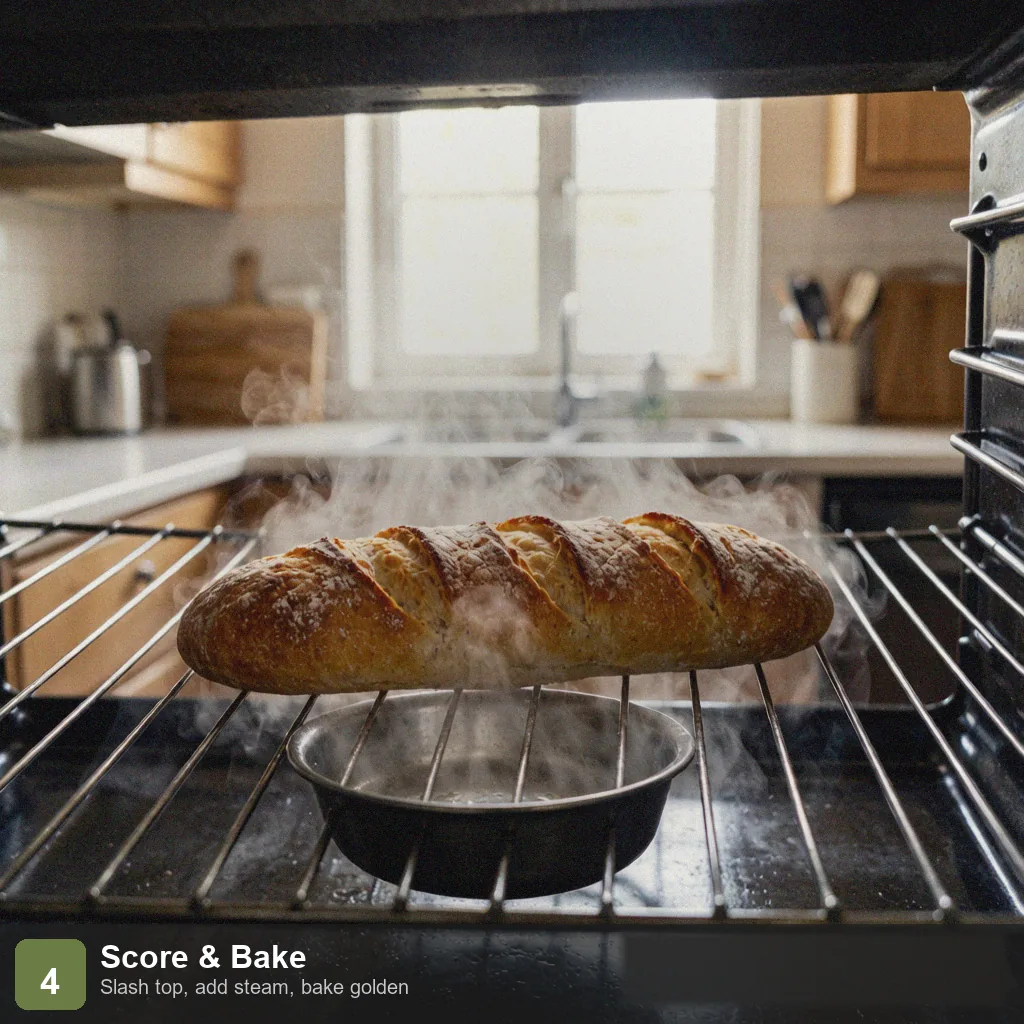
With a sharp blade, cut 3–4 diagonal slashes about 1cm deep across the top so it cracks open as it expands. Slide it onto the middle rack, pour half a cup of boiling water into the hot lower pan for steam, then shut the door. Bake 20–25 minutes; if the color runs ahead, tent with foil.
Step 5: Butter and Cool
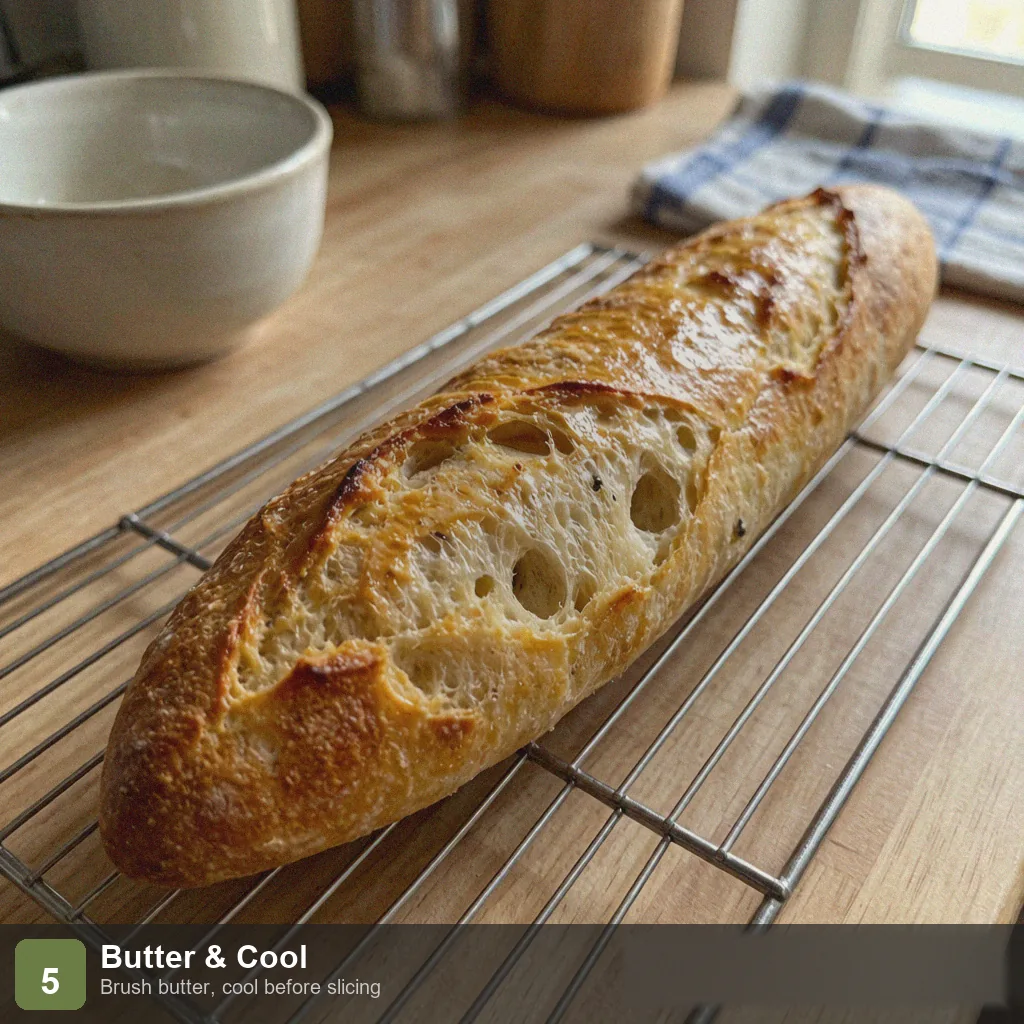
The moment it comes out, brush with the melted unsalted butter (locks the crust, adds aroma) and cool on a rack at least 20 minutes before slicing — a hot French loaf’s interior is gummy and will flatten the holes if cut.
Tips
Steam is the soul of the crust — do not skip it. Without steam, the surface hardens before the loaf finishes expanding, so it bakes flat and soft inside. The boiling water in the lower pan makes steam for only the first 10 minutes, but that is the golden window when the crust forms. If you prefer, a spray bottle misting the loaf and oven walls three times at launch gives about 70% of the effect.
Score with a sharp blade, and score deep. A dull knife tears the gluten and leaks the gas, so the loaf will not rise. Use a razor or very sharp knife, angled 30 degrees, slicing 1cm deep in one quick stroke. Depth decides how pretty the crack is.
A no-salt dough rises fast — do not over-proof. With no salt “brake,” the baguette can fill out in 30–40 minutes. Over-proofed dough collapses in the oven and turns coarse. The moment it hits 1.5 times and a press slowly rebounds, get it in the oven.
Bread flour plus slightly less water = crisper crust, bigger holes. French bread uses a little less water than a white loaf (a firmer dough) to get that crust. This recipe uses 1 tablespoon less water than the white loaf on purpose. If the dough is too dry to come together, add 1 teaspoon of water at a time.
The salt substitute helps, but go light. French bread wins on wheat aroma and crunch; 1/2 teaspoon of potassium chloride is plenty for flavor without adding sodium. Skip it if you have kidney issues — butter and wheat aroma carry it fine.
Storage
A baguette stales fastest of all the loaves here. Eat it the day it is baked, or slice and freeze for up to 1 month; refresh frozen slices in a 160°C (320°F) oven for 3 minutes. If it sits a day at room temperature, a quick oven crisp brings back some of the crust.
FAQ
Can I make it without a baguette pan?
Yes. Set the shaped loaf on a parchment-lined flat sheet. A baguette pan only helps it hold shape and crisp the bottom; without one the flavor is unchanged.
Is the steam pan really necessary?
Strongly recommended. No steam makes French bread hard and dry, not crisp. The next best thing is misting the loaf and oven walls with a spray bottle at launch — about 70% as good.
Can I bake French bread right in the bread machine?
Not recommended. The machine’s square pan cannot form a long loaf and has no steam, so you get a “zero-salt square bread” instead. The Dough cycle plus oven steam is the real method.
What is the best way to eat the low sodium baguette?
Dip it in low sodium vegetable soup, slice thick for garlic bread with unsalted garlic oil, or split it for a sandwich. Its holes hold broth and sauce better than a soft white loaf.
Conclusion
This bread machine low sodium french bread brings the bistro home — a crusty, crackled shell and an airy crumb at under 15mg of sodium per slice. Let the bread machine knead, steam it in the oven, and you get a genuinely low sodium baguette worth showing off.
More Low Sodium Recipes
Serve the baguette with:
- Bread Machine Low Sodium Bread — the soft everyday toast
- Bread Machine Low Sodium Dinner Rolls — soft rolls for soup
- Low Sodium Vegetable Soup — the baguette-dipping bowl
- Low Sodium Chili — a tomato-rich stew
- Low Sodium Mashed Potatoes — a comforting side
Nutrition Information (Per Slice, about 1/12 of the loaf)
| Item | Amount | % Daily Value* |
|---|---|---|
| Calories | 130 kcal | 7% |
| Protein | 4 g | 8% |
| Fat | 2 g | 3% |
| Carbohydrates | 25 g | 9% |
| Sugar | 2 g | — |
| Fiber | 1 g | 4% |
| Sodium | 13 mg | <1% |
*Daily values are based on a 2,000 kcal diet. Sodium is estimated from USDA FoodData Central (the natural sodium in flour and yeast); no table salt is added.
Bread Machine Low Sodium French Bread - Crusty
Ingredients
Method
- Step 1: Load the Pan and Start the Dough Cycle: Pour the warm water and softened butter into the pan. Add the flour, dig a well and drop in the yeast, and place the sugar and salt substitute in a corner away from the yeast. Select the "Dough" cycle and press start. About 1.5 hours later the beep signals knead and first rise are done.
- Step 2: Deflate and Shape the Baguette: Turn the dough onto a floured board, deflate gently, and shape it into one long loaf (about 30–35cm): roll it into an oval, roll up from the long side into a cylinder, pinch the seam shut underneath, then roll and stretch from the center outward with both hands. Set it on a parchment-lined sheet or baguette pan, seam side down, and cover with plastic wrap.
- Step 3: Proof and Preheat with a Steam Pan: Proof in a warm, humid spot (oven proof setting, or microwave with hot water) for 30–40 minutes, until the dough reaches 1.5 times its size and a light press slowly springs back. Meanwhile preheat the oven to 220°C (425°F) and place an empty pan on the lower rack to heat up (you will pour water into it for steam).
- Step 4: Score and Bake with Steam: With a sharp blade, cut 3–4 diagonal slashes about 1cm deep across the top so it cracks open as it expands. Slide it onto the middle rack, pour half a cup of boiling water into the hot lower pan for steam, then shut the door. Bake 20–25 minutes; if the color runs ahead, tent with foil.
- Step 5: Butter and Cool: The moment it comes out, brush with the melted unsalted butter (locks the crust, adds aroma) and cool on a rack at least 20 minutes before slicing — a hot French loaf's interior is gummy and will flatten the holes if cut.