Whole wheat bread is supposed to be the “healthy” loaf, yet supermarket versions often carry as much sodium as white — 150mg or more per slice. When you bake bread machine low sodium whole wheat bread at home, you pull that down to under 15mg per slice while keeping the fiber and nutty aroma whole wheat is loved for. This rare loaf hits both goals at once: high fiber and low sodium.
Why You’ll Love This Bread Machine Low Sodium Whole Wheat Bread
- Under 15mg sodium per slice. No salt is added, so the sodium comes only from the tiny natural amount in flour and yeast. For anyone needing both fiber and sodium control — high blood pressure, pregnancy-related swelling, or heart health — this is a rare “double win” staple.
- Double the fiber of white bread. Whole wheat keeps the bran and germ, giving about 2–3g of fiber per slice — two to three times a white loaf, for more fullness and a gentler blood sugar rise.
- Nutty aroma without salt. Whole wheat flour has its own natural, nutty sweetness. A spoon of honey and a handful of oats perfume the loaf as it bakes — no salt needed to “wake up” the flavor.
- Half the cost of buying it. A store-bought “100% whole wheat” loaf runs $3.50–5; the ingredients here cost about $1.50, and you control whether it is truly whole wheat rather than “wheat flour plus caramel color.”
Ingredients
- 1 cup + 3 tablespoons warm water (about 40°C / 105°F; 285g — about 1 tablespoon more than the white bread version)
- 2.5 cups whole wheat flour (100% whole wheat, not a blended “wheat” flour)
- 1/2 cup bread flour (adds gluten strength; whole wheat alone bakes too dense)
- 2 tablespoons unsalted butter, softened
- 2 tablespoons honey (or maple syrup)
- 1.5 teaspoons active dry yeast
- 0 salt — the key to low sodium
- 2 tablespoons old-fashioned oats (optional, for aroma and texture)
- 1/2 teaspoon salt substitute (potassium chloride; optional, restores the salty note)
Why mix in a little bread flour? Pure whole wheat bran slices through gluten, so a 100% loaf often comes out short and brick-dense. Adding 1/2 cup of bread flour rebuilds some gluten for a lighter crumb with more even holes while keeping most of the whole grain nutrition. If you insist on 100% whole wheat, swap the bread flour for an equal amount of whole wheat flour and expect a denser loaf — that is normal.
Instructions
Step 1: Add the Dry and Wet Ingredients in Order
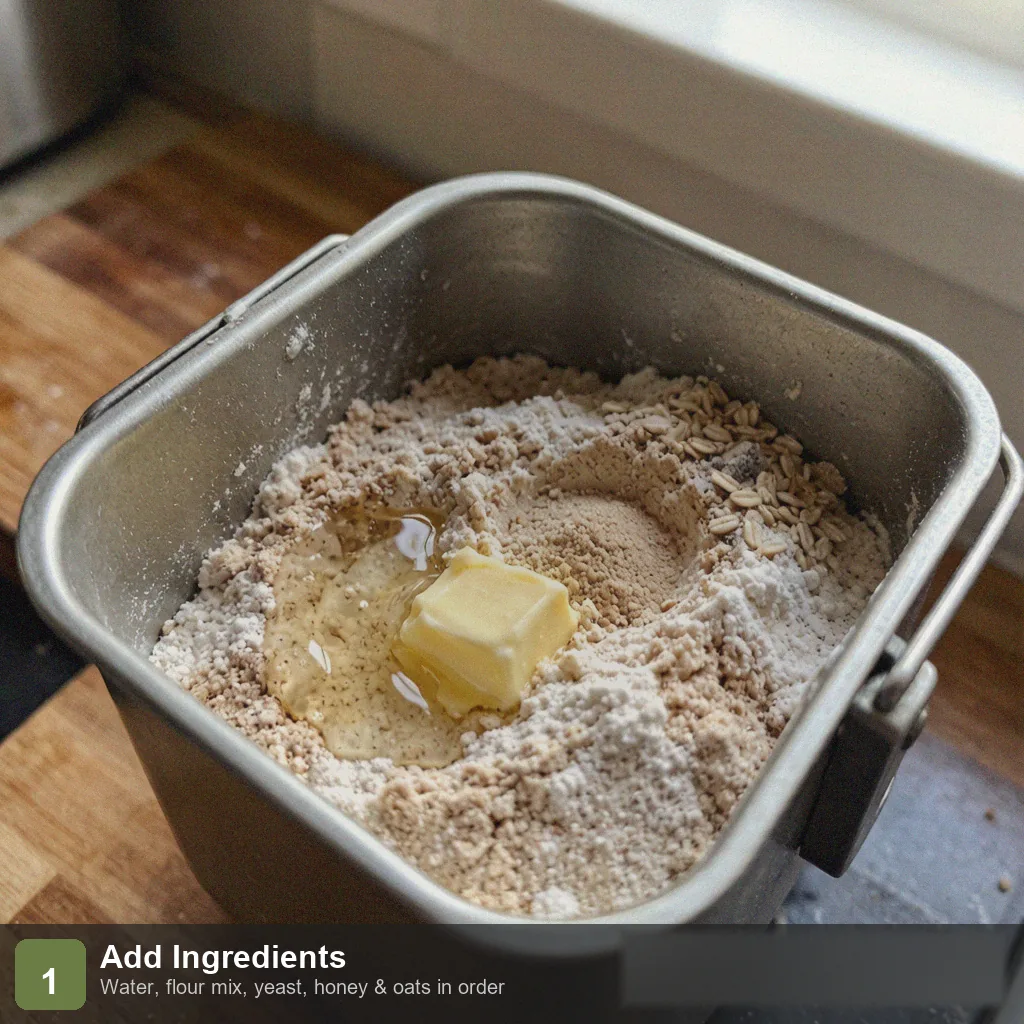
Pour the warm water and softened butter into the pan. Then add the mixed whole wheat and bread flours, dig a well and drop in the yeast, and place the honey, oats, and salt substitute in a corner away from the yeast. Whole wheat drinks more water than white flour, so the extra tablespoon of water versus the white loaf is correct.
Step 2: Seat the Pan and Close the Lid
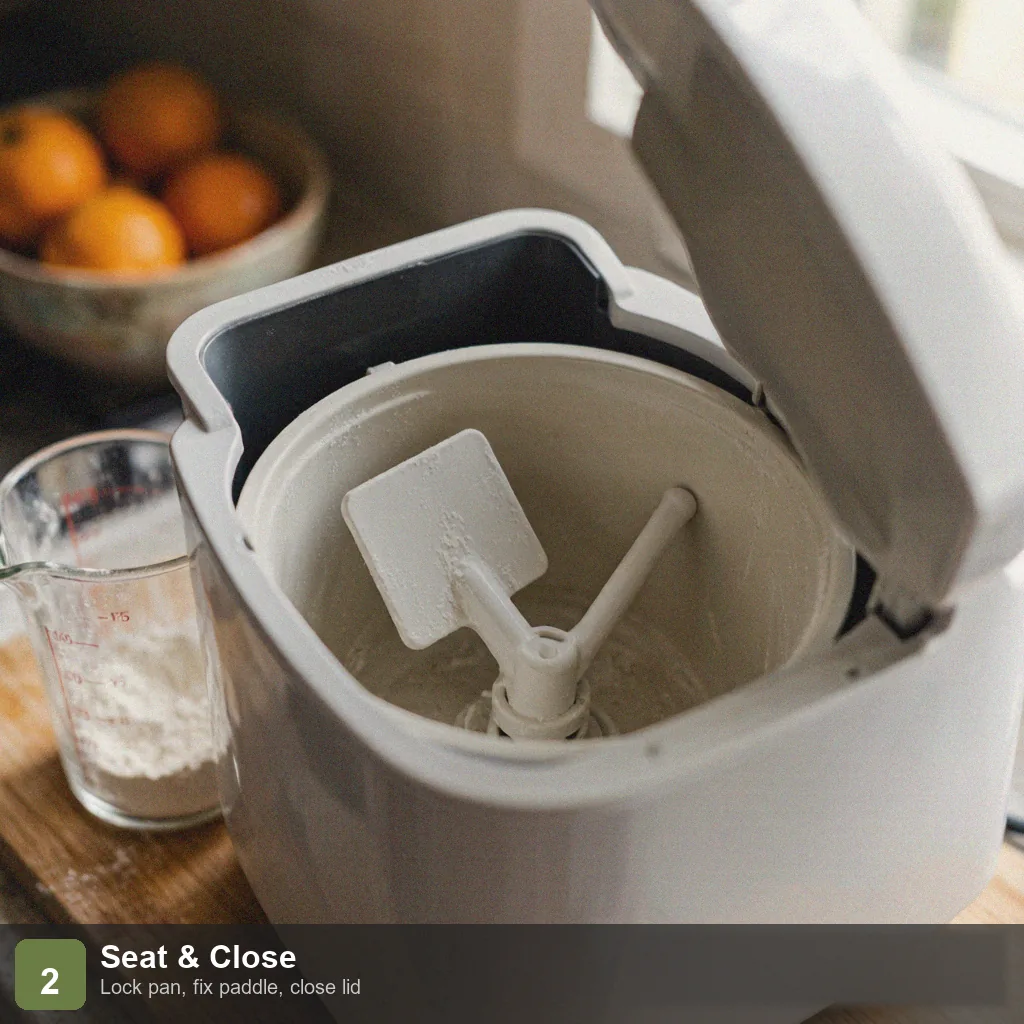
Lock the pan into the machine and confirm the kneading paddle is firmly in place, then close the lid. Whole wheat dough is heavier and wetter than white, so a loose paddle will simply fall off mid-knead.
Step 3: Select the Whole Wheat Cycle
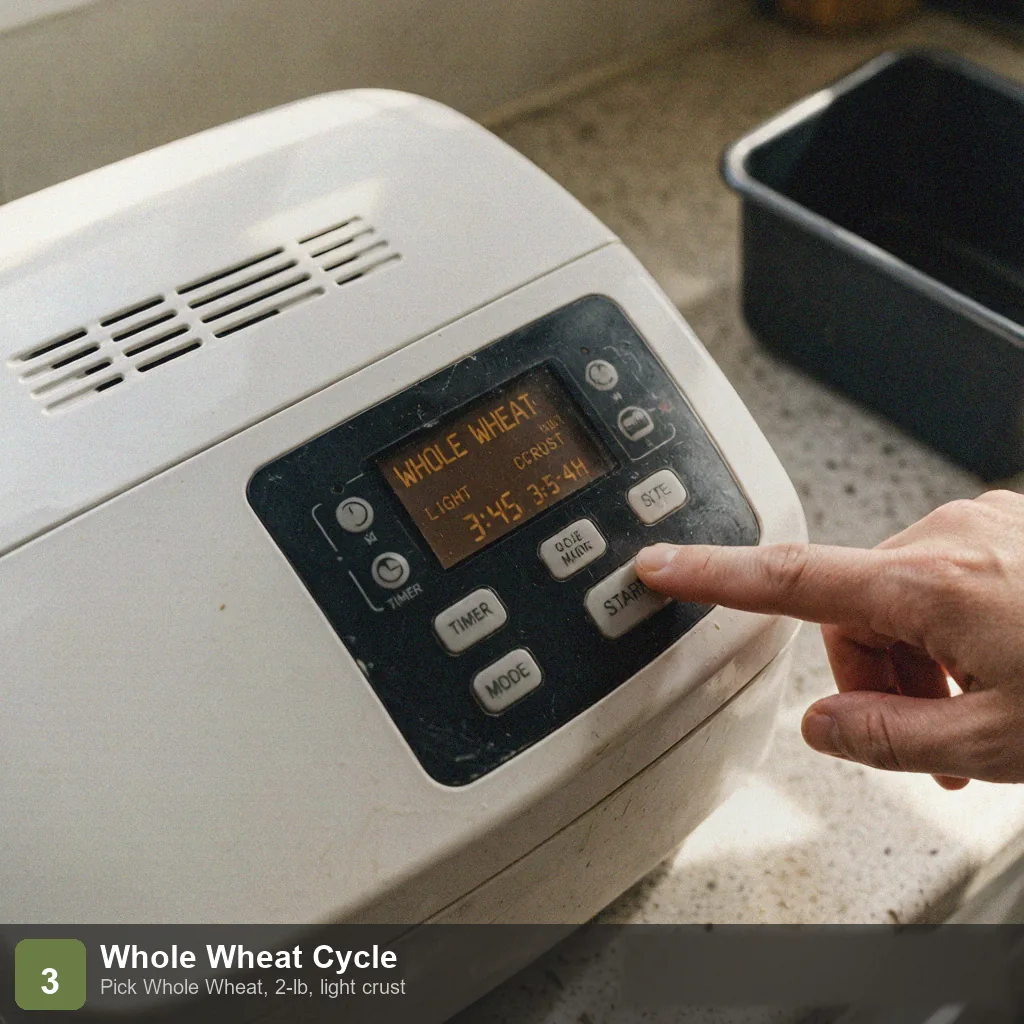
Choose the “Whole Wheat” setting (or “Basic” with a lighter crust). The program kneads longer and proofs more fully, about 3.5–4 hours. Select 2-pound, light or medium crust, then press start.
Step 4: Let It Rise and Bake
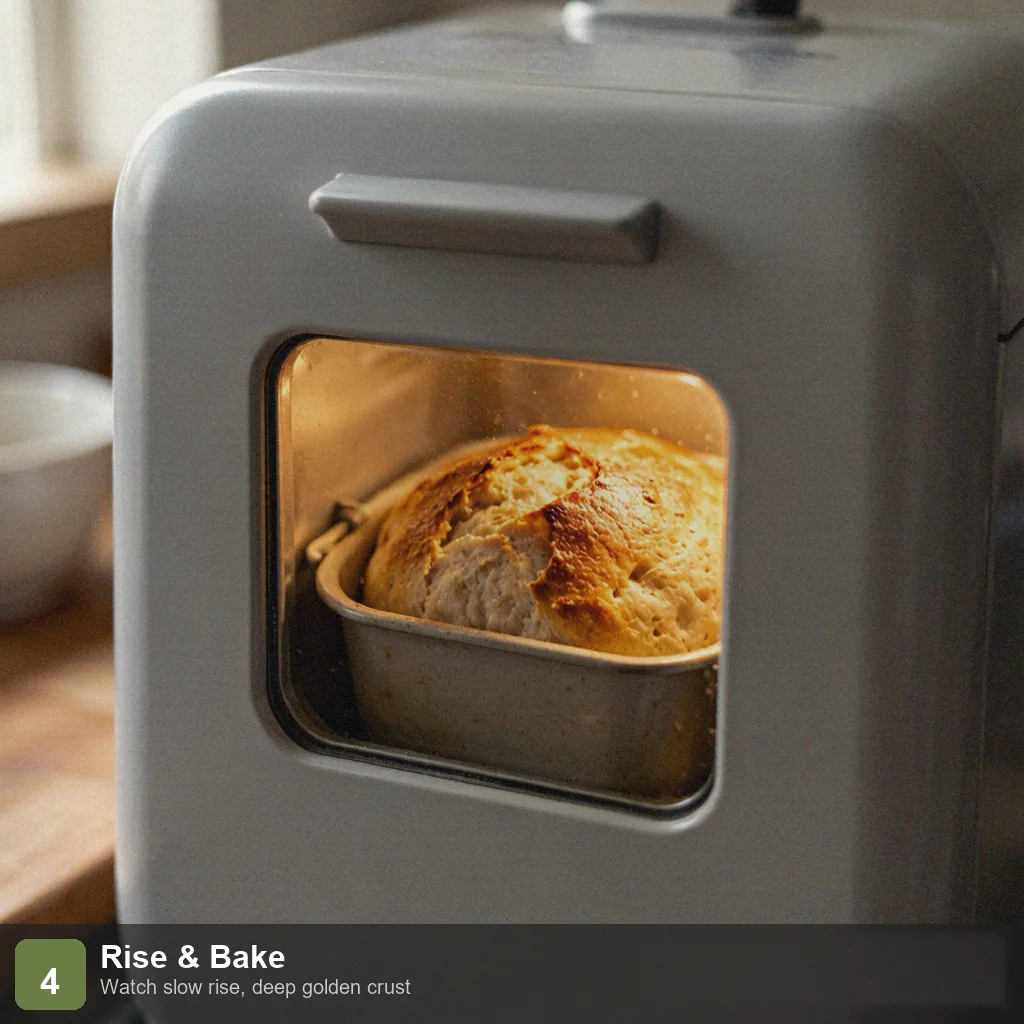
Do not open the lid while it works. Because the bran is heavy, whole wheat dough will not climb as high as a white loaf — that is expected, not a failure. Through the window you will see it rise slowly and form a deep, golden-brown, crisp crust during the bake.
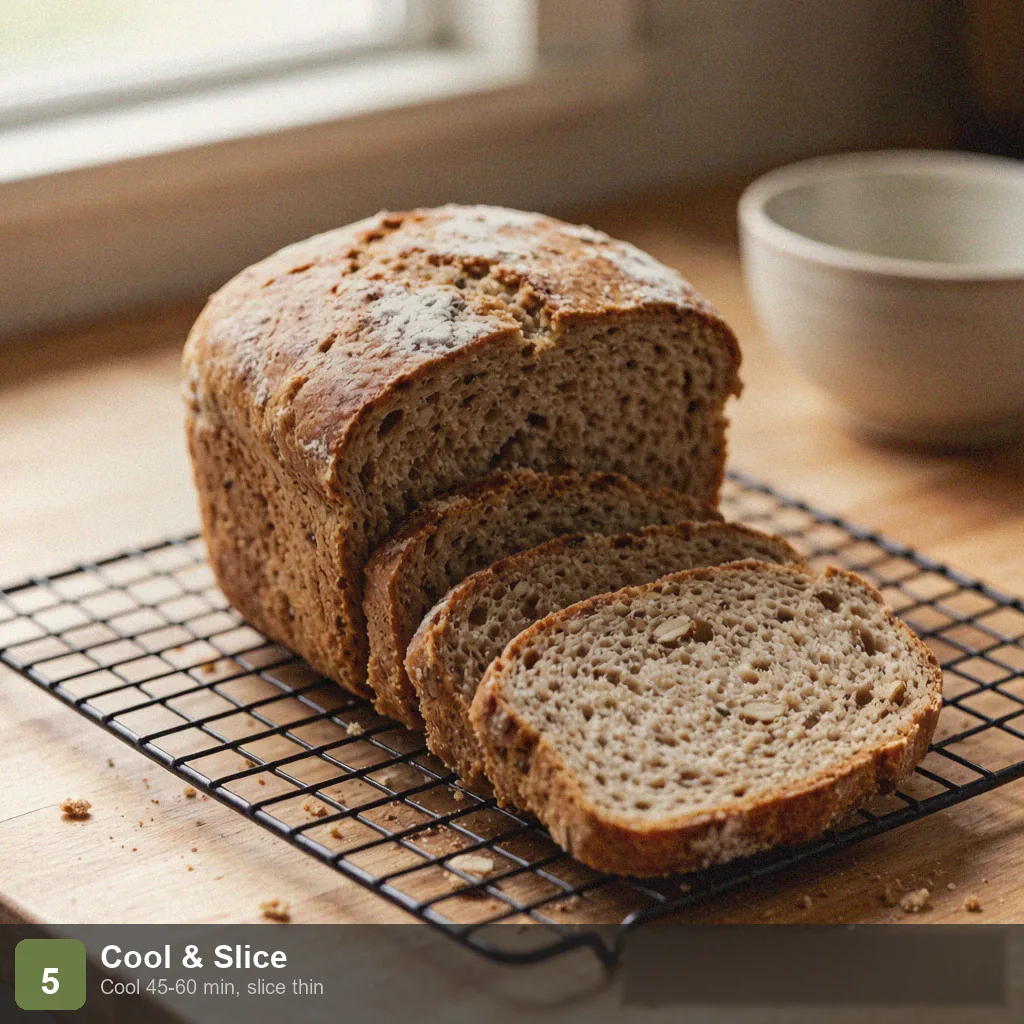
Step 5: Cool and Slice
When the cycle ends, lift out the pan and turn it onto a cooling rack. Whole wheat is a touch wetter than white, so cool at least 45 minutes — ideally a full hour — before slicing, or the crumb sticks and compresses.
Tips
Whole wheat is thirsty — do not fear the extra tablespoon of water. The bran acts like a sponge, absorbing about 5–10% more water than white flour. Too little water and the loaf bakes hard and dry. After about 5 minutes of kneading, open the lid to check: the dough should be a soft, slightly tacky ball. If dry and crumbly, add 1 tablespoon of water; if wet and clinging, add 1 tablespoon of whole wheat flour.
Honey does more than sweeten. Honey is a yeast-friendly sugar, and its Maillard reaction deepens the crust color and aroma. No honey? Maple syrup or white sugar work in the same amount. If you also cut sugar, drop to 1 tablespoon — the crust will just be a shade lighter.
The salt substitute brings back the salty signal. Like the white loaf, no-salt whole wheat tastes mild. A 1/2 teaspoon of potassium chloride is nearly sodium-free yet tells your brain “this is salty.” Use caution if you have kidney issues.
Freeze whole wheat sooner rather than later. Whole wheat’s oils and moisture make it stale faster than white bread — past 2 days at room temperature it is no longer fresh. Slice, seal, and freeze; crisp in a toaster or a 160°C (320°F) oven for 3 minutes.
A lighter crust protects nutrition. Whole wheat’s B vitamins and fiber partly break down under long, high heat. A “light” crust keeps the temperature lower and the time shorter than “dark” — and since this loaf is meant to be healthy, light is the on-brand choice.
Storage
Slice the cooled loaf, pack in a sealed freezer bag, and freeze for up to 1 month. For same-day eating, keep it in a sealed bag at room temperature and finish within 2 days. A toaster or a 160°C (320°F) oven for 3 minutes restores the soft crumb.
FAQ
Do I have to use 100% whole wheat flour?
No. This recipe already blends in 1/2 cup of bread flour for a better texture. If all you have is “whole wheat bread flour” (a whole wheat plus bread flour mix), use it in place of both flours at the same total amount and keep the water unchanged.
Why is whole wheat bread shorter than white?
Bran physically cuts gluten and the protein is weaker — that is the nature of whole wheat, not a mistake. Blending in bread flour and keeping the yeast fresh help it rise, but do not expect white-bread height.
Can I add nuts or dried fruit?
Yes. Most machines beep in the last 5 minutes (the “add-in” alert) — drop in 1/3 cup of chopped walnuts or raisins then. Dried fruit darkens the crust faster, so set a lighter crust at the same time.
Can regular salt replace the salt substitute?
No — that would defeat the “low sodium” point. If you cannot find a potassium substitute, leave out all salty seasoning and let the honey and oats carry the flavor; the sodium will be even lower, near zero.
Conclusion
This bread machine low sodium whole wheat bread delivers the fiber whole wheat is famous for while keeping sodium under 15mg per slice — a genuine double win for heart-healthy, high-fiber eating. Bake it on the weekend, slice and freeze, and a wholesome low sodium slice is always ready.
More Low Sodium Recipes
Pair this heart-healthy loaf with:
- Bread Machine Low Sodium Bread — the softer white version
- Bread Machine Low Sodium Dinner Rolls — pull-apart rolls
- Low Sodium Baked Chicken Breast — a high-protein main
- Low Sodium Mashed Potatoes — a comforting side
- Low Sodium Vegetable Soup — a warming low sodium bowl
Nutrition Information (Per Slice, about 1/12 of the loaf)
| Item | Amount | % Daily Value* |
|---|---|---|
| Calories | 140 kcal | 7% |
| Protein | 5 g | 10% |
| Fat | 3 g | 4% |
| Carbohydrates | 25 g | 9% |
| Sugar | 4 g | — |
| Fiber | 3 g | 11% |
| Sodium | 12 mg | <1% |
*Daily values are based on a 2,000 kcal diet. Sodium is estimated from USDA FoodData Central (the natural sodium in flour and yeast); no table salt is added.
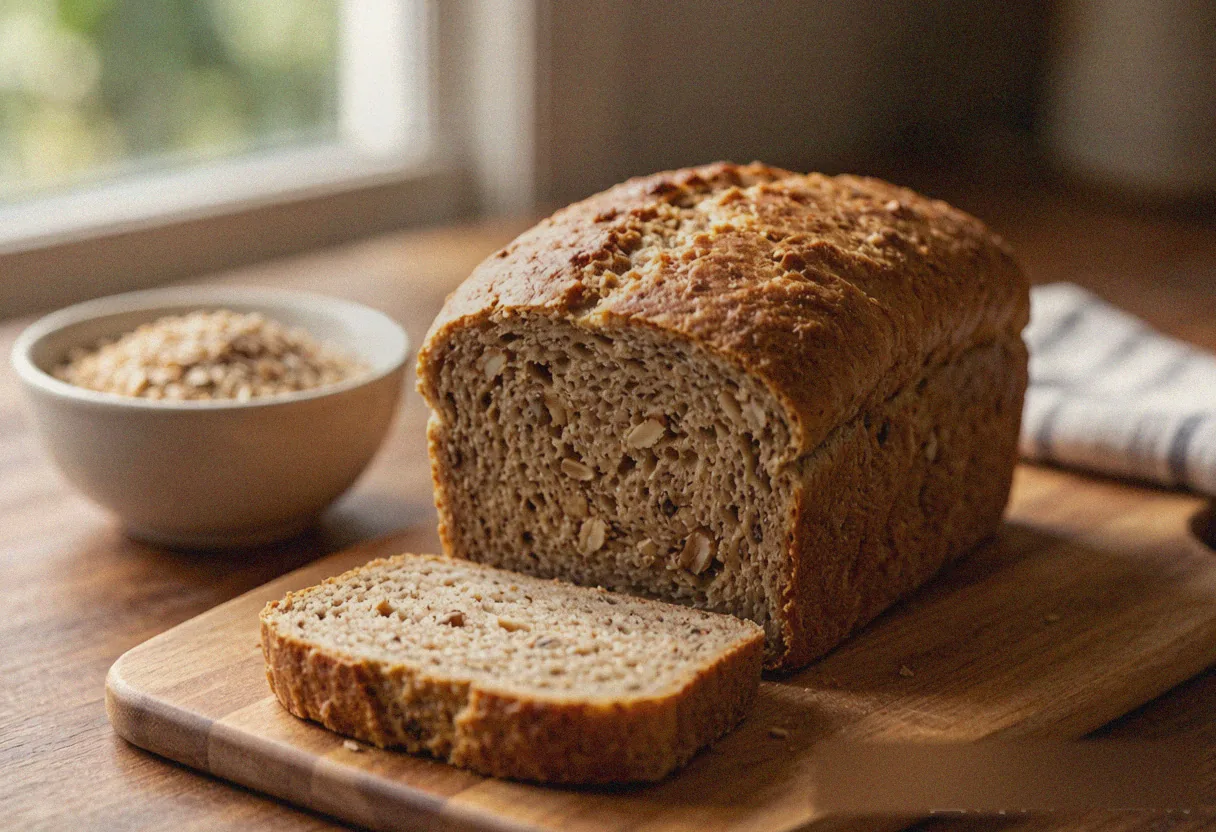
Bread Machine Low Sodium Whole Wheat Bread
Ingredients
Method
- Step 1: Add the Dry and Wet Ingredients in Order: Pour the warm water and softened butter into the pan. Then add the mixed whole wheat and bread flours, dig a well and drop in the yeast, and place the honey, oats, and salt substitute in a corner away from the yeast. Whole wheat drinks more water than white flour, so the extra tablespoon of water versus the white loaf is correct.
- Step 2: Seat the Pan and Close the Lid: Lock the pan into the machine and confirm the kneading paddle is firmly in place, then close the lid. Whole wheat dough is heavier and wetter than white, so a loose paddle will simply fall off mid-knead.
- Step 3: Select the Whole Wheat Cycle: Choose the "Whole Wheat" setting (or "Basic" with a lighter crust). The program kneads longer and proofs more fully, about 3.5–4 hours. Select 2-pound, light or medium crust, then press start.
- Step 4: Let It Rise and Bake: Do not open the lid while it works. Because the bran is heavy, whole wheat dough will not climb as high as a white loaf — that is expected, not a failure. Through the window you will see it rise slowly and form a deep, golden-brown, crisp crust during the bake.
- Step 5: Cool and Slice: When the cycle ends, lift out the pan and turn it onto a cooling rack. Whole wheat is a touch wetter than white, so cool at least 45 minutes — ideally a full hour — before slicing, or the crumb sticks and compresses.