Low Sodium Salad Dressing
Bottled salad dressing is one of the biggest hidden sodium sources in the average refrigerator. Two tablespoons of ranch dressing: 260mg. A splash of Japanese sesame dressing: 340mg. Italian: 290mg. You can easily add 500mg of sodium to an otherwise healthy salad before you’ve taken a single bite. These low sodium salad dressings flip that dynamic completely — three distinct flavors, each clocking in at 25mg of sodium or less per serving, each ready in under five minutes.
The approach is simple: let vinegar and citrus do the work that salt usually does, add aromatics like garlic and fresh herbs for depth, and use just enough oil or yogurt for body. You get the same satisfying mouthfeel and bright flavor with roughly 90% less sodium than the bottled alternatives.
Why You’ll Love These Recipes
Health Notice: This recipe is designed for low-sodium diets. The American Heart Association recommends no more than 2,300mg of sodium per day, with an ideal limit of 1,500mg for most adults. Sodium values are estimates based on USDA food composition data. Always consult your healthcare provider before making dietary changes. See our Medical Disclaimer for more information.
- Only 20–25mg sodium per serving. Bottled dressings average 250–350mg per 2-tablespoon serving. These homemade versions reduce that by about 90%, and they achieve it without any special ingredients — just the vinegar, oil, herbs, and aromatics you already keep in your kitchen.
- Three flavors that cover every salad. The classic vinaigrette handles everyday green salads with elegant simplicity. The creamy yogurt herb dressing is thick enough for vegetable crudités and sturdy enough for kale. The lemon herb vinaigrette is bright and delicate — perfect for seafood salads and grain bowls. Learn these three and you’ll never need to buy dressing again.
- Five minutes, no cooking. Every version is a “dump and shake” or “dump and stir” preparation. No simmering, no reducing, no waiting for flavors to develop (though they do improve after 30 minutes in the fridge). You can make a batch while your salad greens are still wet from washing.
- One week in the fridge, no preservatives. Each batch lasts about a week refrigerated, and because you’re making it yourself, you know exactly what’s in it — no gums, no artificial flavors, no anti-caking agents.
Ingredients You’ll Need
Flavor 1: Classic Vinaigrette (about 6 servings)
- ¼ cup extra-virgin olive oil
- 2 tablespoons red wine vinegar (or apple cider vinegar)
- 1 teaspoon Dijon mustard (look for a low-sodium brand)
- 1 garlic clove, grated or pressed to a paste
- ½ teaspoon black pepper
- Pinch of dried oregano
- 1 teaspoon honey (to balance the acidity)
Flavor 2: Creamy Yogurt Herb (about 6 servings)
- ½ cup plain Greek yogurt (unsalted)
- 1 tablespoon fresh lemon juice
- 1 small garlic clove, grated or pressed
- 1 tablespoon fresh dill, finely chopped (or 1 teaspoon dried dill)
- 1 tablespoon fresh chives, finely chopped
- ½ teaspoon black pepper
- 1 teaspoon olive oil
Flavor 3: Lemon Herb Vinaigrette (about 6 servings)
- ¼ cup olive oil
- 2 tablespoons fresh lemon juice
- 1 teaspoon lemon zest (from about ½ lemon)
- 1 garlic clove, grated or pressed
- 1 tablespoon fresh parsley, finely chopped
- 1 teaspoon dried basil
- ½ teaspoon black pepper
- ½ teaspoon honey
Not all Dijon mustard is created equal. Standard Dijon contains about 120mg of sodium per teaspoon. Low-sodium versions cut that roughly in half. If you can’t find low-sodium Dijon, dilute ½ teaspoon of regular Dijon with ½ teaspoon of water — you’ll keep the emulsifying power while halving the sodium. Alternatively, skip the mustard entirely and whisk in ¼ teaspoon of cornstarch dissolved in 1 tablespoon of water to help the oil and vinegar stay combined.
How to Make Low Sodium Salad Dressing
Flavor 1: Classic Vinaigrette
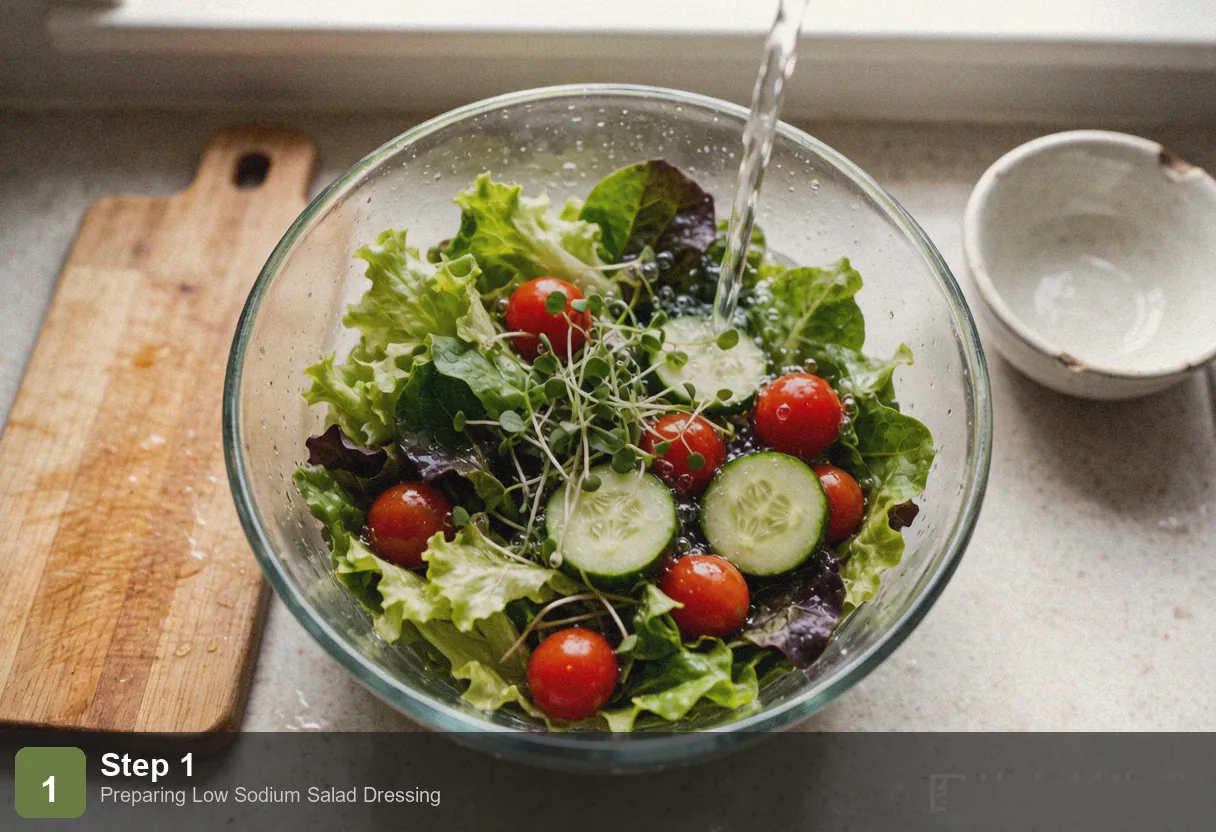
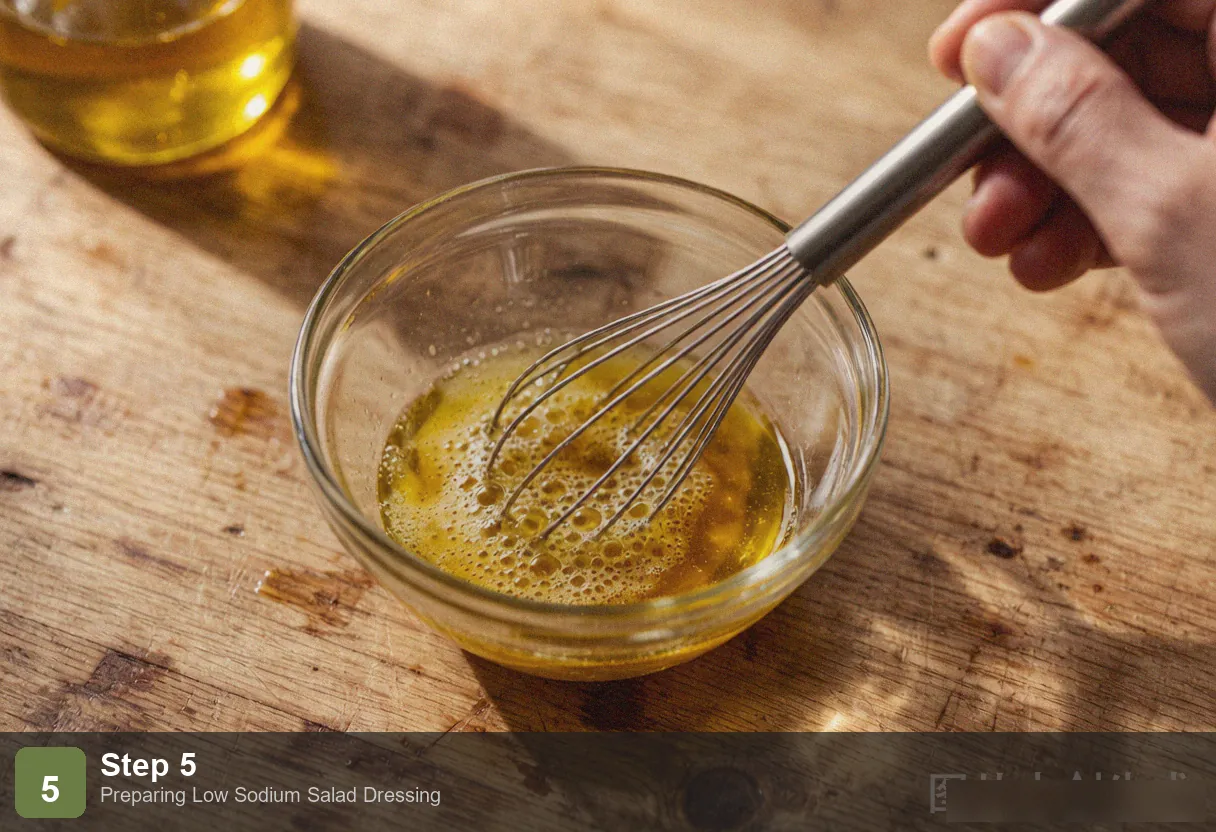
Combine all the ingredients in a small jar with a tight-fitting lid. Seal the lid and shake vigorously for 30 seconds — you’ll see the mixture turn slightly cloudy and thicken as the mustard emulsifies the oil and vinegar into a uniform suspension. Taste and adjust: if it’s too sharp, add a few more drops of honey; if it’s too mellow, add a splash more vinegar. Use immediately or refrigerate for up to 1 week. Always shake before using, as some separation is natural without commercial stabilizers.
Flavor 2: Creamy Yogurt Herb
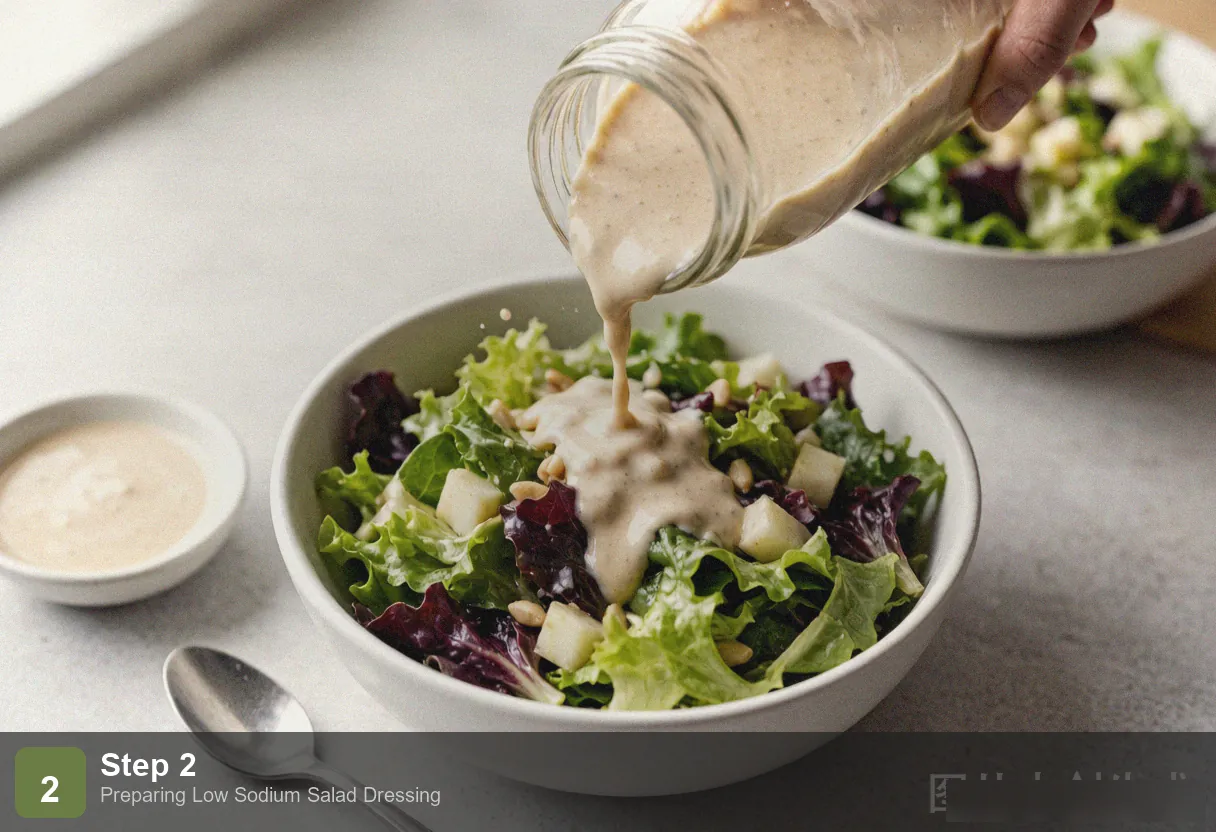
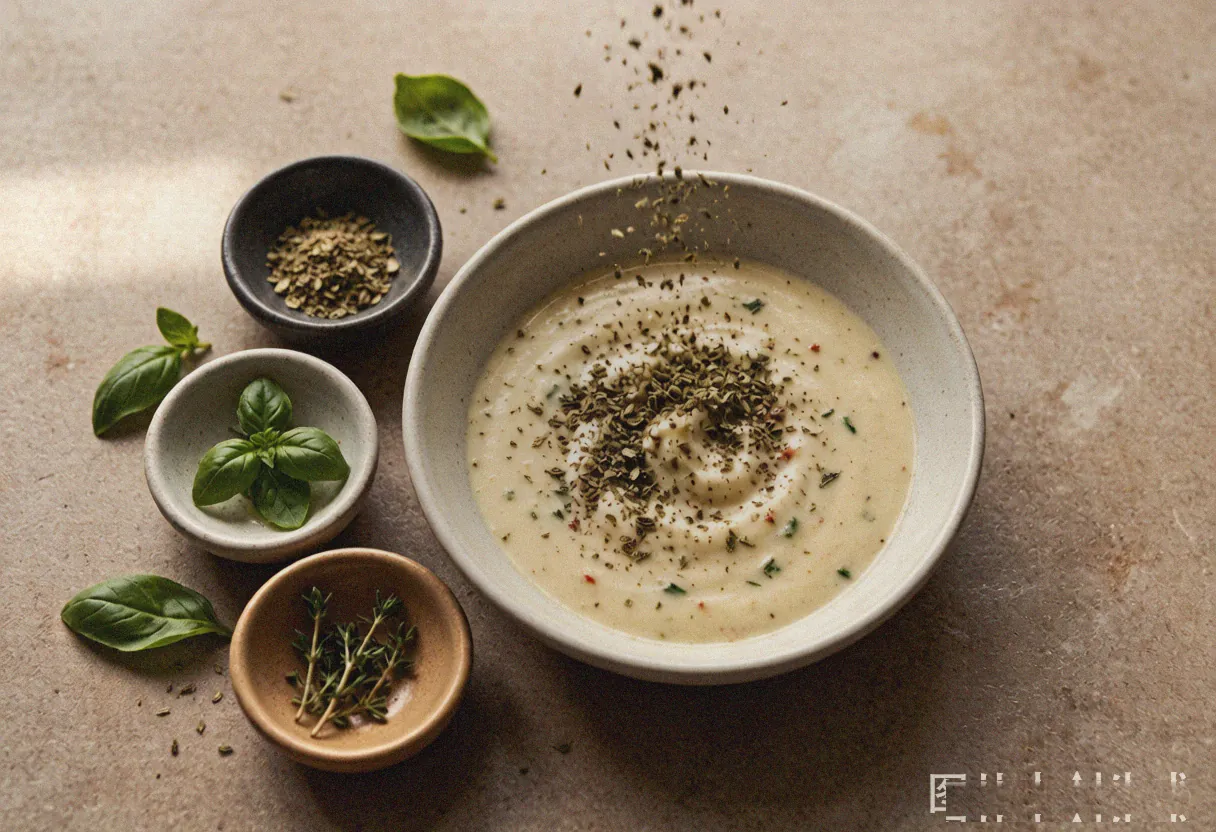
Spoon the Greek yogurt into a small bowl. Add the lemon juice, grated garlic, dill, chives, black pepper, and olive oil. Whisk until completely smooth — the lemon juice will thin the yogurt slightly, and the olive oil adds a silky mouthfeel that plain yogurt lacks. If the dressing is thicker than you’d like, thin it with 1 tablespoon of water or milk. For the best flavor, refrigerate for 30 minutes before serving to let the herbs infuse into the yogurt. Keeps for 5 days in the refrigerator.
Flavor 3: Lemon Herb Vinaigrette
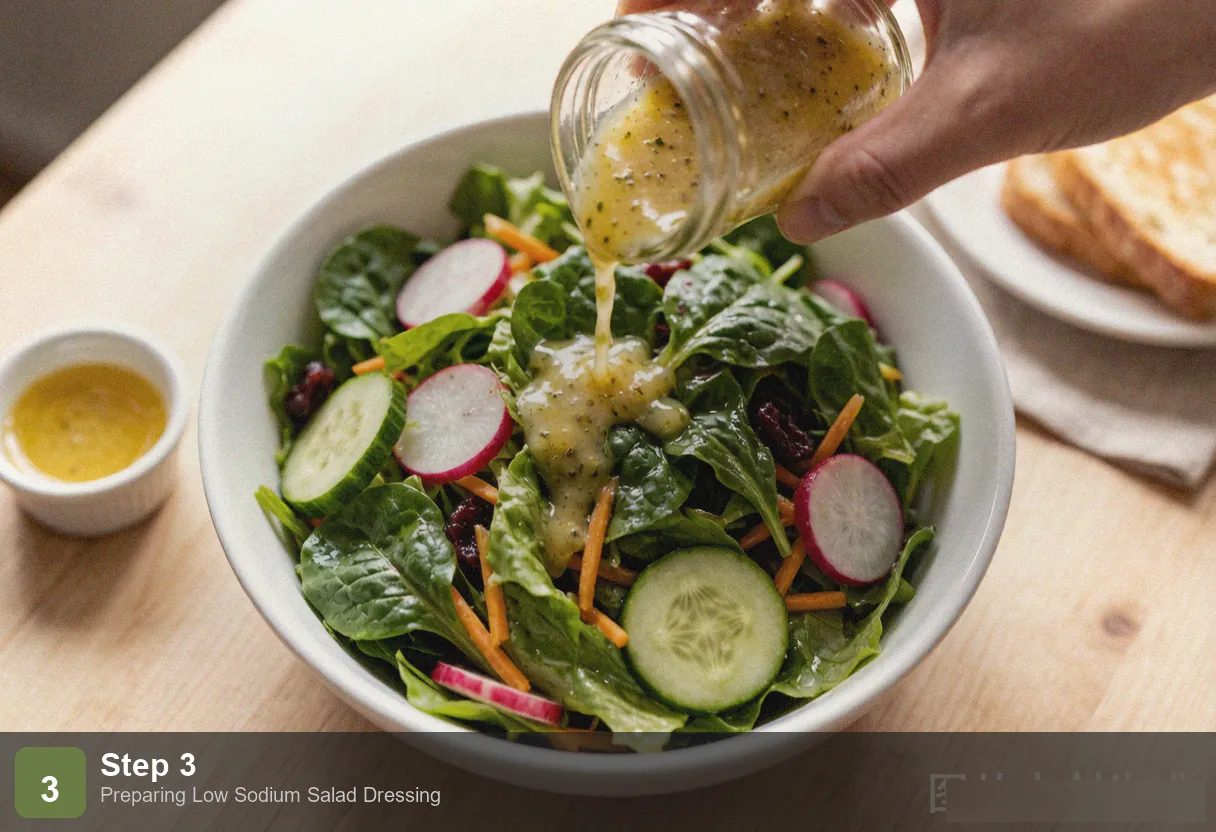
Combine all ingredients in a small jar, seal, and shake for 30 seconds — same method as the classic vinaigrette. The lemon zest is the star here: it contains the lemon’s essential oils, which are far more aromatic and long-lasting than the juice’s acidity alone. Use a microplane or fine grater and only grate the bright yellow outer layer — the white pith underneath is bitter and will ruin the dressing. Refrigerate for up to 1 week, shaking before each use.
Pro Tips
Memorize the 3:1 ratio and you’ll never need a vinaigrette recipe again. The classic French vinaigrette ratio is 3 parts oil to 1 part acid (vinegar or citrus juice). This ratio has been validated across centuries of cooking — more oil and the dressing feels greasy; more acid and it’s harsh and unpleasantly sharp. Once you internalize 3:1, you can make vinaigrette with any oil and any vinegar in your pantry, adding herbs and seasonings by instinct rather than by measurement.
Emulsification is what keeps your dressing from separating. Oil and water (or vinegar) naturally repel each other. An emulsifier — like Dijon mustard, egg yolk, or Greek yogurt — acts as a bridge between the two, allowing them to form a stable mixture. Without an emulsifier, your dressing will separate into layers within minutes of sitting. This isn’t a failure; it’s just physics. Shake it again before pouring and it’ll recombine just fine.
Fresh and dried herbs have different jobs in dressings. Fresh herbs (dill, chives, parsley, basil) contain volatile aromatic compounds that dissipate quickly, so they’re best added right before serving or shortly before. Dried herbs (oregano, basil, rosemary) need time to rehydrate and release their flavor, so dressings made with dried herbs actually improve after an hour or two in the fridge. This is why the vinaigrette uses dried oregano (it gets better over the week) while the yogurt dressing uses fresh dill and chives (it’s at its best within a day or two).
Frequently Asked Questions
Can I use a different oil?
Yes. Avocado oil has a neutral flavor and a higher smoke point, making it a good all-purpose substitute. Walnut oil has a rich, nutty character that works beautifully with fruit-based salads. Avoid strongly flavored oils like sesame or coconut unless you’re deliberately making an Asian-inspired dressing — they’ll dominate everything else.
What if I don’t have Dijon mustard?
Mix ¼ teaspoon of cornstarch with 1 tablespoon of water and microwave for 15 seconds until it thickens into a gel. Whisk this into the vinaigrette — it provides similar emulsifying and thickening action without the mustard’s tang. You’ll miss the subtle heat mustard brings, but the dressing will still hold together.
Can I make the creamy version dairy-free?
Yes. Soak ⅓ cup of raw cashews in hot water for 30 minutes (or cold water for 4 hours), then drain and blend with the lemon juice, garlic, herbs, and 2–3 tablespoons of water until completely smooth. The texture is remarkably close to the yogurt version — thick, creamy, and neutral in flavor. The sodium count will drop even further since cashews contain virtually no sodium.
How do I know when a dressing has gone bad?
Vinaigrettes are fairly stable — the vinegar acts as a natural preservative, and they can last up to 2 weeks without issues. Creamy yogurt-based dressings are more perishable. Discard any dressing that smells sour or funky (not just yogurt-tangy, but genuinely off), shows visible mold, or has separated into watery liquid and solid chunks that don’t recombine with stirring.
More Low Sodium Recipes
- Low Sodium Stir Fry Chicken — A quick low-sodium weeknight dinner
- Low Sodium Baked Chicken Breast — The perfect protein to pair with any of these dressings
- Low Sodium Vegetable Soup — A plant-based low-sodium option
- Low Sodium Fried Rice — A low-sodium one-bowl meal
Nutrition (per 2-tablespoon serving)
| Nutrient | Vinaigrette | Yogurt Herb | Lemon Herb |
|---|---|---|---|
| Calories | 95 kcal | 35 kcal | 90 kcal |
| Protein | 0g | 2g | 0g |
| Fat | 10g | 2g | 10g |
| Carbohydrates | 2g | 2g | 2g |
| Sodium | 25mg | 20mg | 25mg |
Low Sodium Salad Dressing - 3 Flavors 5 Min
Ingredients
Method
- Flavor 1: Classic Vinaigrette (about 6 servings): ¼ cup extra-virgin olive oil 2 tablespoons red wine vinegar (or apple cider vinegar) 1 teaspoon Dijon mustard (look for a low-sodium brand) 1 garlic clove, grated or pressed to a paste ½ teaspoon black pepper Pinch of dried oregano 1 teaspoon honey (to balance the acidity)
- Flavor 2: Creamy Yogurt Herb (about 6 servings): ½ cup plain Greek yogurt (unsalted) 1 tablespoon fresh lemon juice 1 small garlic clove, grated or pressed 1 tablespoon fresh dill, finely chopped (or 1 teaspoon dried dill) 1 tablespoon fresh chives, finely chopped ½ teaspoon black pepper 1 teaspoon olive oil
- Flavor 3: Lemon Herb Vinaigrette (about 6 servings): ¼ cup olive oil 2 tablespoons fresh lemon juice 1 teaspoon lemon zest (from about ½ lemon) 1 garlic clove, grated or pressed 1 tablespoon fresh parsley, finely chopped 1 teaspoon dried basil ½ teaspoon black pepper ½ teaspoon honey Not all Dijon mustard is created equal. Standard Dijon contains about 120mg of sodium per teaspoon. Low-sodium versions cut that roughly in half. If you can't find low-sodium Dijon, dilute ½ teaspoon of regular Dijon with ½ teaspoon of water — you'll keep the emulsifying power while halving the sodium. Alternatively, skip the mustard entirely and whisk in ¼ teaspoon of cornstarch dissolved in 1 tablespoon of water to help the oil and vinegar stay combined.
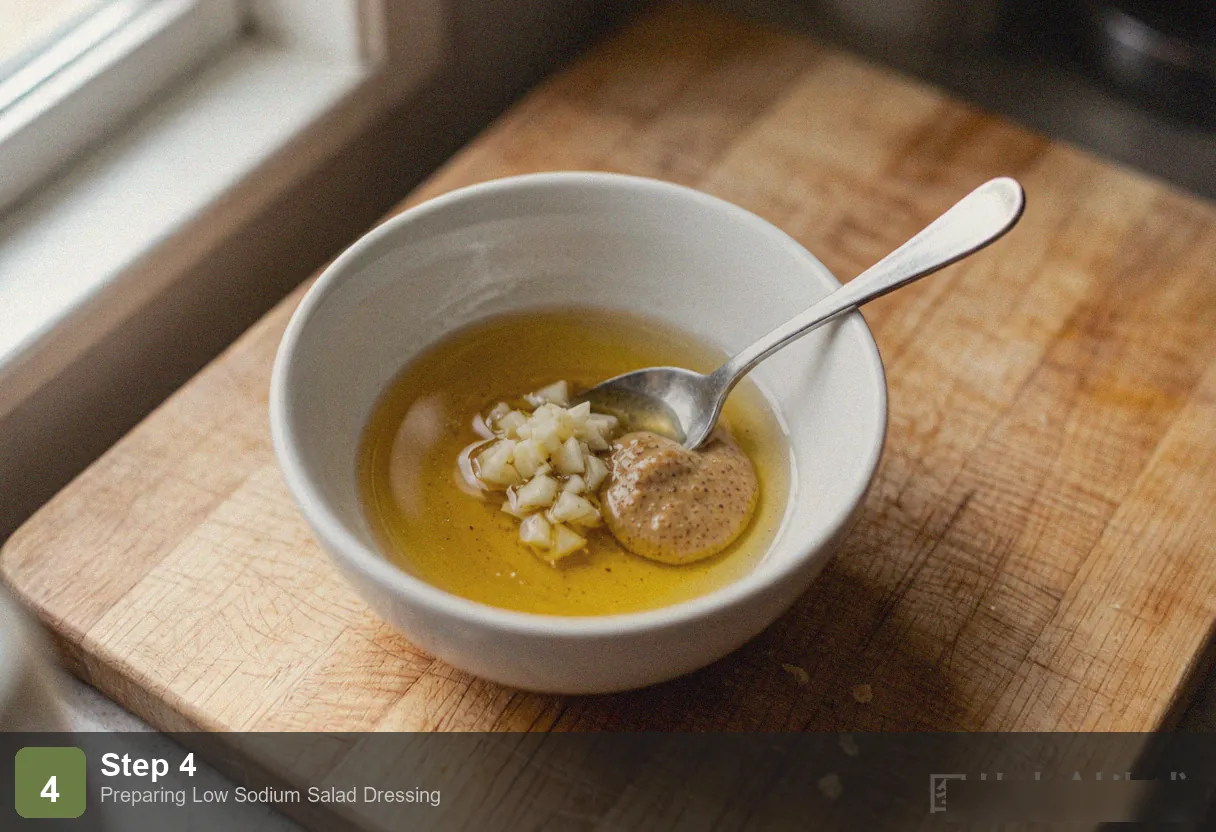
- Flavor 1: Classic Vinaigrette: Combine all the ingredients in a small jar with a tight-fitting lid. Seal the lid and shake vigorously for 30 seconds — you'll see the mixture turn slightly cloudy and thicken as the mustard emulsifies the oil and vinegar into a uniform suspension. Taste and adjust: if it's too sharp, add a few more drops of honey; if it's too mellow, add a splash more vinegar. Use immediately or refrigerate for up to 1 week. Always shake before using, as some separation is natural without commercial stabilizers.
- Flavor 2: Creamy Yogurt Herb: Spoon the Greek yogurt into a small bowl. Add the lemon juice, grated garlic, dill, chives, black pepper, and olive oil. Whisk until completely smooth — the lemon juice will thin the yogurt slightly, and the olive oil adds a silky mouthfeel that plain yogurt lacks. If the dressing is thicker than you'd like, thin it with 1 tablespoon of water or milk. For the best flavor, refrigerate for 30 minutes before serving to let the herbs infuse into the yogurt. Keeps for 5 days in the refrigerator.
- Flavor 3: Lemon Herb Vinaigrette: Combine all ingredients in a small jar, seal, and shake for 30 seconds — same method as the classic vinaigrette. The lemon zest is the star here: it contains the lemon's essential oils, which are far more aromatic and long-lasting than the juice's acidity alone. Use a microplane or fine grater and only grate the bright yellow outer layer — the white pith underneath is bitter and will ruin the dressing. Refrigerate for up to 1 week, shaking before each use.