Meal Prep Salmon
If you want a week of lunches that feel fancy yet stay easy, this meal prep salmon is the pick. Flaky salmon over rice and vegetables, portioned into grab-and-go bowls, rich in omega-3, and ready to eat straight from the fridge on workdays. One roast fills a pan, and five days get a restaurant-grade lift. Salmon is loaded with quality fat and protein; a bowl of rice and a handful of veggies is a balanced meal — far steadier than daily takeout or skipping a meal, and better for the steady energy workdays demand.
Why You’ll Love This Recipe
⚠️ Kitchen Safety
- Stovetop and oven surfaces get very hot — use oven mitts and keep pot handles turned inward to avoid knocks.
- Keep a clean, dry workspace; watch sharp knives and hot oil to prevent cuts and burns.
- Always read your appliance manual before first use.
- High nutrition density: salmon’s omega-3 plus veggie fiber makes one box a full meal.
- Batch roast: one oven run makes 4 portions, a single weekly prep covering five days.
- Bowl and go: portion into bowls, grab one on the way out, no cooking at work.
- Low fat, light oil: just a little olive oil, clean eating with no burden.
Ingredients You’ll Need
| Ingredient | Amount (about 4 portions) |
|---|---|
| Salmon fillets (skin off) | 4 pieces (~500g) |
| Cooked rice (base) | 4 portions (~600g) |
| Asparagus (cut into sections) | 1 bunch (~200g) |
| Olive oil | 2 tbsp |
| Lemon | 1, juiced |
| Garlic powder | 1 tsp |
| Dried dill (or parsley) | 1 tsp |
| Salt | 1/2 tsp |
| Black pepper | to taste |
Substitution tip: swap salmon for cod or chicken breast (different times); swap asparagus for broccoli or green beans; swap rice for quinoa or brown rice for slower carbs; for low sodium, cut salt and lean on lemon and dill.
How to Make Meal Prep Salmon
Step 1: Preheat and prep the fish
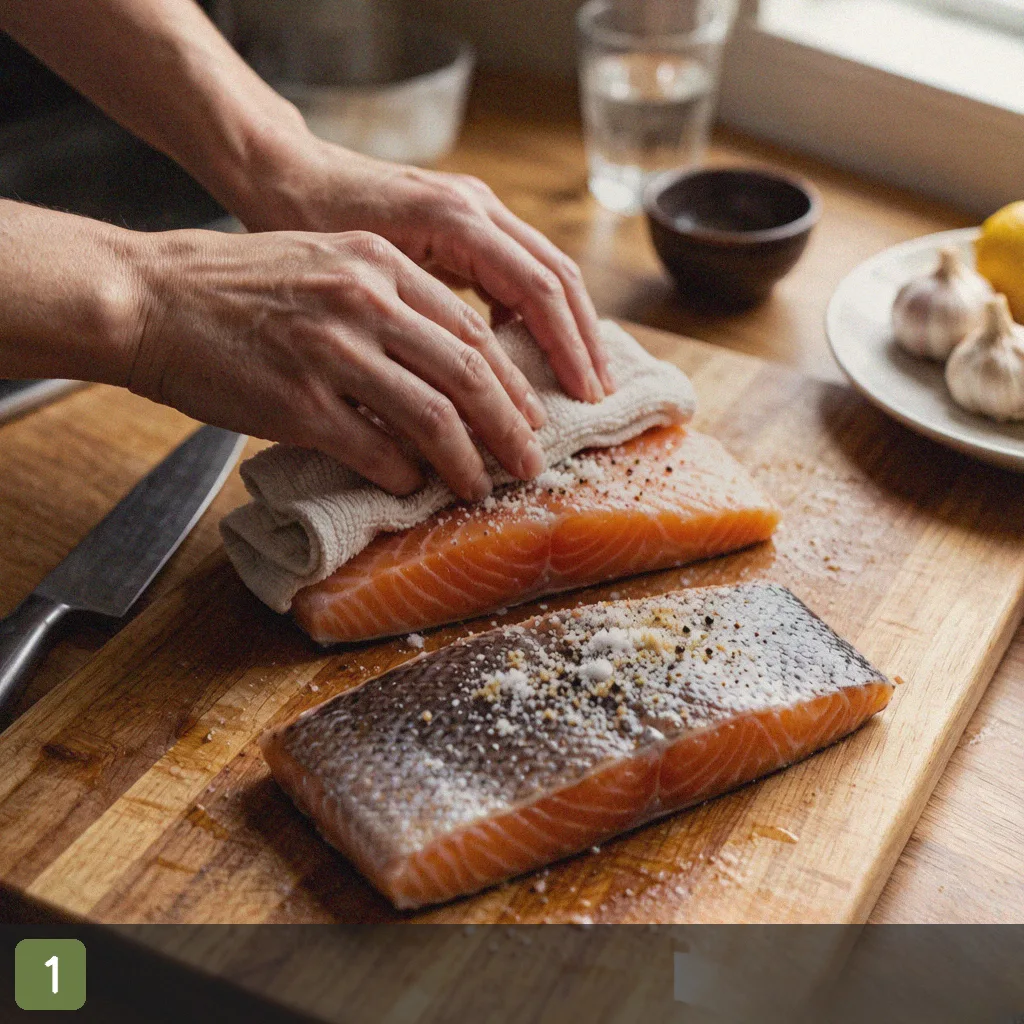
Preheat the oven to 200°C (400°F). Pat the salmon dry with a kitchen towel, then season with salt, black pepper, and garlic powder, skin-side down. Drying the surface is the key to a seared edge; too much moisture and it boils in the pan, hurting both texture and looks.
Step 2: Make the lemon herb oil
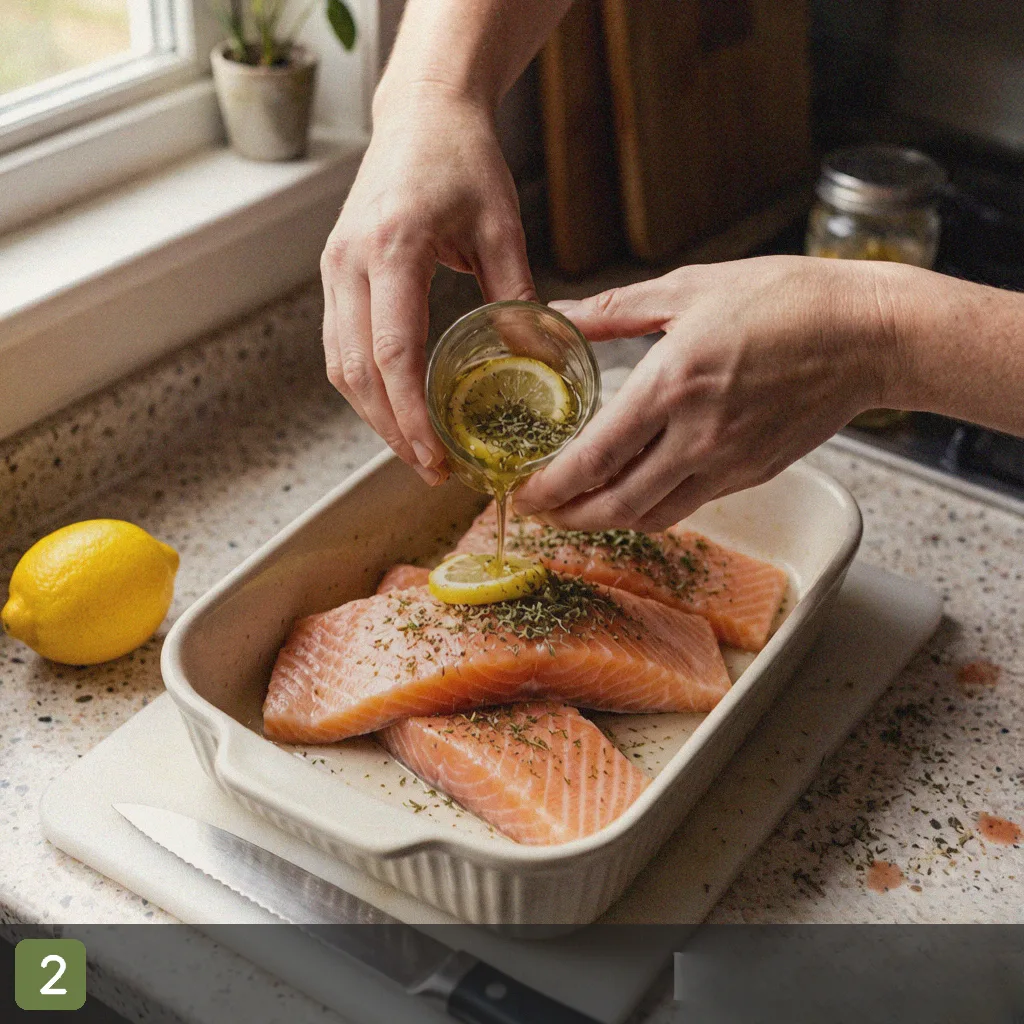
Mix olive oil, lemon juice, and dried dill, then drizzle over the fish so each piece wears a thin oil film that locks in moisture. Lemon and dill are a perfect pair, their aroma covering any fishiness so even fish-shy eaters accept it.
Step 3: Arrange fish and veggies to roast together
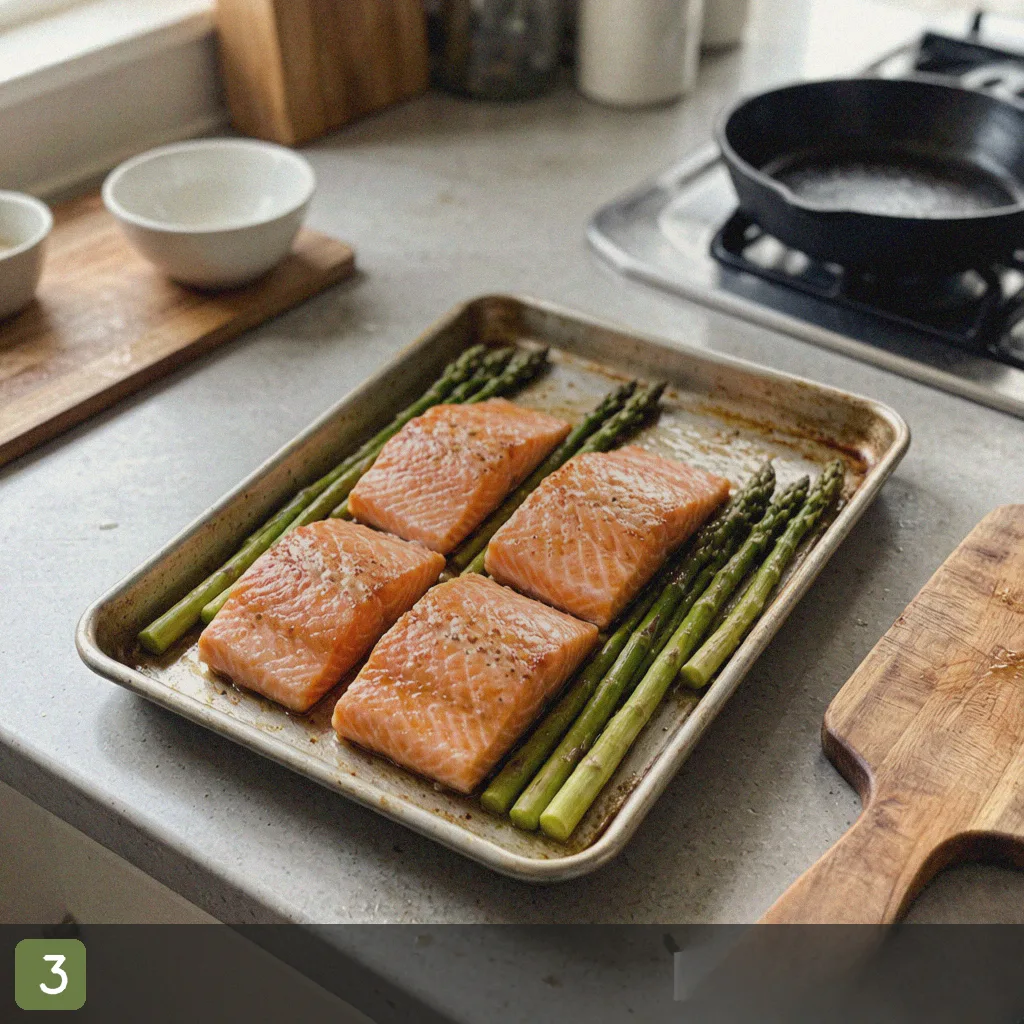
Lay the salmon on the pan and tuck asparagus into the gaps with a light brush of oil. Same-pan veggies save effort and pick up the fish aroma. Choose thin asparagus so it finishes with the salmon; thick stalks need a quick blanch first or they stay raw when the fish is done.
Step 4: Bake
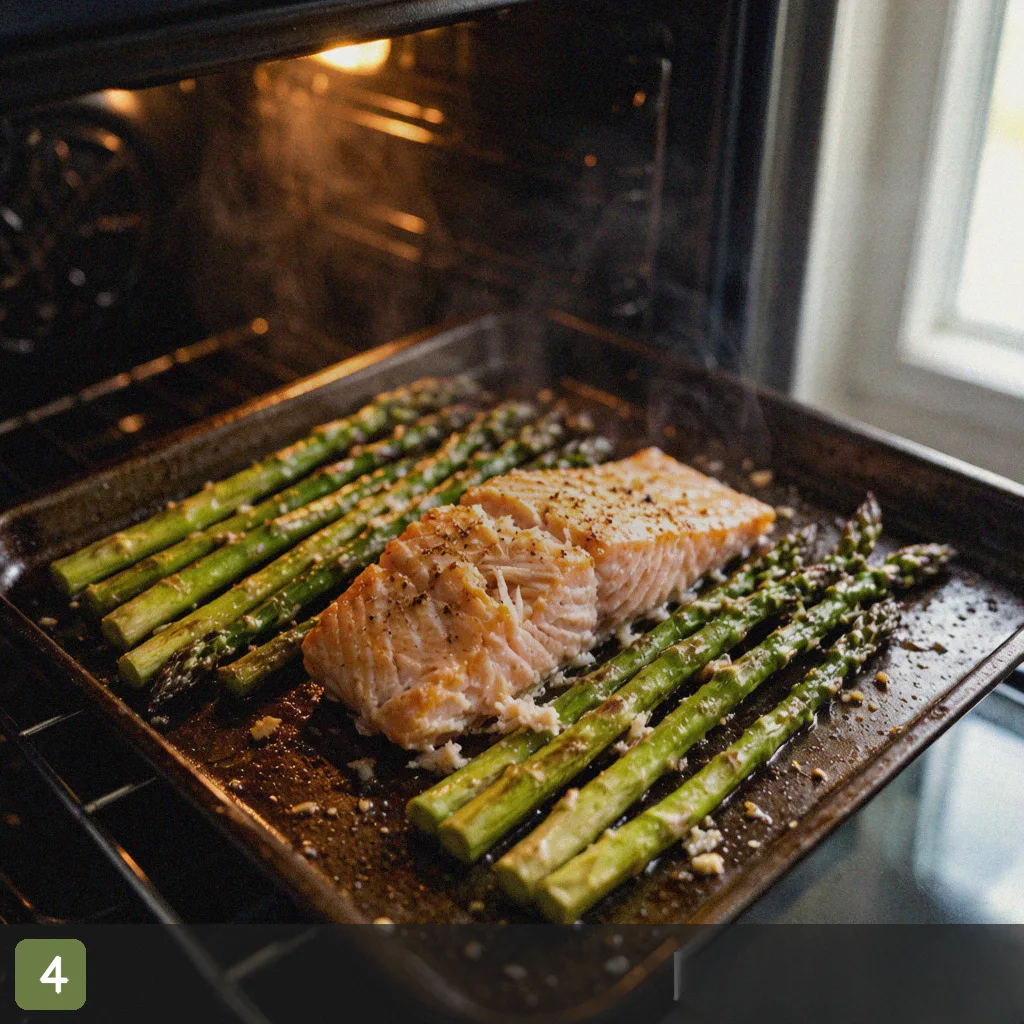
Bake at 200°C for 12–14 minutes, until the fish flakes apart easily with a fork — do not overcook or it dries. When the center reaches 63°C/145°F (the FDA minimum safe temperature for fish), it is fully and safely cooked. This recipe is refrigerated for 3 days, so cook it to fully done before portioning.
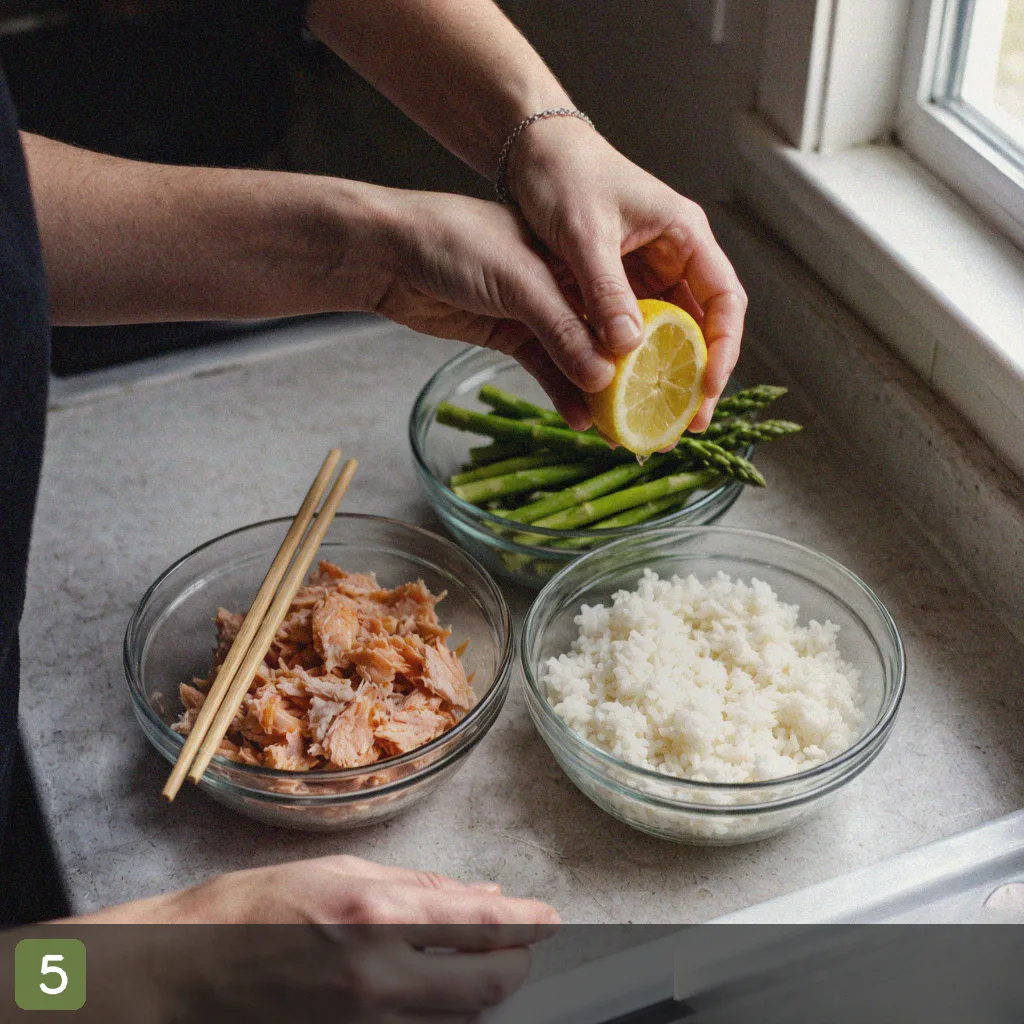
Step 5: Assemble the bowls
Spoon rice into the base, top with fish and vegetables, and squeeze lemon. Portion into containers and refrigerate 3 days; reheat lightly before eating. Lay the salmon skin-side up so the skin stays crisp after reheating; squeeze lemon fresh, since sitting makes it turn harsh and dulls the whole bowl.
Pro Tips for the Best Results
- Pat dry: a dry surface sears; otherwise you get a boiled, watery feel.
- Do not overcook: just-set and slightly translucent at the center is tenderest; residual heat keeps cooking.
- Cool the rice before boxing: hot rice sealed straight away weeps; let it warm-temper before portioning.
- Squeeze lemon last: pre-squeezing turns it white; fresh off the heat is most fragrant.
- Eat within three days: salmon’s freshness is limited, so finish in the first three days and switch to a sturdier protein after.
Frequently Asked Questions
Q: How many days does it keep?
A: 3 days in the fridge is best; day four drops in flavor. For longer, freeze, though the texture dries a bit.
Q: No oven?
A: Pan-sear over medium-low, 3–4 minutes per side, or air fry at 190°C (375°F) for 10 minutes.
Q: How do I know it is done?
A: A fork flakes the fish into layers and the center is opaque — internally around 63°C.
Q: How do I eat this while cutting fat?
A: Swap rice for more veggies or brown rice; the fish’s healthy fat is enough, no extra sauce needed.
Q: Can I add sauce?
A: Yes, a homemade teriyaki or cucumber-yogurt sauce, packed in a small box and drizzled at eating time.
More Quick Meals Recipes to Try
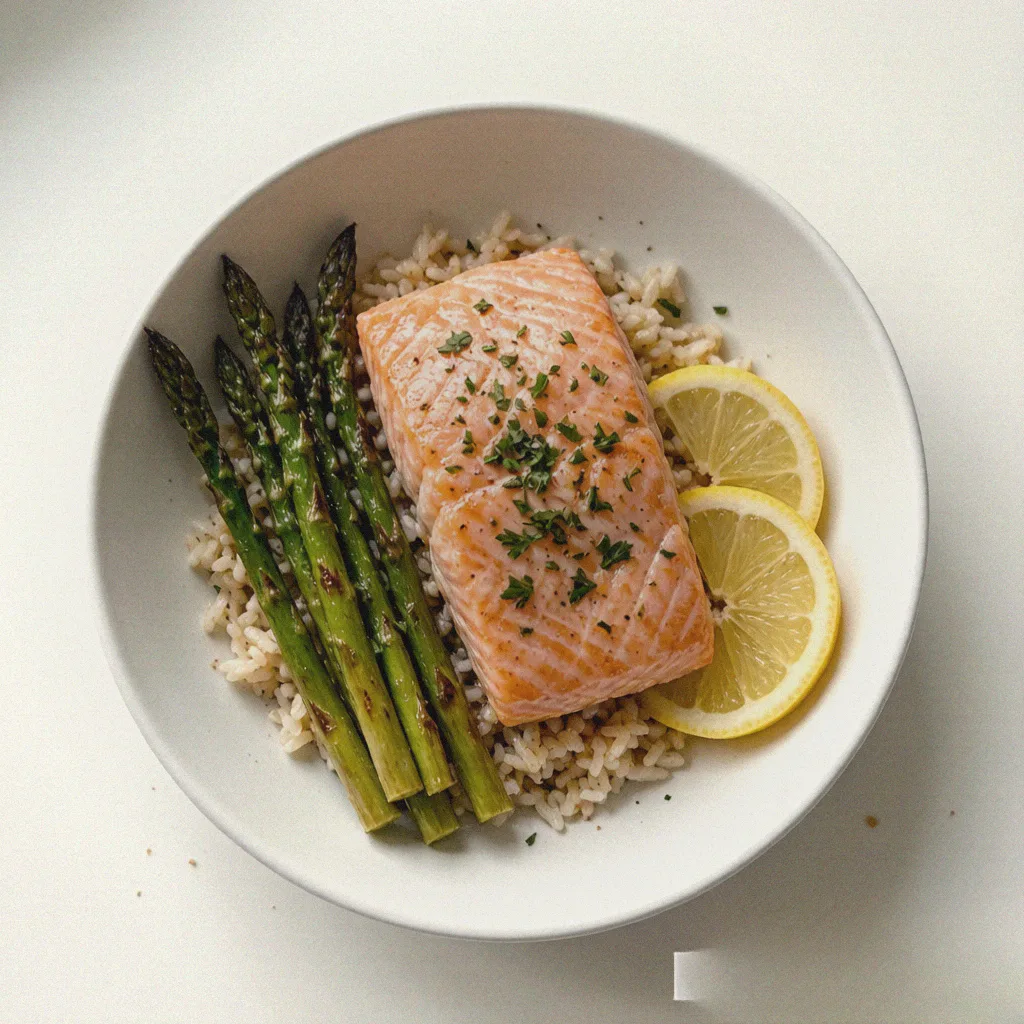
Meal Prep Salmon
Ingredients
Method
- Step 1: Preheat and prep the fish: Preheat the oven to 200°C (400°F). Pat the salmon dry with a kitchen towel, then season with salt, black pepper, and garlic powder, skin-side down. Drying the surface is the key to a seared edge; too much moisture and it boils in the pan, hurting both texture and looks.
- Step 2: Make the lemon herb oil: Mix olive oil, lemon juice, and dried dill, then drizzle over the fish so each piece wears a thin oil film that locks in moisture. Lemon and dill are a perfect pair, their aroma covering any fishiness so even fish-shy eaters accept it.
- Step 3: Arrange fish and veggies to roast together: Lay the salmon on the pan and tuck asparagus into the gaps with a light brush of oil. Same-pan veggies save effort and pick up the fish aroma. Choose thin asparagus so it finishes with the salmon; thick stalks need a quick blanch first or they stay raw when the fish is done.
- Step 4: Bake: Bake at 200°C for 12–14 minutes, until the fish flakes apart easily with a fork — do not overcook or it dries. When the center reaches 63°C/145°F (the FDA minimum safe temperature for fish), it is fully and safely cooked. This recipe is refrigerated for 3 days, so cook it to fully done before portioning.
- Step 5: Assemble the bowls: Spoon rice into the base, top with fish and vegetables, and squeeze lemon. Portion into containers and refrigerate 3 days; reheat lightly before eating. Lay the salmon skin-side up so the skin stays crisp after reheating; squeeze lemon fresh, since sitting makes it turn harsh and dulls the whole bowl.