Sheet Pan Chicken and Vegetables
Some nights, the thought of standing over a stove and managing multiple pans is enough to make delivery look like a reasonable life choice. Those are the nights for sheet pan chicken and vegetables. Everything — protein, starch, vegetables — goes onto a single baking sheet and into a hot oven. Thirty-five minutes later, you pull out a pan of crispy-skinned chicken thighs surrounded by vegetables that have caramelized in the rendered chicken fat. One pan to wash. Five pieces of cutlery total. Dinner done.
The trick is in the temperature and the arrangement: 425°F is hot enough to crisp chicken skin and caramelize vegetable edges simultaneously, and giving each ingredient enough space on the pan means everything roasts instead of steaming.
Why You’ll Love This Recipe
- Truly one pan, truly minimal cleanup. Chop the vegetables, season the chicken, arrange everything on a single sheet pan, and slide it into the oven. You’ll wash one sheet pan, one mixing bowl, a knife, a cutting board, and your forks. That’s it. No sauté pans, no saucepans, no colanders.
- Chicken fat is the secret ingredient. Bone-in, skin-on chicken thighs render their subcutaneous fat as they roast. That fat drips onto the pan and pools around the vegetables, coating them in schmaltz that browns and crisps their edges in a way that olive oil alone never achieves. This is a one-pan dinner where the protein actively makes the vegetables better.
- Thirty-five minutes of hands-off cooking. Once the pan goes into the oven, you’re free. Shower, help with homework, answer emails, pour a glass of wine. Toss the vegetables once at the 20-minute mark and the rest takes care of itself. No stirring, no adjusting, no babysitting.
- Meal prep gold. Double the recipe, split between two sheet pans, and you’ve got four lunches for the week. The chicken and vegetables reheat beautifully — microwave for 2 minutes and they’re almost as good as fresh out of the oven.
Ingredients You’ll Need
- 6 boneless, skin-on chicken thighs (about 150g each)
- 2 cups broccoli florets
- 2 carrots, cut into chunks
- 2 medium potatoes (about 400g), cut into chunks
- 1 red onion, cut into wedges
- 3 tablespoons olive oil
- 1 teaspoon garlic powder
- 1 teaspoon dried rosemary
- 1 teaspoon dried thyme
- ½ teaspoon smoked paprika
- 1 teaspoon salt
- ½ teaspoon black pepper
- 1 lemon, halved
Why skin-on thighs instead of breasts? Chicken thighs have two things chicken breasts don’t: fat that renders during roasting and a texture that stays juicy even if you overshoot the cooking time by a few minutes. The rendered fat is what makes this recipe work — it drips onto the vegetables and caramelizes their edges. Chicken breasts lack both the fat and the forgiveness, which means drier meat and paler, less interesting vegetables.
How to Make Sheet Pan Chicken and Vegetables
Step 1: Preheat and Prep Vegetables
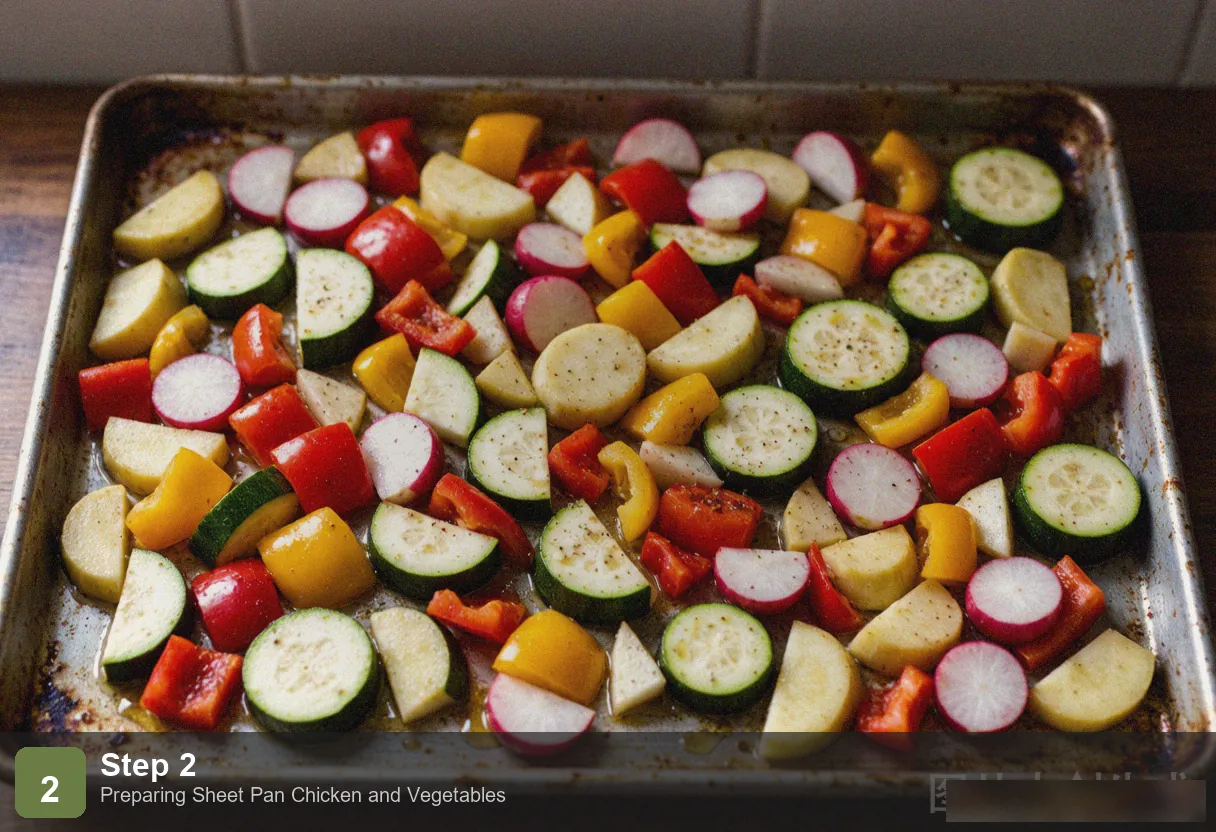
Preheat your oven to 425°F (220°C). On a large rimmed baking sheet, combine the broccoli florets, carrot chunks, potato chunks, and onion wedges. Drizzle with 2 tablespoons of olive oil and sprinkle with ½ teaspoon salt and ¼ teaspoon black pepper. Toss everything with your hands until every piece is coated. Spread the vegetables into an even layer, leaving gaps where the chicken thighs will go. Do not crowd the pan — ingredients need at least a finger’s width of space between them for air to circulate. Overcrowding traps steam and turns roasting into steaming.
Step 2: Season the Chicken
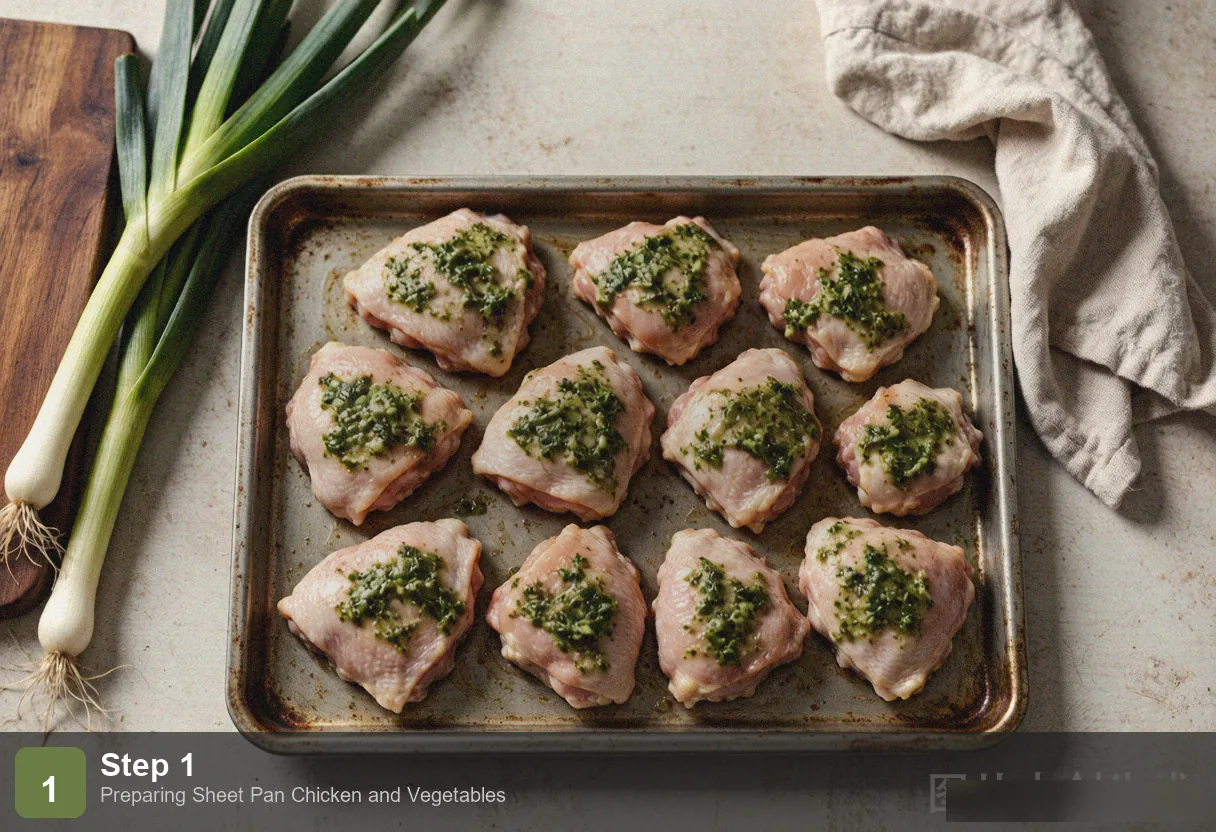
In a small bowl, mix the remaining 1 tablespoon of olive oil, garlic powder, rosemary, thyme, smoked paprika, remaining ½ teaspoon salt, and remaining ¼ teaspoon black pepper into a paste. Place the chicken thighs skin-side up in the gaps on the baking sheet. Using your fingers, spread the herb paste evenly over the skin of each thigh — make sure every piece of skin is coated. Skin-side up is critical: this positions the fat directly above the vegetables, so as it renders, it drips down and bastes everything on the pan.
Step 3: Roast for 20 Minutes
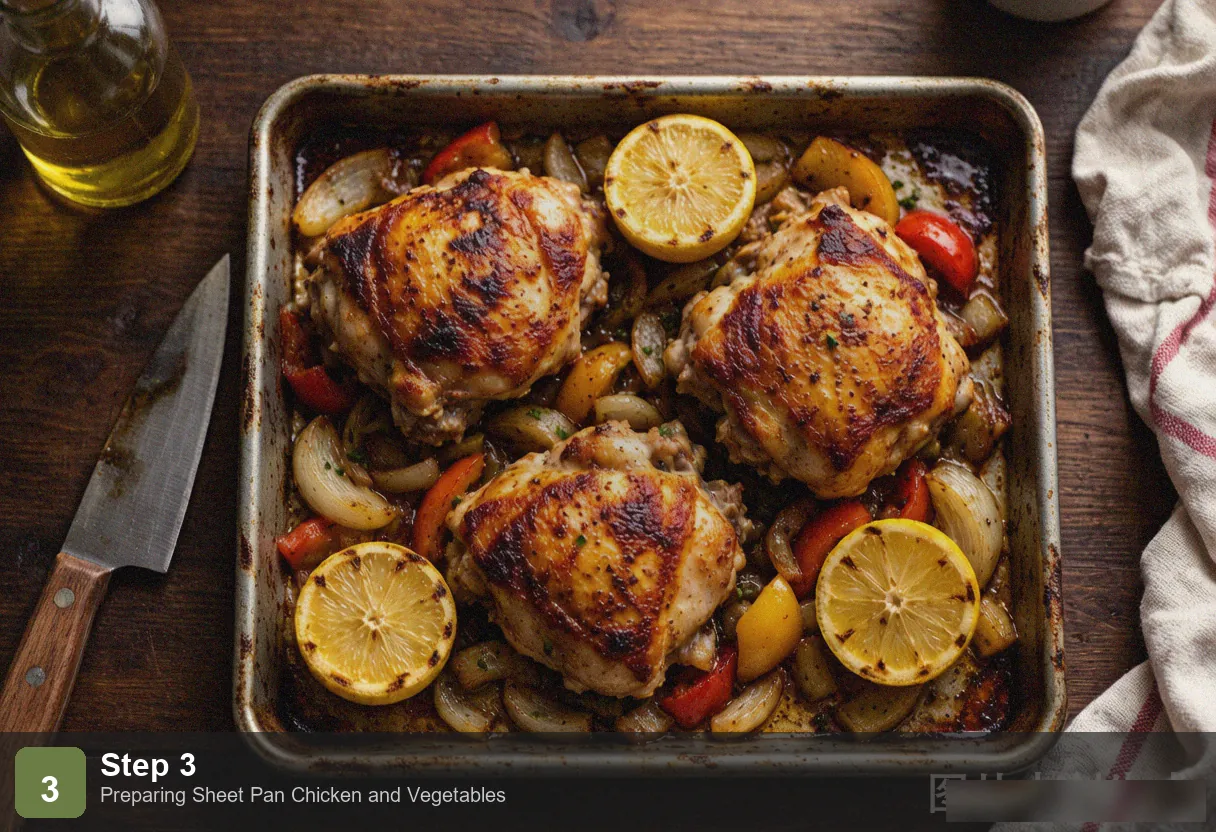
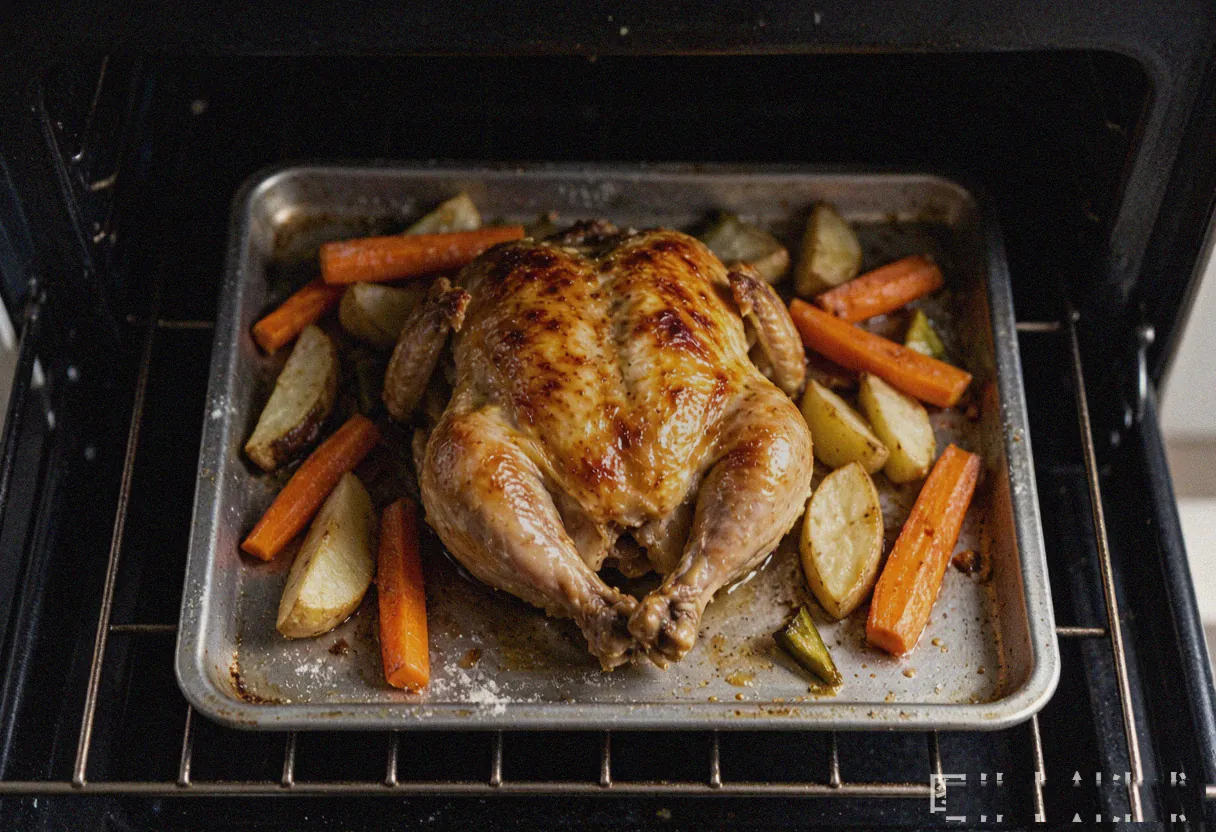
Place the pan on the middle rack of the preheated oven and roast for 20 minutes. During this time, the chicken skin will begin to render and turn golden, while the bottom edges of the vegetables — especially the potatoes touching the hot metal — will start to brown and crisp.
Step 4: Toss Vegetables and Continue Roasting
Pull the pan from the oven. Using tongs or a spatula, toss the vegetables — this flips them so the sides that were touching the pan get a turn facing up, and the sides that were facing up make contact with the hot metal. Do not flip the chicken; the skin stays up the entire time. Return the pan to the oven and roast for another 15 minutes, for a total of 35 minutes. If you want extra-crispy chicken skin, switch the oven to broil for the last 2 minutes — but watch it closely.
Step 5: Finish and Serve
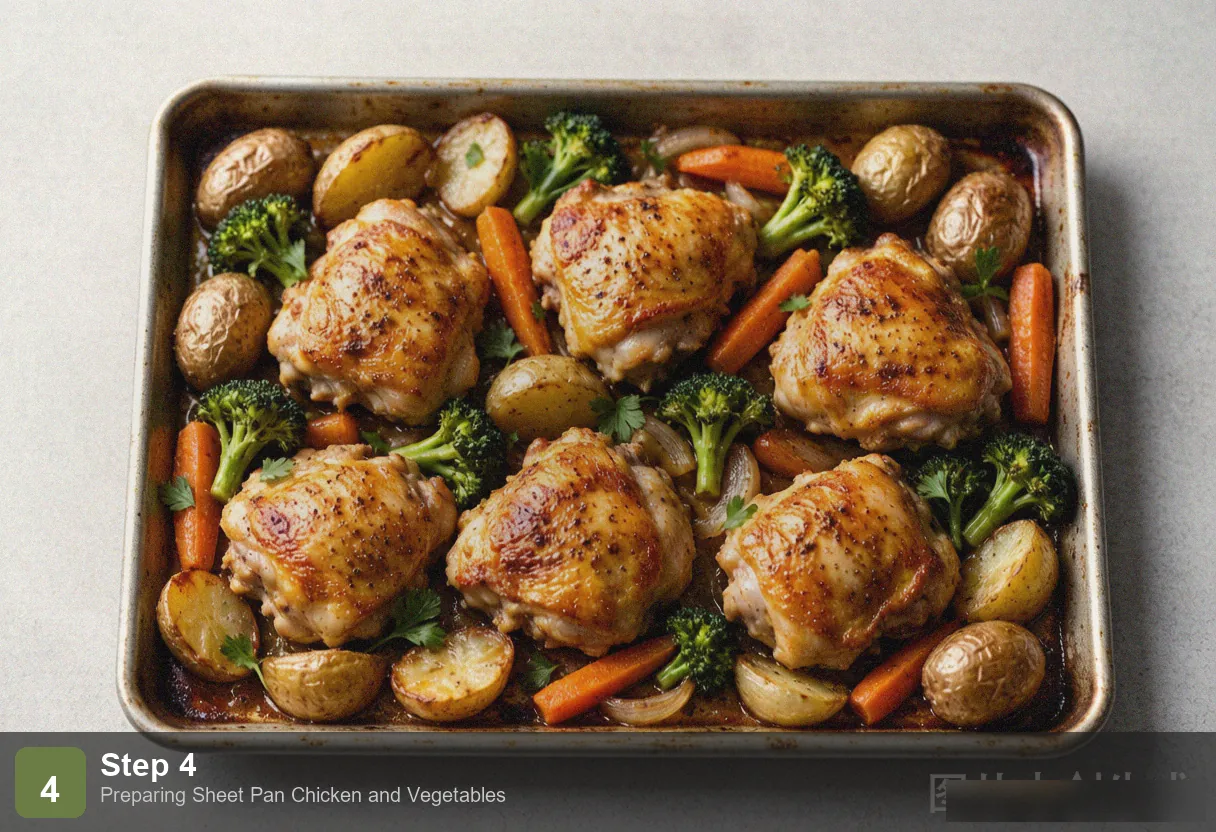
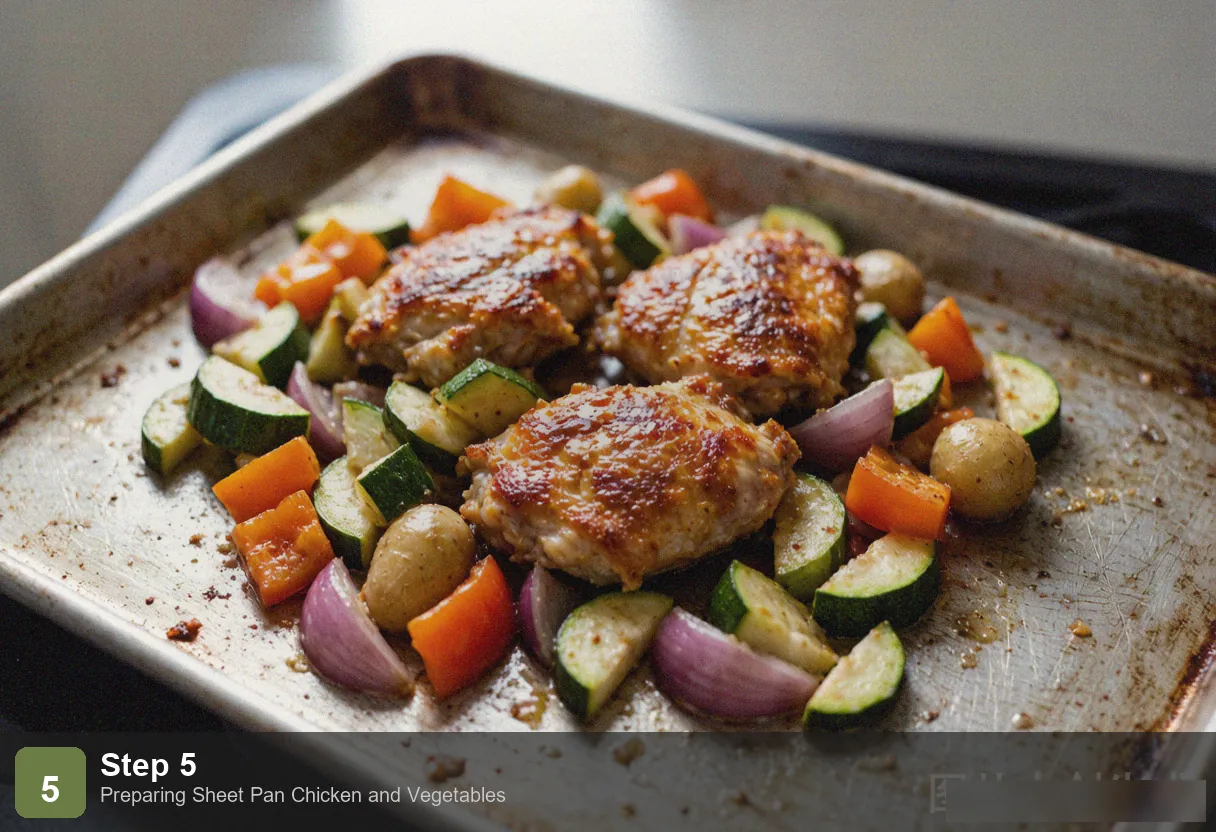
Remove the pan from the oven. Squeeze the lemon halves over the chicken and vegetables — the juice will sizzle on contact with the hot pan. Let everything rest for 5 minutes before serving. The chicken skin should be golden and crackling-crisp, the vegetable edges should show visible caramelization, and the potatoes should be tender inside with a lightly crisped exterior. Spoon any juices and rendered fat from the pan over the vegetables — that’s concentrated flavor you don’t want to leave behind.
Pro Tips
425°F is the sheet pan sweet spot. Below 400°F, vegetables steam rather than roast and chicken skin renders slowly, staying pale and flabby. Above 450°F, the exterior can burn before the chicken reaches a safe internal temperature. At 425°F, the skin renders and crisps, the vegetables caramelize, and everything reaches doneness at roughly the same moment — about 35 minutes for thighs and medium-cut vegetables.
Don’t crowd the pan. This is the most common sheet-pan mistake. When ingredients are packed tightly together, the moisture they release can’t escape — it gets trapped between them and steams everything instead of roasting. The result: limp vegetables and pale, rubbery chicken skin. Every piece of food needs at least a finger’s width of breathing room around it. If your baking sheet isn’t large enough, use two sheets or cut the recipe in half.
Chicken fat is free flavor. As the skin-on thighs roast, the rendered chicken fat pools on the baking sheet and mingles with the olive oil, herbs, and vegetable juices. When you toss the vegetables at the 20-minute mark, they get re-coated in this seasoned fat. Spoon any remaining pan juices over the finished dish — they’ve absorbed the garlic, rosemary, and thyme from the chicken skin and carry more flavor than any sauce you could make separately.
Frequently Asked Questions
Can I use chicken breasts instead?
Yes, with adjustments. Breasts cook faster than thighs — about 25 minutes total. To compensate, roast the vegetables alone for the first 10 minutes, then add the seasoned chicken breasts and roast for another 20–25 minutes. Breasts have almost no fat to render, so add an extra tablespoon of olive oil to the vegetables to make up for the missing chicken fat.
What other vegetables work well?
Brussels sprouts (halved), cauliflower florets, sweet potato chunks, bell pepper strips, and asparagus all roast beautifully at 425°F. Add quick-cooking vegetables like asparagus and cherry tomatoes during the last 10 minutes; they’ll overcook if they go in at the start. Avoid high-moisture vegetables like zucchini and mushrooms — they release too much water and will steam the entire pan.
How do I clean the baking sheet with minimal effort?
The caramelized drippings on the pan are the only downside of this recipe. The easiest method: immediately after removing the food, pour off any excess fat, lay a paper towel over the stuck-on bits, and fill the pan with hot water. Let it soak for 10 minutes. The residue will wipe off with a sponge. If your baking sheet has a nonstick coating, use a nylon scrubber — never steel wool. For truly zero cleanup, line the pan with parchment paper.
Is this good for meal prep?
Excellent for meal prep. Double the recipe across two pans, portion into 4 containers, and refrigerate for up to 4 days. The chicken stays juicy and the vegetables hold up well, though they’ll lose some of their crisp edges. Microwave for 2 minutes to reheat. Do not freeze — the potatoes will turn mealy and watery upon thawing.
More Quick Meals
- 15-Minute Chicken Stir Fry — Another chicken dinner, different technique
- One Pot Chicken and Rice — Another one-pan solution
- Quick Fried Rice — 15-minute rice dish
- Quick Breakfast Ideas — More fast options
Nutrition (per serving, serves 4)
| Nutrient | Amount | % Daily Value |
|---|---|---|
| Calories | 385 kcal | 19% |
| Protein | 28g | 56% |
| Fat | 18g | 23% |
| Carbohydrates | 28g | 10% |
| Fiber | 4g | 16% |
| Sodium | 520mg | 23% |
| Potassium | 720mg | 15% |
| Vitamin C | 45mg | 50% |
Sheet Pan Chicken and Vegetables - One Pan 35 Min
Ingredients
Method
- Step 1: Preheat and Prep Vegetables: Preheat your oven to 425°F (220°C). On a large rimmed baking sheet, combine the broccoli florets, carrot chunks, potato chunks, and onion wedges. Drizzle with 2 tablespoons of olive oil and sprinkle with ½ teaspoon salt and ¼ teaspoon black pepper. Toss everything with your hands until every piece is coated. Spread the vegetables into an even layer, leaving gaps where the chicken thighs will go. Do not crowd the pan — ingredients need at least a finger's width of space between them for air to circulate. Overcrowding traps steam and turns roasting into steaming.
- Step 2: Season the Chicken: In a small bowl, mix the remaining 1 tablespoon of olive oil, garlic powder, rosemary, thyme, smoked paprika, remaining ½ teaspoon salt, and remaining ¼ teaspoon black pepper into a paste. Place the chicken thighs skin-side up in the gaps on the baking sheet. Using your fingers, spread the herb paste evenly over the skin of each thigh — make sure every piece of skin is coated. Skin-side up is critical: this positions the fat directly above the vegetables, so as it renders, it drips down and bastes everything on the pan.
- Step 3: Roast for 20 Minutes: Place the pan on the middle rack of the preheated oven and roast for 20 minutes. During this time, the chicken skin will begin to render and turn golden, while the bottom edges of the vegetables — especially the potatoes touching the hot metal — will start to brown and crisp.
- Step 4: Toss Vegetables and Continue Roasting: Pull the pan from the oven. Using tongs or a spatula, toss the vegetables — this flips them so the sides that were touching the pan get a turn facing up, and the sides that were facing up make contact with the hot metal. Do not flip the chicken; the skin stays up the entire time. Return the pan to the oven and roast for another 15 minutes, for a total of 35 minutes. If you want extra-crispy chicken skin, switch the oven to broil for the last 2 minutes — but watch it closely.
- Step 5: Finish and Serve: Remove the pan from the oven. Squeeze the lemon halves over the chicken and vegetables — the juice will sizzle on contact with the hot pan. Let everything rest for 5 minutes before serving. The chicken skin should be golden and crackling-crisp, the vegetable edges should show visible caramelization, and the potatoes should be tender inside with a lightly crisped exterior. Spoon any juices and rendered fat from the pan over the vegetables — that's concentrated flavor you don't want to leave behind.