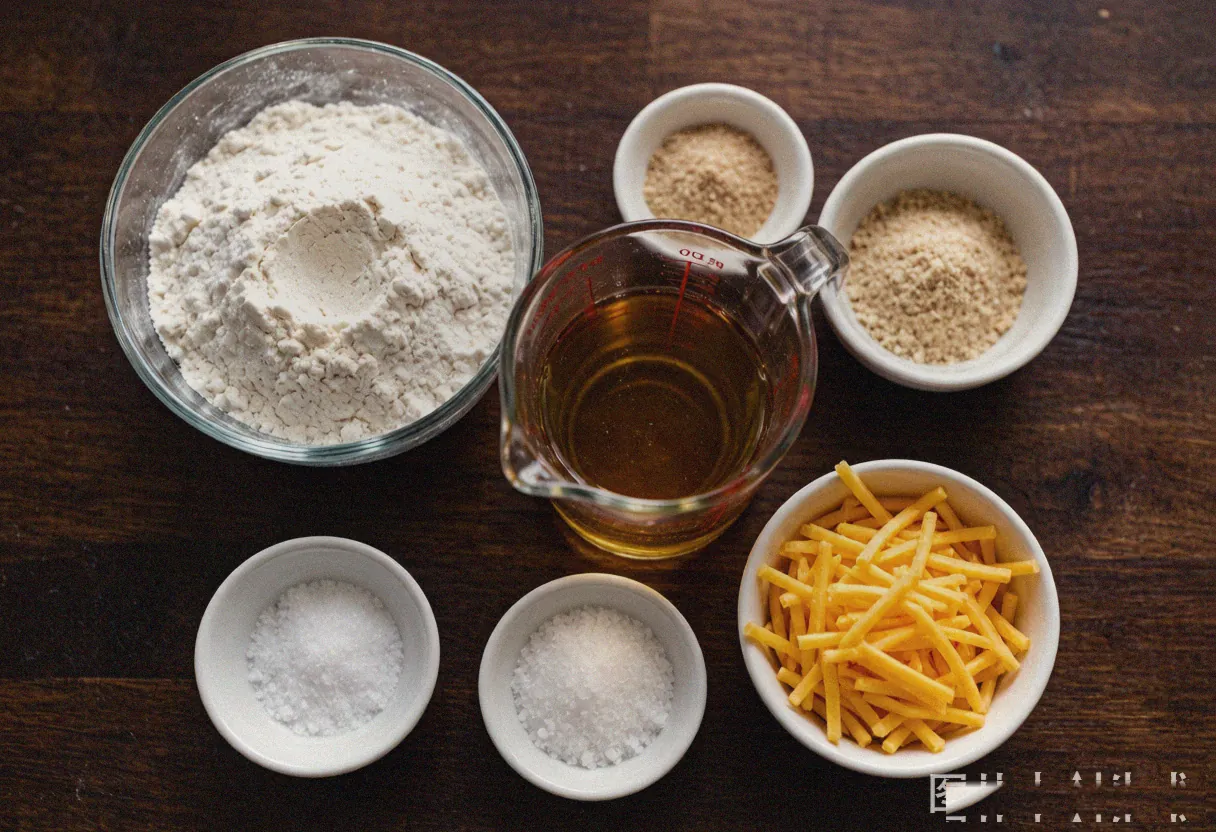
Step 1: Load the Basic Ingredients: Add ingredients to the bread machine pan in the recommended order: warm water, melted butter, flour, sugar, salt, garlic powder, and rosemary in opposite corners, and finally the yeast in a small well in the center of the flour. Do not add the cheese yet — cheese added too early interferes with gluten development and can prevent the dough from forming proper structure.
Step 2: Start the Cycle and Add Cheese During Kneading: Select the "Basic White" cycle, loaf size 1.5 pounds, crust color "Medium" or "Dark." Press start. Let the machine knead for about 5 minutes — the dough should have come together into a recognizable ball. Open the lid and sprinkle the grated cheddar evenly across the top of the dough. Close the lid and let the machine continue kneading. Over the next 2–3 minutes, the paddle will work the cheese shreds into the dough, and what was a white dough ball will take on a pale yellow tint as the cheese distributes. Adding cheese after the initial gluten development allows the dough structure to form first, then the cheese is folded in without compromising that structure.
Step 3: Let the Dough Rise: Close the lid and do not open it again until it's time to add the Parmesan. The machine will complete kneading and then begin the rise cycle. The dough will roughly double in volume, and its color will shift from pale yellow to a richer golden tint as the cheese oils begin to disperse into the dough. The machine will automatically punch down and begin the second rise. The entire fermentation takes about 1–1½ hours.
Step 4: Top with Parmesan Before Baking: Just before the bake cycle begins — this is typically signaled by a change in the machine's sound or a brief pause after the final rise — open the lid and sprinkle the grated Parmesan evenly over the top of the risen dough. Unlike cheddar, Parmesan doesn't melt completely in the oven. It forms a thin, golden, crispy crust that adds a salty, umami punch to every slice. Close the lid and let the machine complete the bake cycle, which lasts about 50–60 minutes.
Step 5: Cool Thoroughly Before Slicing: When the machine beeps, remove the pan and turn out the loaf onto a wire rack. Cheese bread needs more cooling time than plain bread — at least 45 minutes. The cheese inside the loaf is still semi-molten when the bread emerges, and cutting into it immediately will cause the cheese to smear across the knife, the crumb to compress, and the slice to tear rather than cut cleanly. When properly cooled, each slice shows a golden-tinged crumb dotted with visible cheddar flecks, and the Parmesan-crusted top adds a savory crunch.