Bread Machine Cheese Bread
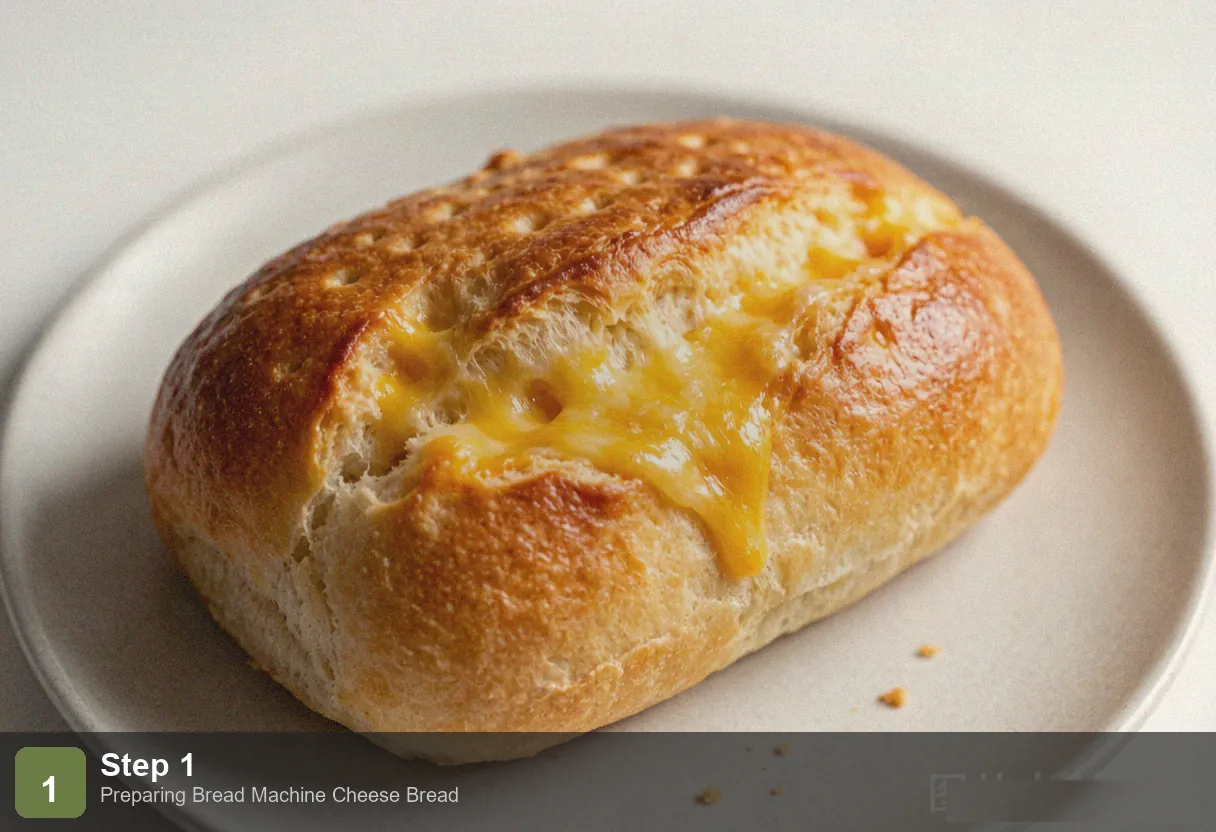
Plain white bread is a blank canvas. But some days, you want the canvas itself to be the masterpiece. This bread machine cheese bread kneads sharp cheddar directly into the dough, so every slice is studded with golden cheese flecks and every bite carries that savory, nutty cheddar flavor. A sprinkle of Parmesan on top before baking creates a crisp, salty crust that crackles when you cut into it.
The bread machine handles the entire process — from mixing the dough to distributing the cheese to baking the loaf — in a single three-hour cycle. Your main job is grating the cheese yourself, which turns out to be the single most important decision you’ll make.
Why You’ll Love This Recipe
- Cheese in every bite, not just on top. Unlike “cheese-topped” breads where the cheese sits on the surface and burns, this recipe incorporates the cheddar into the dough during kneading. The shreds distribute throughout the crumb, melting during the bake into savory pockets that leave the bread tender, golden-hued, and fragrant. When you pull a slice apart warm, you’ll see the faint strands where cheese has melted and re-set within the crumb.
- Two cheeses, two different jobs. Sharp cheddar provides the main flavor and melts into the body of the bread. Parmesan, sprinkled on top before the bake cycle, creates a thin, crisp, intensely savory crust. The cheddar works from the inside out; the Parmesan works from the outside in. Together they produce a loaf with cheese flavor in every dimension.
- The machine does everything — one button, three hours. No separate cheese-adding step, no shaping, no oven. Load the basic ingredients, start the cycle, open the lid once to add the cheese during kneading, close it, and walk away. Three hours later: hot cheese bread.
- The ultimate soup companion. A thick slice of warm cheese bread dunked into tomato soup, French onion soup, or butternut squash soup transforms a simple meal into the kind of lunch you’d remember. It also makes extraordinary grilled cheese sandwiches — the bread is already cheesy, so the sandwich becomes a double-cheese situation.
Ingredients You’ll Need
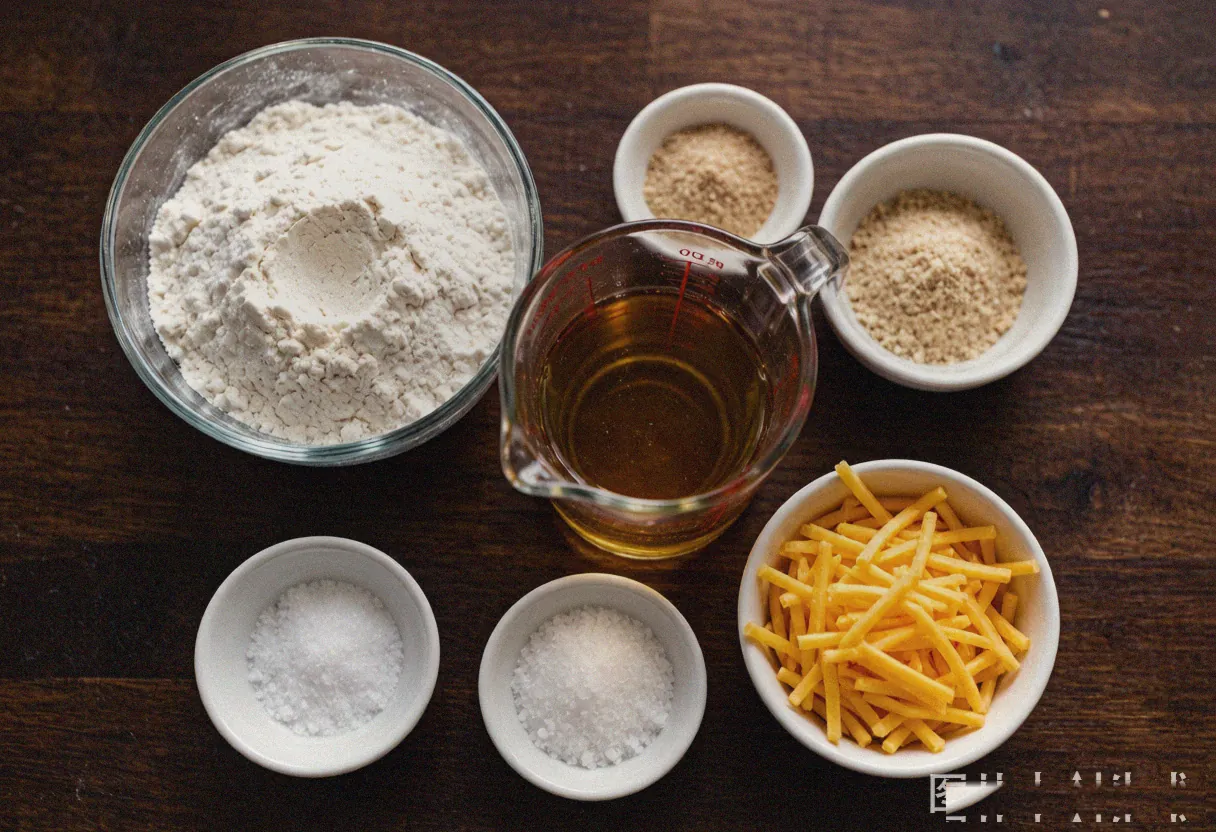
- 1 cup water (240ml, warm at 95–100°F / 35–38°C)
- 3 cups bread flour (about 375g)
- 1½ cups sharp cheddar cheese, freshly grated (about 170g)
- ⅓ cup Parmesan cheese, freshly grated (about 35g)
- 2 tablespoons unsalted butter, melted
- 1 tablespoon granulated sugar
- 1½ teaspoons salt
- 2 teaspoons active dry yeast
- 1 teaspoon garlic powder (optional, boosts savoriness)
- ½ teaspoon dried rosemary (optional)
Grate your own cheese — do not use pre-shredded. Pre-shredded cheese is coated in cellulose powder and anti-caking agents that prevent the shreds from clumping in the bag. That same coating prevents the cheese from melting properly in the bread. You’ll end up with distinct, waxy shreds suspended in the crumb rather than cheese that’s melted and fused with the dough. A block of sharp cheddar, a box grater, and 60 seconds of effort produce dramatically better results. Sharp cheddar (aged 9–12 months) is the ideal choice — mild cheddar (2–3 months) loses almost all its flavor during baking.
How to Make Bread Machine Cheese Bread
Step 1: Load the Basic Ingredients
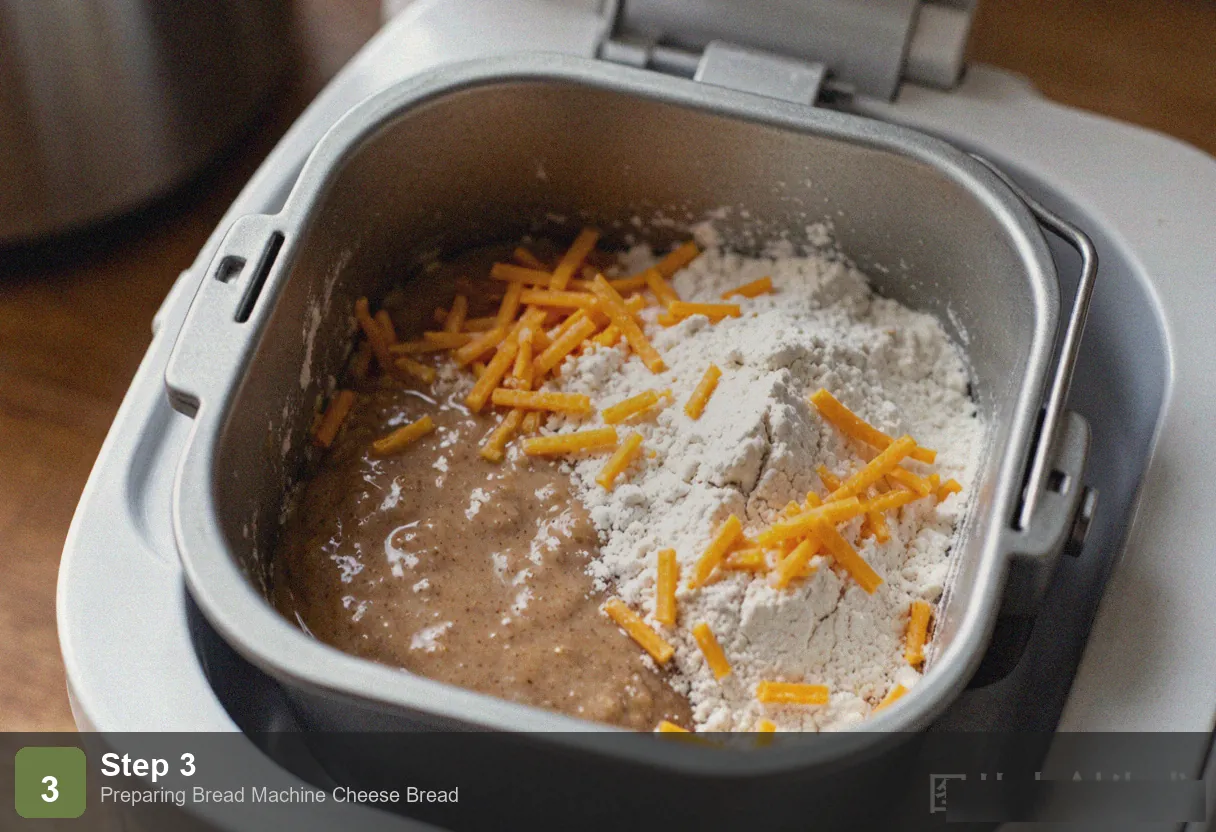
Add ingredients to the bread machine pan in the recommended order: warm water, melted butter, flour, sugar, salt, garlic powder, and rosemary in opposite corners, and finally the yeast in a small well in the center of the flour. Do not add the cheese yet — cheese added too early interferes with gluten development and can prevent the dough from forming proper structure.
Step 2: Start the Cycle and Add Cheese During Kneading
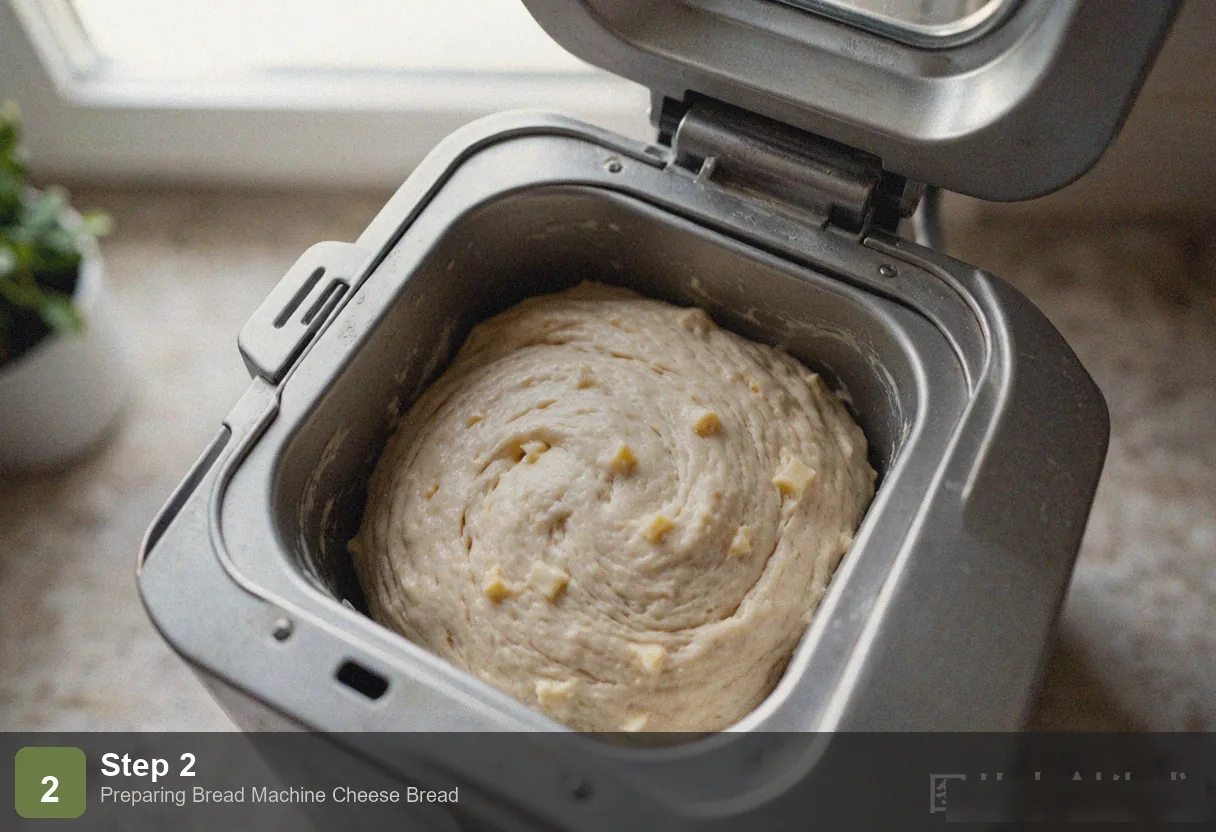
Select the “Basic White” cycle, loaf size 1.5 pounds, crust color “Medium” or “Dark.” Press start. Let the machine knead for about 5 minutes — the dough should have come together into a recognizable ball. Open the lid and sprinkle the grated cheddar evenly across the top of the dough. Close the lid and let the machine continue kneading. Over the next 2–3 minutes, the paddle will work the cheese shreds into the dough, and what was a white dough ball will take on a pale yellow tint as the cheese distributes. Adding cheese after the initial gluten development allows the dough structure to form first, then the cheese is folded in without compromising that structure.
Step 3: Let the Dough Rise
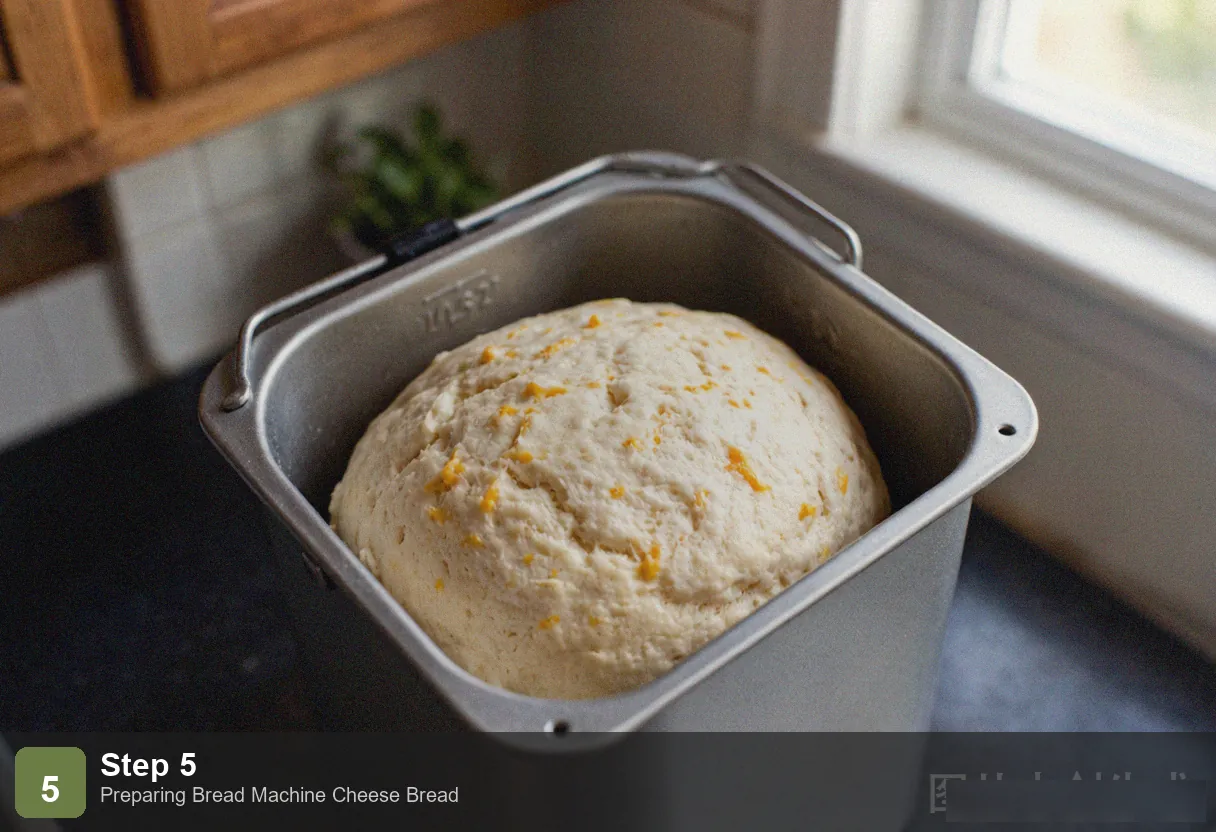
Close the lid and do not open it again until it’s time to add the Parmesan. The machine will complete kneading and then begin the rise cycle. The dough will roughly double in volume, and its color will shift from pale yellow to a richer golden tint as the cheese oils begin to disperse into the dough. The machine will automatically punch down and begin the second rise. The entire fermentation takes about 1–1½ hours.
Step 4: Top with Parmesan Before Baking
Just before the bake cycle begins — this is typically signaled by a change in the machine’s sound or a brief pause after the final rise — open the lid and sprinkle the grated Parmesan evenly over the top of the risen dough. Unlike cheddar, Parmesan doesn’t melt completely in the oven. It forms a thin, golden, crispy crust that adds a salty, umami punch to every slice. Close the lid and let the machine complete the bake cycle, which lasts about 50–60 minutes.
Step 5: Cool Thoroughly Before Slicing
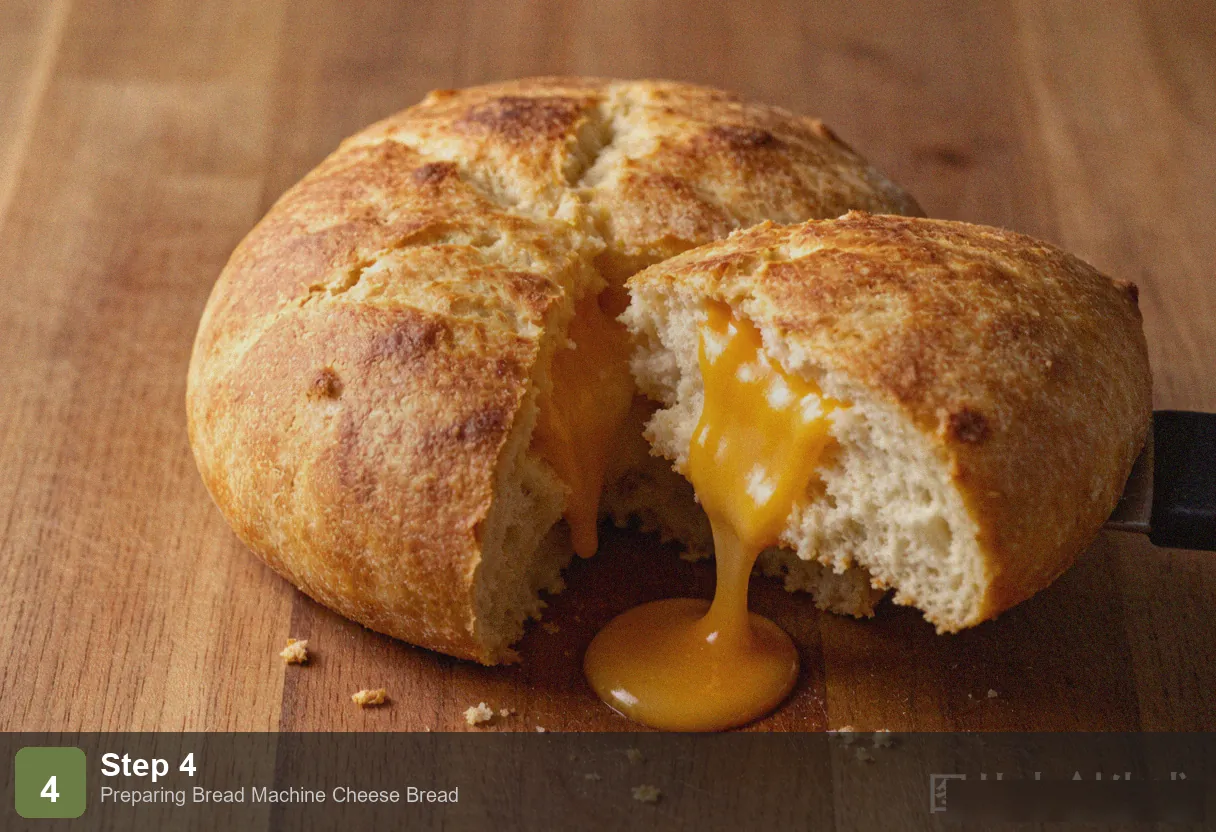
When the machine beeps, remove the pan and turn out the loaf onto a wire rack. Cheese bread needs more cooling time than plain bread — at least 45 minutes. The cheese inside the loaf is still semi-molten when the bread emerges, and cutting into it immediately will cause the cheese to smear across the knife, the crumb to compress, and the slice to tear rather than cut cleanly. When properly cooled, each slice shows a golden-tinged crumb dotted with visible cheddar flecks, and the Parmesan-crusted top adds a savory crunch.
Pro Tips
Sharp cheddar is the right choice — mild will disappear. The flavor compounds that make sharp cheddar taste like cheddar survive baking. Mild cheddar, aged only 2–3 months, lacks those developed flavor compounds and tastes essentially neutral after 50 minutes at baking temperature. Sharp (9–12 months) holds its own. Extra sharp (18 months) is even better if you want an aggressive cheese presence. Avoid aged cheddar beyond 3 years — it’s too dry and crystalline to melt properly.
Add cheese after the dough forms, not before. Cheese is mostly fat, and fat is gluten’s enemy. If you add all the cheese at the beginning with the flour, the fat coats the flour proteins before they have a chance to link up, resulting in a weak, crumbly loaf with poor rise. Adding the cheese after 5 minutes of kneading allows the gluten network to establish itself first. The cheese is then folded into an existing structure rather than interfering with its formation.
The kneading paddle will break up some of the cheese shreds — that’s fine. Don’t be alarmed if the long shreds you added turn into smaller fragments during kneading. This actually produces better distribution — smaller cheese particles mean more even cheese flavor throughout the crumb. If you want a few visible pockets of melted cheese, reserve a small handful of cheddar shreds and press them into the top of the dough just before the final rise (after the machine’s punch-down) rather than adding them during kneading.
Frequently Asked Questions
Can I use a different cheese?
Yes, with some guidance. Good substitutes: Gruyère (melts beautifully, nutty and complex), Monterey Jack (mild and creamy, good if you prefer subtle cheese flavor), or Pepper Jack (contains chili flakes for a spicy version). Avoid fresh mozzarella or other high-moisture cheeses — they’ll release too much water during baking and make the bread gummy. Hard aged cheeses like aged Gouda or Comté also work well but are more expensive.
Why is there a hole in the middle of my bread?
Occasionally, the steam released by melting cheese can create a large bubble during baking. Three ways to reduce this: ensure the cheese is completely and evenly distributed during kneading, deflate the dough more thoroughly during the machine’s punch-down phase by opening the lid and pressing it down yourself (if your machine allows pausing), or simply accept it — it’s cosmetic only and doesn’t affect flavor.
Can I make this a garlic cheese bread?
Yes — the optional garlic powder in the recipe already provides a subtle garlic note, but you can intensify it. Increase the garlic powder to 2 teaspoons and add 1 teaspoon of dried parsley. For an even more aggressive garlic version, brush the hot loaf with garlic butter immediately after baking: melt 2 tablespoons of butter with 2 minced garlic cloves, brush over the entire surface, and return to the pan in the machine (heat off) for 3 minutes to let the garlic infuse.
How should I store cheese bread?
Cheese bread has a higher fat content than plain bread, which means it oxidizes and stales slightly faster. Store at room temperature in a sealed bag for up to 2 days. Slice and freeze for up to 1 month. To reheat, place slices in a 325°F (160°C) oven for 5 minutes. Do not refrigerate — the cold makes both the bread starch and the cheese fat seize up, producing a dry, waxy texture that doesn’t recover.
More Bread Machine Recipes
- Bread Machine White Bread — The classic everyday loaf
- Bread Machine French Bread — Crusty and classic
- Bread Machine Brioche — Rich, buttery French bread
- Bread Machine Dinner Rolls — Soft pull-apart rolls
Nutrition (per slice, about 10 slices)
| Nutrient | Amount | % Daily Value |
|---|---|---|
| Calories | 235 kcal | 12% |
| Protein | 9g | 18% |
| Fat | 10g | 13% |
| Carbohydrates | 27g | 10% |
| Fiber | 1g | 4% |
| Calcium | 150mg | 12% |
| Sodium | 380mg | 17% |
| Iron | 1.5mg | 8% |
Bread Machine Cheese Bread - Savory Cheddar Loaf
Ingredients
Method
- Step 1: Load the Basic Ingredients: Add ingredients to the bread machine pan in the recommended order: warm water, melted butter, flour, sugar, salt, garlic powder, and rosemary in opposite corners, and finally the yeast in a small well in the center of the flour. Do not add the cheese yet — cheese added too early interferes with gluten development and can prevent the dough from forming proper structure.
- Step 2: Start the Cycle and Add Cheese During Kneading: Select the "Basic White" cycle, loaf size 1.5 pounds, crust color "Medium" or "Dark." Press start. Let the machine knead for about 5 minutes — the dough should have come together into a recognizable ball. Open the lid and sprinkle the grated cheddar evenly across the top of the dough. Close the lid and let the machine continue kneading. Over the next 2–3 minutes, the paddle will work the cheese shreds into the dough, and what was a white dough ball will take on a pale yellow tint as the cheese distributes. Adding cheese after the initial gluten development allows the dough structure to form first, then the cheese is folded in without compromising that structure.
- Step 3: Let the Dough Rise: Close the lid and do not open it again until it's time to add the Parmesan. The machine will complete kneading and then begin the rise cycle. The dough will roughly double in volume, and its color will shift from pale yellow to a richer golden tint as the cheese oils begin to disperse into the dough. The machine will automatically punch down and begin the second rise. The entire fermentation takes about 1–1½ hours.
- Step 4: Top with Parmesan Before Baking: Just before the bake cycle begins — this is typically signaled by a change in the machine's sound or a brief pause after the final rise — open the lid and sprinkle the grated Parmesan evenly over the top of the risen dough. Unlike cheddar, Parmesan doesn't melt completely in the oven. It forms a thin, golden, crispy crust that adds a salty, umami punch to every slice. Close the lid and let the machine complete the bake cycle, which lasts about 50–60 minutes.
- Step 5: Cool Thoroughly Before Slicing: When the machine beeps, remove the pan and turn out the loaf onto a wire rack. Cheese bread needs more cooling time than plain bread — at least 45 minutes. The cheese inside the loaf is still semi-molten when the bread emerges, and cutting into it immediately will cause the cheese to smear across the knife, the crumb to compress, and the slice to tear rather than cut cleanly. When properly cooled, each slice shows a golden-tinged crumb dotted with visible cheddar flecks, and the Parmesan-crusted top adds a savory crunch.