Step 1: Sauté Onion and Garlic: Heat 2 tablespoons of olive oil in a deep skillet or saucepan over medium heat. Add the finely diced onion and cook for 4–5 minutes until translucent and just starting to turn golden at the edges. Add the minced garlic and cook for 30 seconds — no longer. Garlic burns quickly and burnt garlic tastes acrid, which will ruin the entire batch of sauce. The moment it turns fragrant and pale gold, move on.
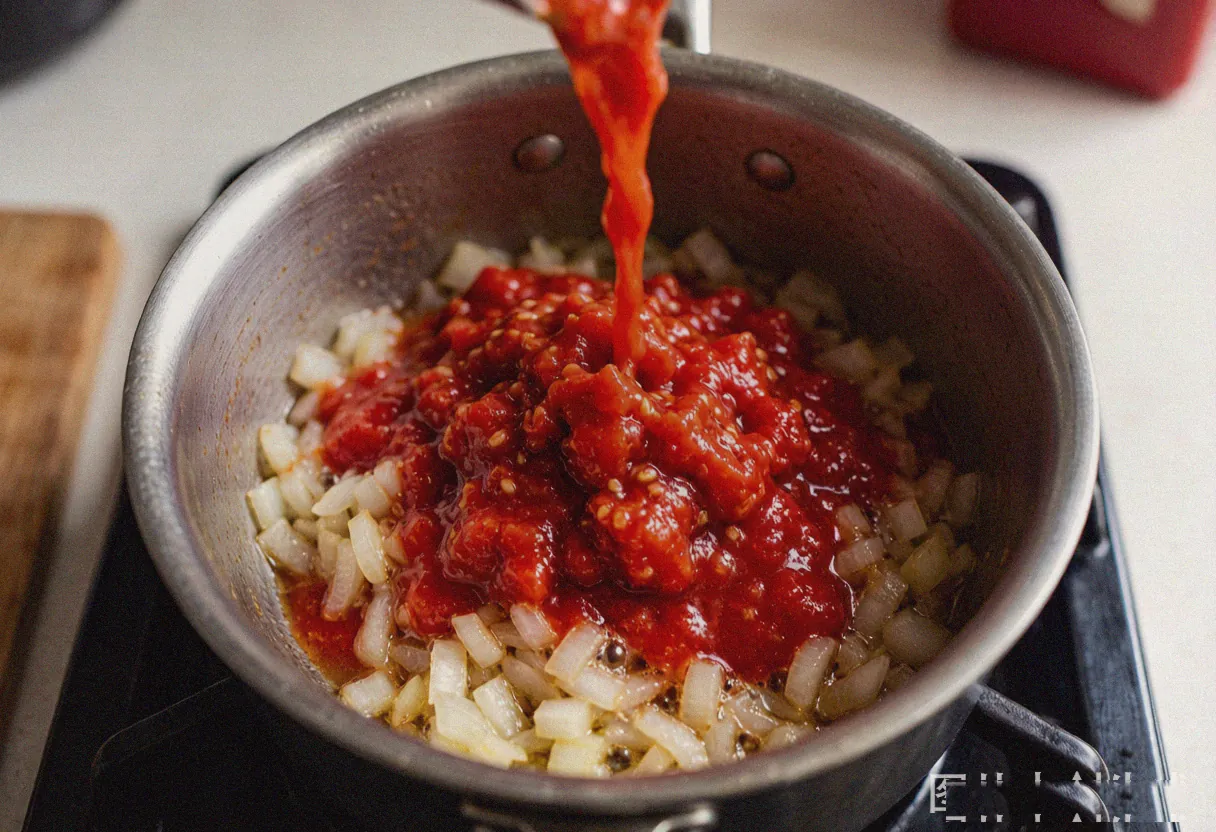
Step 2: Bloom the Tomato Paste: Add the can of tomato paste to the pan, right on top of the onions and garlic. Stir continuously for 1–2 minutes with a wooden spoon. The paste will darken from bright red to deep burgundy, and your kitchen will fill with a rich, caramelized tomato aroma. This step — called blooming the paste — caramelizes the natural tomato sugars and builds a much deeper flavor than simply stirring paste into cold liquid. Skipping it produces a sauce that tastes flat and tinny.
Step 3: Add Crushed Tomatoes and Simmer: Pour in both cans of crushed tomatoes, add ½ cup of water, the dried oregano, black pepper, and red pepper flakes. Stir until everything is evenly combined. Bring to a boil, then reduce the heat to medium-low. Simmer uncovered — do not cover the pan — for 15–20 minutes, stirring occasionally to prevent sticking. Leaving the lid off allows water to evaporate, which concentrates the tomato flavor and naturally thickens the sauce.
Step 4: Check and Balance Acidity: After 15 minutes, taste the sauce. Depending on the brand of tomatoes and the time of year, canned tomatoes can range from pleasantly tangy to sharply acidic. If the sauce tastes too tart, add 1 teaspoon of sugar and stir it in — this isn't about making the sauce sweet; it's about rounding off the sharp edges. Summer tomatoes in season rarely need sugar; winter canned tomatoes often benefit from it. Simmer for another 5 minutes after adding the sugar to let it fully dissolve and integrate.
Step 5: Finish with Fresh Basil: Remove the pan from the heat. Tear the basil leaves directly into the sauce and stir to distribute. Fresh basil must go in at the very end — prolonged heat destroys its volatile aromatic compounds, turning fragrant leaves into tasteless green flecks. Cover the pan and let it sit for 2 minutes off the heat so the basil's fragrance infuses the sauce. If you prefer a smoother texture, pulse with an immersion blender for 10 seconds, but I recommend leaving some texture — those visible flecks of tomato and herb are the badge of a homemade sauce.