Why You’ll Love This Low Sodium Lasagna
Lasagna is the centerpiece of parties and family dinners — but a single restaurant serving often tops 1,000mg of sodium. This low sodium lasagna uses no-salt tomato sauce, plenty of spinach, and a measured amount of ricotta and mozzarella, baked in golden, stretchy layers at about 260mg of sodium per serving — under a third of the restaurant version, and just as satisfying for cheese lovers.
- No compromise on the cheese pull. A double layer of ricotta and mozzarella bakes up golden and bubbling — texture-wise, indistinguishable from the restaurant version.
- Hidden vegetables. The spinach layer blends into the cheese, so kids eat a serving of greens without noticing.
- One bake, three days of dinners. Make one big pan cut into 8, refrigerate or freeze, and reheat on a weeknight.
- A third of the sodium. Flavor comes from no-salt tomato sauce and natural cheese, not the shaker.
Ingredients
- 9–12 no-boil lasagna noodles
- 3 cups no-salt-added tomato sauce (or homemade low sodium spaghetti sauce)
- 1 can (400g) no-salt-added diced tomatoes
- 2 cups ricotta cheese (about 480g)
- 2 cups shredded mozzarella (about 220g)
- 1/2 cup grated Parmesan (for garnish, small amount)
- 2 cups fresh spinach (chopped)
- 1 egg
- 2 cloves garlic (minced)
- 1 teaspoon dried oregano
- 1/2 teaspoon black pepper
- 1 tablespoon olive oil
- 0 salt — the whole point of the recipe
- Optional: a pinch of salt substitute (potassium chloride) — skip if you have kidney disease or a potassium-restricted diet.
Why no-salt tomato sauce? Store-bought tomato sauce often carries 400–500mg of sodium per 1/2 cup, and a lasagna uses 3 cups — that alone maxes out the day. Choose a “no salt added” version (under 30mg per 1/2 cup) and let the tomato’s natural sweet-tart flavor plus oregano and garlic carry it. Want a saltier signal? Finish with a little potassium-chloride salt substitute; skip it on a renal diet.
Instructions
Step 1: Mix the Ricotta Layer
Combine the ricotta with the egg, minced garlic, oregano, black pepper, and chopped spinach. The egg helps the cheese layer set firm so it doesn’t slide apart after baking.
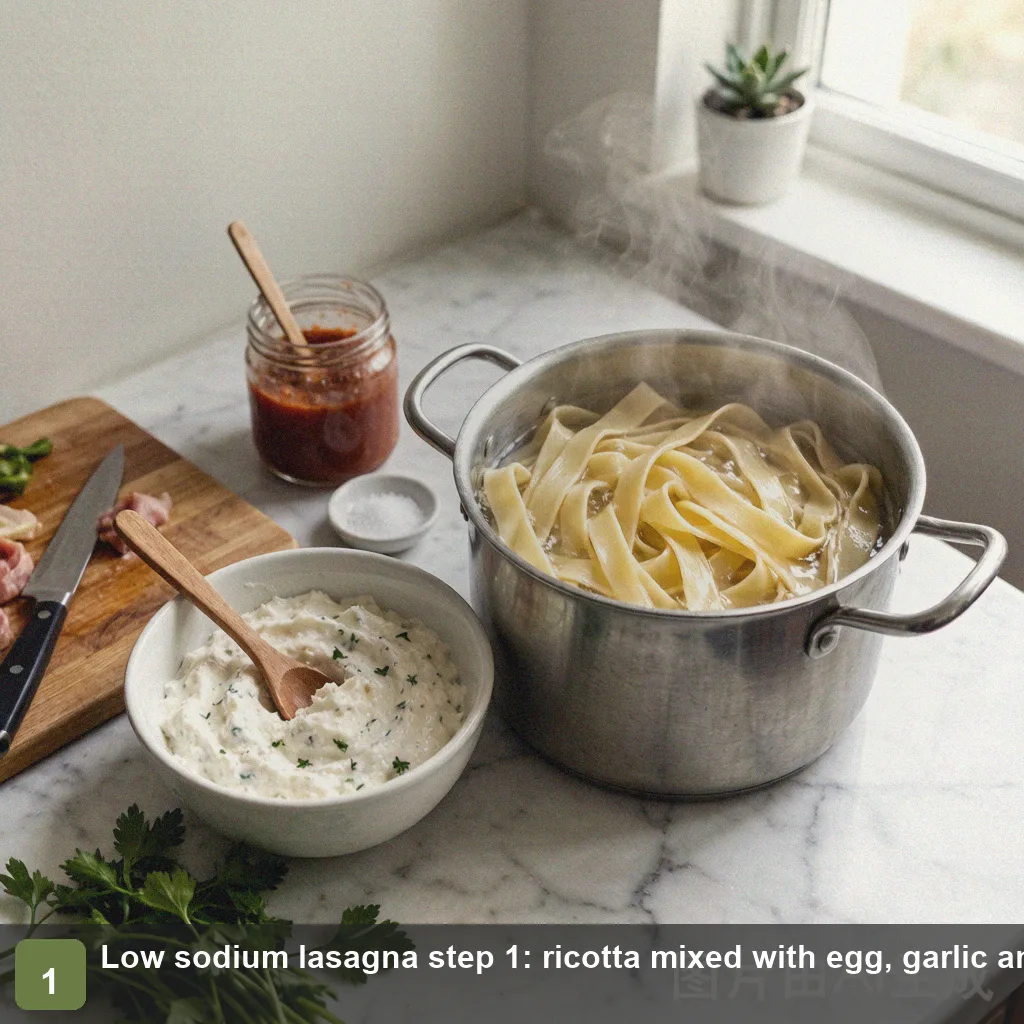
Step 2: Simmer the Tomato Base
Sauté the garlic in olive oil over low heat for 30 seconds, then add the no-salt diced tomatoes and tomato sauce with black pepper and simmer 5 minutes until slightly thickened.
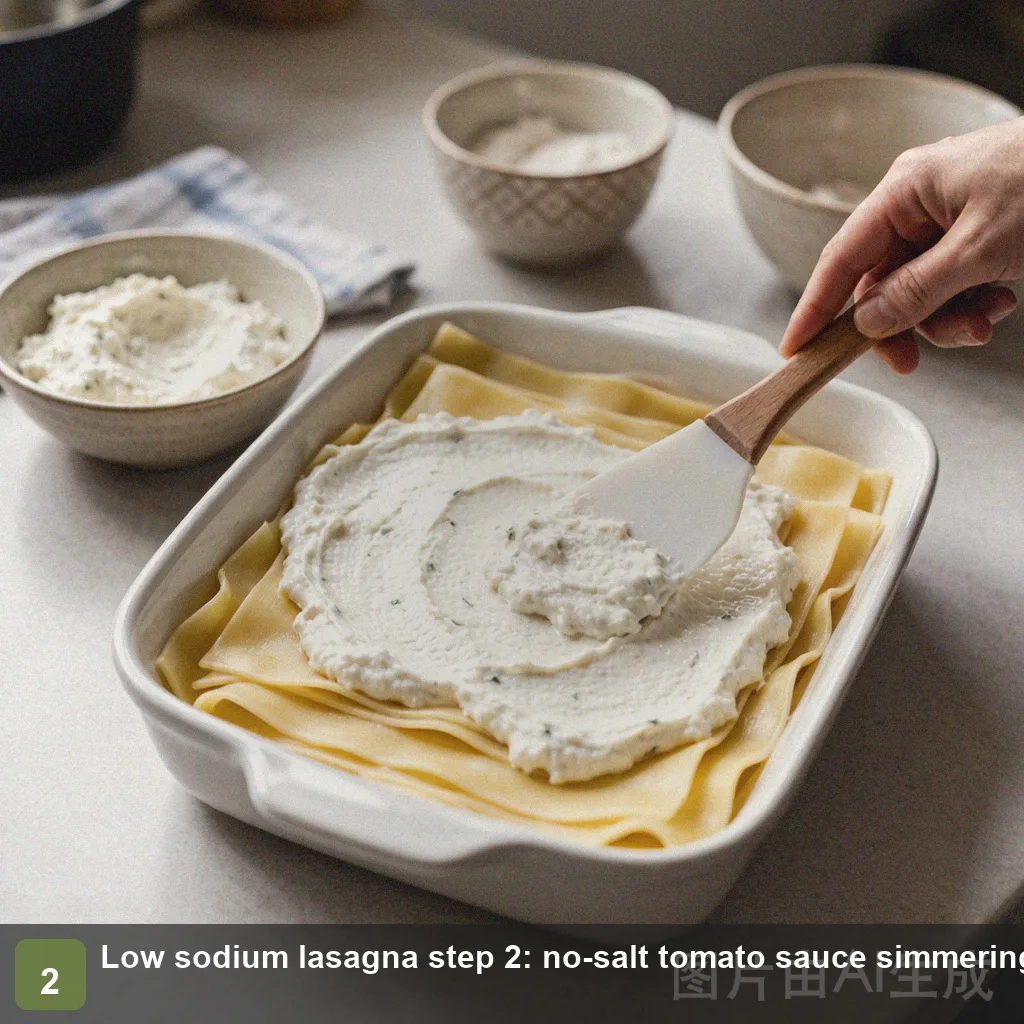
Step 3: Assemble the Layers
Spread a layer of sauce on the bottom of a baking dish, lay down 3 noodles, spread half the ricotta mixture, and sprinkle a third of the mozzarella. Repeat once. Finish with noodles, sauce, the remaining mozzarella, and a Parmesan garnish.
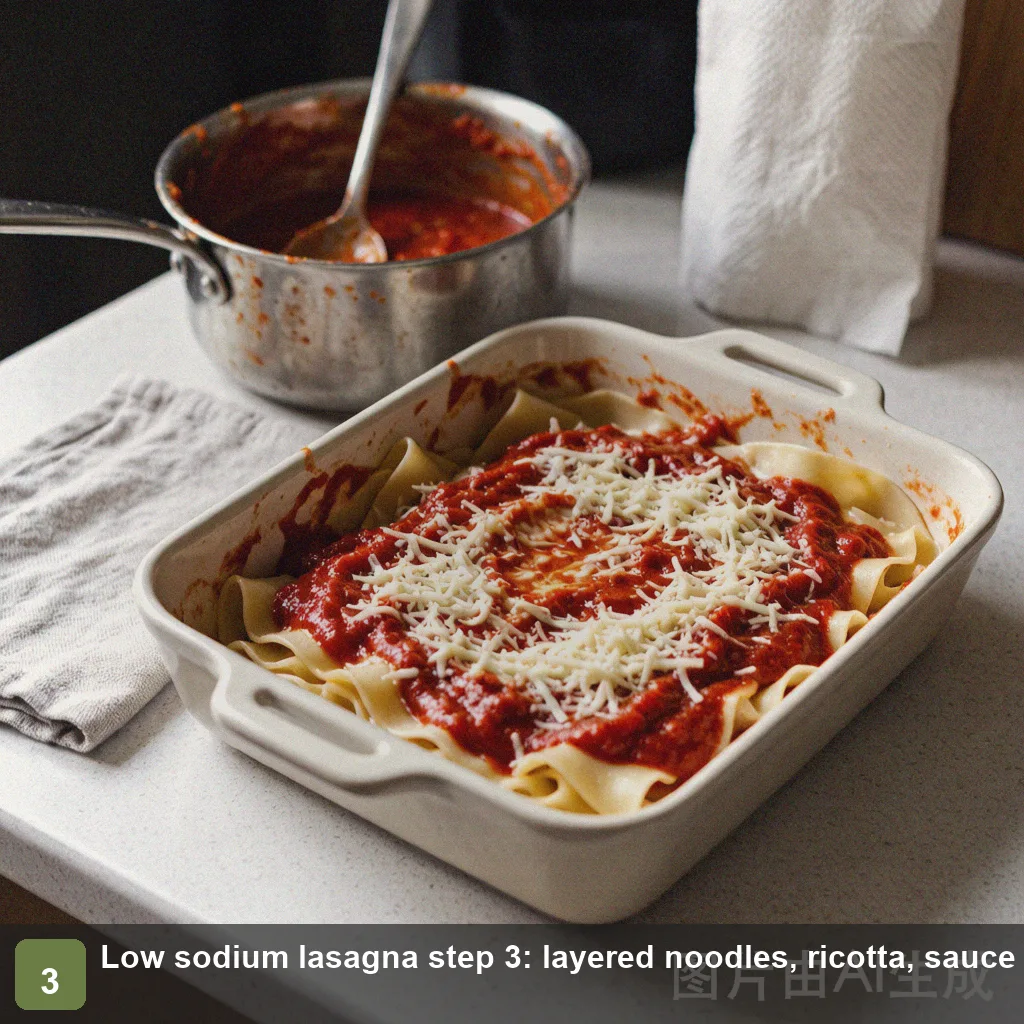
Step 4: Bake
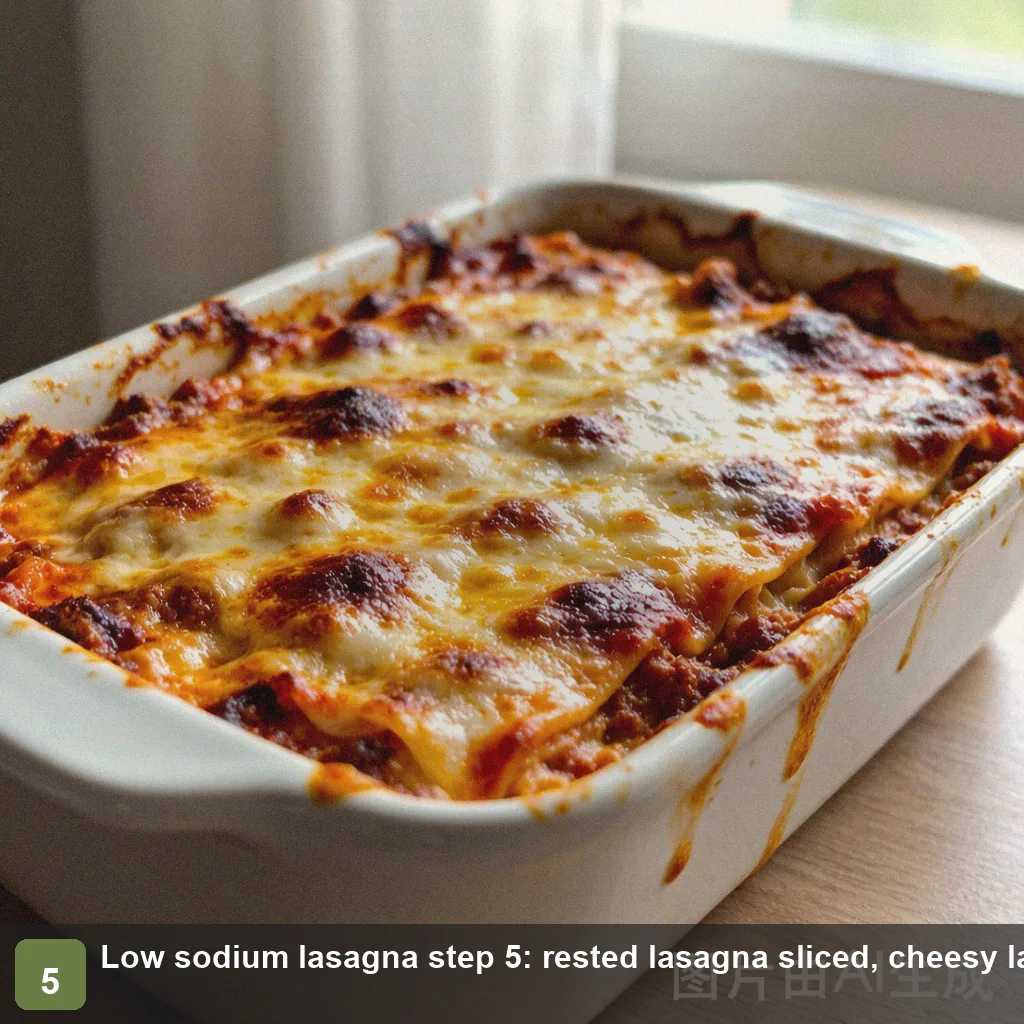
Cover with foil and bake at 190°C (375°F) for 30 minutes, then remove the foil and bake another 15 minutes until the top is golden and bubbling.
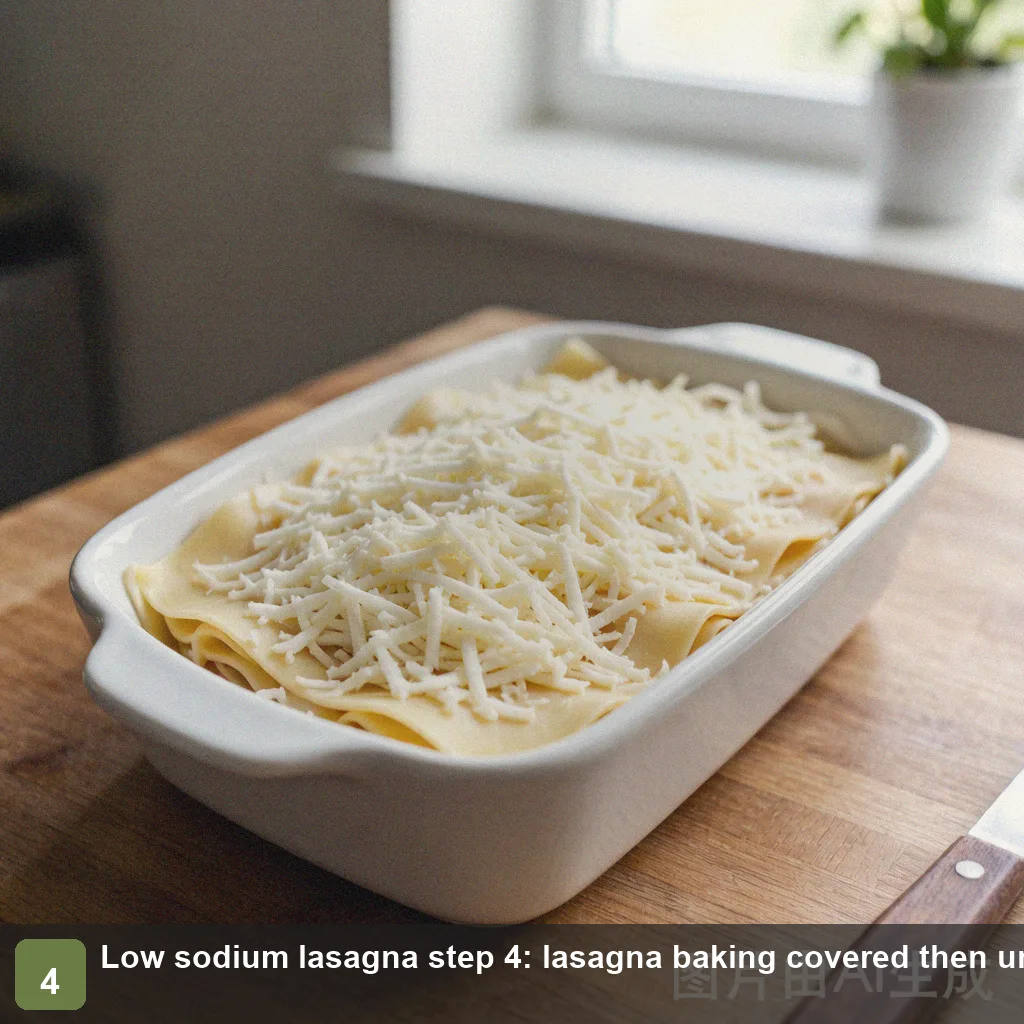
Step 5: Rest and Slice
Let it rest 10 minutes out of the oven before slicing (cutting it hot makes it collapse). Cut into 8 pieces and serve.
Pro Tips for the Best Results
The 10-minute rest is non-negotiable. Straight from the oven the inside is still liquid, and cutting immediately makes it slump. Resting lets the ricotta layer and sauce set so the slices come out clean.
Soften no-boil noodles a touch. If your no-boil noodles still bake up firm, rinse them under water for 30 seconds before layering for a softer result.
Squeeze the spinach dry. Always wring out frozen or washed spinach — extra water thins the sauce and makes the layers slide during baking.
Don’t let the sauce run thin. Simmer the base until it coats a spoon; too watery and the finished lasagna turns soupy. The vegetables provide enough moisture on their own.
Freezer-friendly by the portion. Freeze the assembled raw lasagna and bake it straight from frozen (add 15 minutes), or slice and freeze the cooked version for easy reheating — a lifesaver for sodium-conscious families.
Storage and Reheating
Store leftovers in an airtight container in the fridge for up to 4 days. Reheat single slices in the microwave or oven. To freeze, slice and wrap portions individually for up to 3 months; thaw in the fridge and reheat gently. This low sodium lasagna holds its layers beautifully, making it a reliable make-ahead meal.
Frequently Asked Questions
Can I use regular noodles instead of no-boil?
Yes. Boil regular noodles 5 minutes (al dente, not fully cooked) before layering, or they won’t soften enough in the bake. Everything else stays the same.
Can I use different vegetables?
Absolutely. Zucchini slices, roasted peppers, and mushrooms all layer well. The rule: use low-moisture vegetables so they don’t weep water and ruin the layers.
Is this sodium-free?
No. Cheese and tomato carry natural sodium, landing this at about 260mg per serving — “low sodium,” not “no sodium,” and safe for most sodium-conscious eaters.
How do I make it vegetarian or vegan?
For vegetarian it already qualifies. For vegan, drop the egg from the ricotta and use a plant-based cheese substitute; everything else stays the same and it’s still low sodium.
Does it fit a heart-healthy diet?
Yes. At about 260mg sodium per serving it fits inside a DASH plan’s daily target, and the spinach adds fiber and nutrients to a classic comfort dish.
Conclusion
This low sodium lasagna proves you don’t have to give up cheesy, layered comfort to eat heart-healthy. With no-salt tomato sauce, plenty of spinach, and zero added salt, you get a golden, bubbling bake at about 260mg of sodium. Keep the sauce thick, squeeze the spinach dry, and let it rest before you slice.
More Low Sodium Recipes to Try
Build a low-sodium table with these:
- Low Sodium Spaghetti Sauce — the sauce base for this recipe
- Low Sodium Baked Chicken Breast — a lean main to serve alongside
- Low Sodium One Pot Meal — a faster weeknight option
- Low Sodium Chili — a spicier tomato-based dish
- Low Sodium Complete Collection — every heart-healthy recipe in one place
Nutrition Information (Per Serving, 1 of 8)
| Item | Amount | % Daily Value* |
|---|---|---|
| Calories | 340 kcal | 17% |
| Protein | 20 g | 40% |
| Fat | 15 g | 19% |
| Carbohydrates | 30 g | 11% |
| Fiber | 3 g | 11% |
| Sodium | 260 mg | 11% |
*Daily values are based on a 2,000 kcal diet. Sodium is an estimate for no-added-salt preparation (USDA FoodData Central: ricotta about 85mg/100g, mozzarella about 210mg/100g, Parmesan about 1,529mg/100g used only as a light garnish, no-salt tomato sauce under 30mg/half cup natural sodium) — roughly one-third of a restaurant lasagna.