Why You’ll Love This Air Fryer Low Sodium Salmon
Salmon is one of nature’s best sources of omega-3 fatty acids — great for your heart and brain. The problem is that smoked and cured salmon hides 600–1000mg of sodium per serving in a brine you never asked for. This air fryer low sodium salmon uses lemon and fresh dill for brightness, adds zero salt, and keeps sodium under 80mg per serving. It’s on the table in 10 minutes.
- Ready in 10 minutes. Salmon is thin and delicate. The air fryer’s high, circulating heat locks in the oils faster than a skillet, with no splatter and no babysitting.
- Under 80mg sodium per serving. Zero added salt. A comparable smoked salmon portion runs 600mg+ — this is roughly one-eighth of that.
- Full omega-3 credit. One fillet covers most of your daily omega-3 needs, making it a genuinely “positive” ingredient for cardiovascular health.
- Lemon and dill replace the salt. Citrus acidity plus herbal fragrance infuse the fish in the hot air. You get plenty of flavor without leaning on sodium.
- Pairs with almost anything. Serve it over brown rice, beside a low-sodium potato, or on top of a crisp salad — the mild flavor adapts to whatever else is on the plate.
Ingredients You’ll Need
- 2 salmon fillets (about 140g each, skinless and boneless) — uniform thickness helps timing; aim for roughly 2.5cm at the thickest point.
- 2 tablespoons olive oil — the fat carries the herb flavor and keeps the flesh from drying; extra-virgin adds the most aroma.
- 1 tablespoon fresh dill, chopped (or 1 teaspoon dried dill) — the signature note of this dish.
- 1/2 lemon (sliced, plus juice for finishing) — acid brightens and “de-fishes” without salt.
- 1/2 teaspoon black pepper — our only seasoning besides the herbs.
- 1 clove garlic, grated (optional) — adds a savory base note.
- 0 salt — this is the whole point of the recipe.
- Optional: 1/4 teaspoon salt substitute (potassium chloride) — avoid if you have kidney disease or are on a potassium-restricted diet.
Fresh, not smoked. Smoked salmon soaks in a salt brine during curing, with natural sodium around 600–1000mg per 100g. Fresh salmon contains only 50–60mg of natural sodium per 100g. If you’re watching sodium, always buy fresh raw fillets and cook them yourself — that’s the only way the number stays in your control.
How to Make Air Fryer Low Sodium Salmon
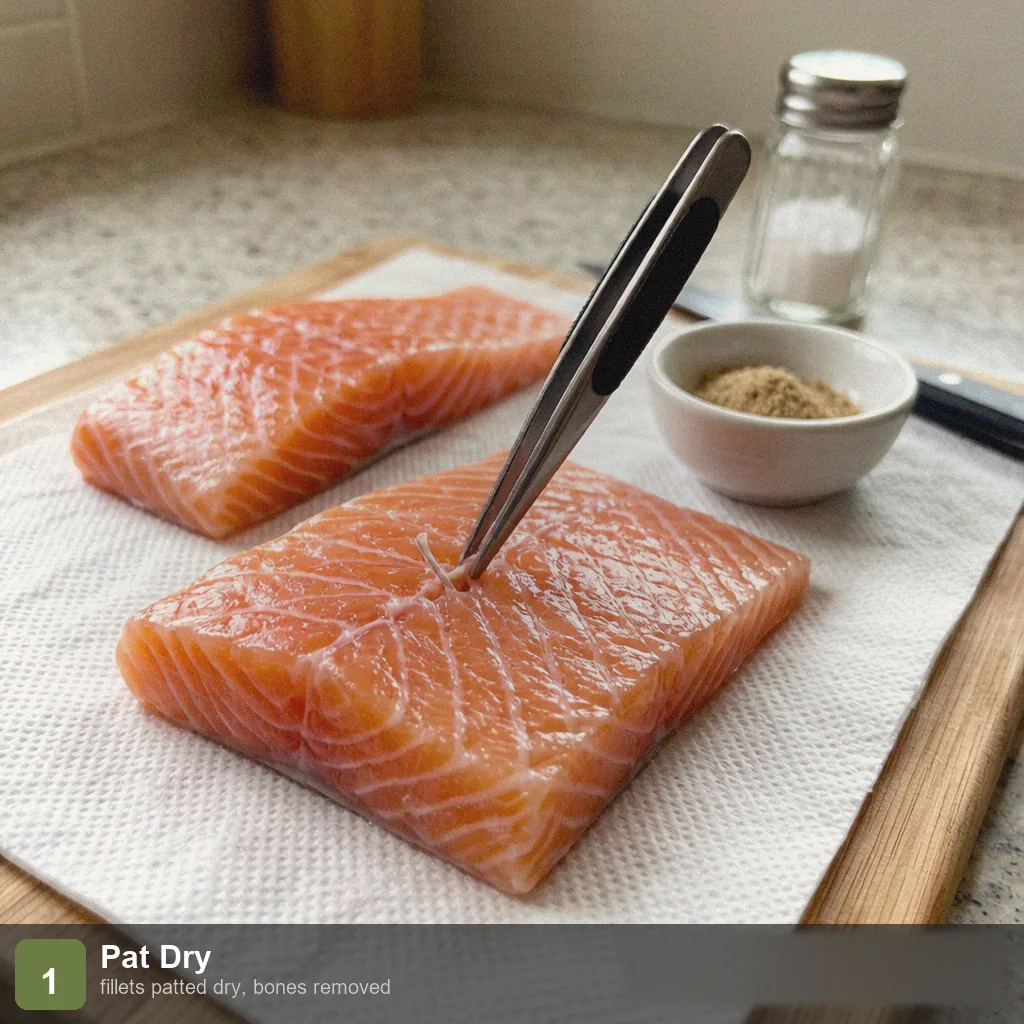
Step 1: Pat the Fillets Dry
Use paper towels to pat the salmon completely dry on both sides. Dry surfaces crisp better and help the herbs stick. Check for any stray pin bones and pull them out with tweezers — they’re easy to miss and unpleasant to bite into.
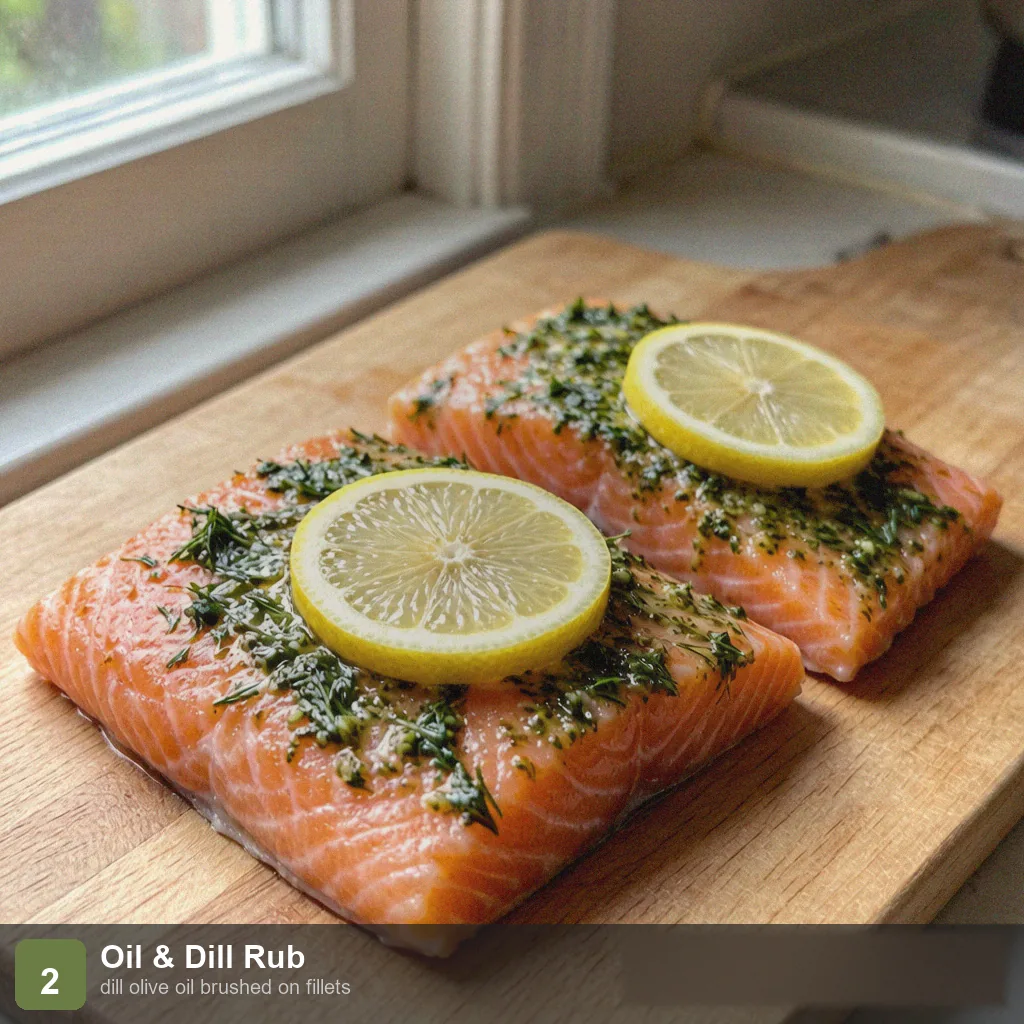
Step 2: Make the Dill-Olive-Oil Rub
Stir the olive oil, dill, black pepper, and grated garlic into a loose paste. Brush it generously over both sides of each fillet, then lay a few lemon slices on top of the flesh. The oil also acts as a barrier so the lean fish doesn’t stick to the parchment.
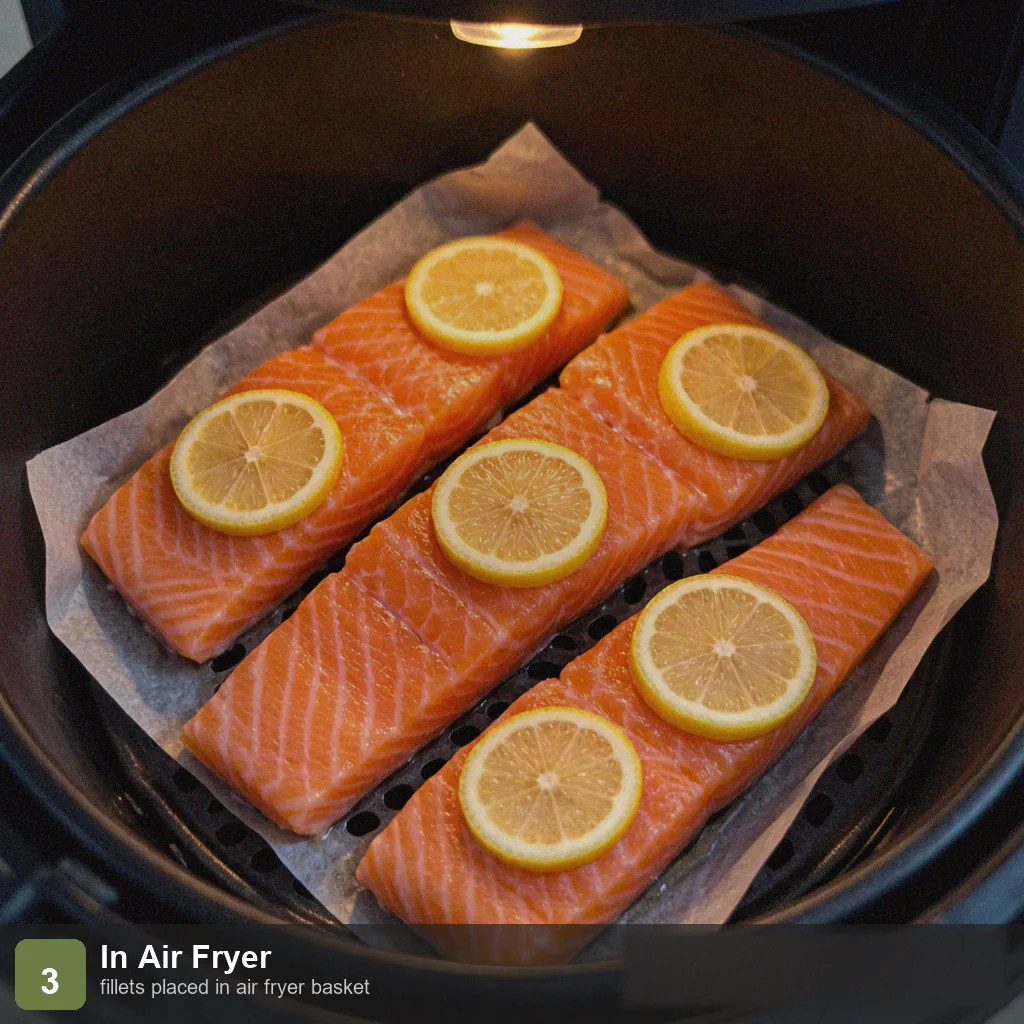
Step 3: Arrange in the Basket
Line the air fryer basket with parchment paper. Place the fillets flat, former skin-side down, without overlapping. Set the air fryer to 190°C (375°F) for 10 minutes. Crowding the basket traps steam, so give each fillet its own space.
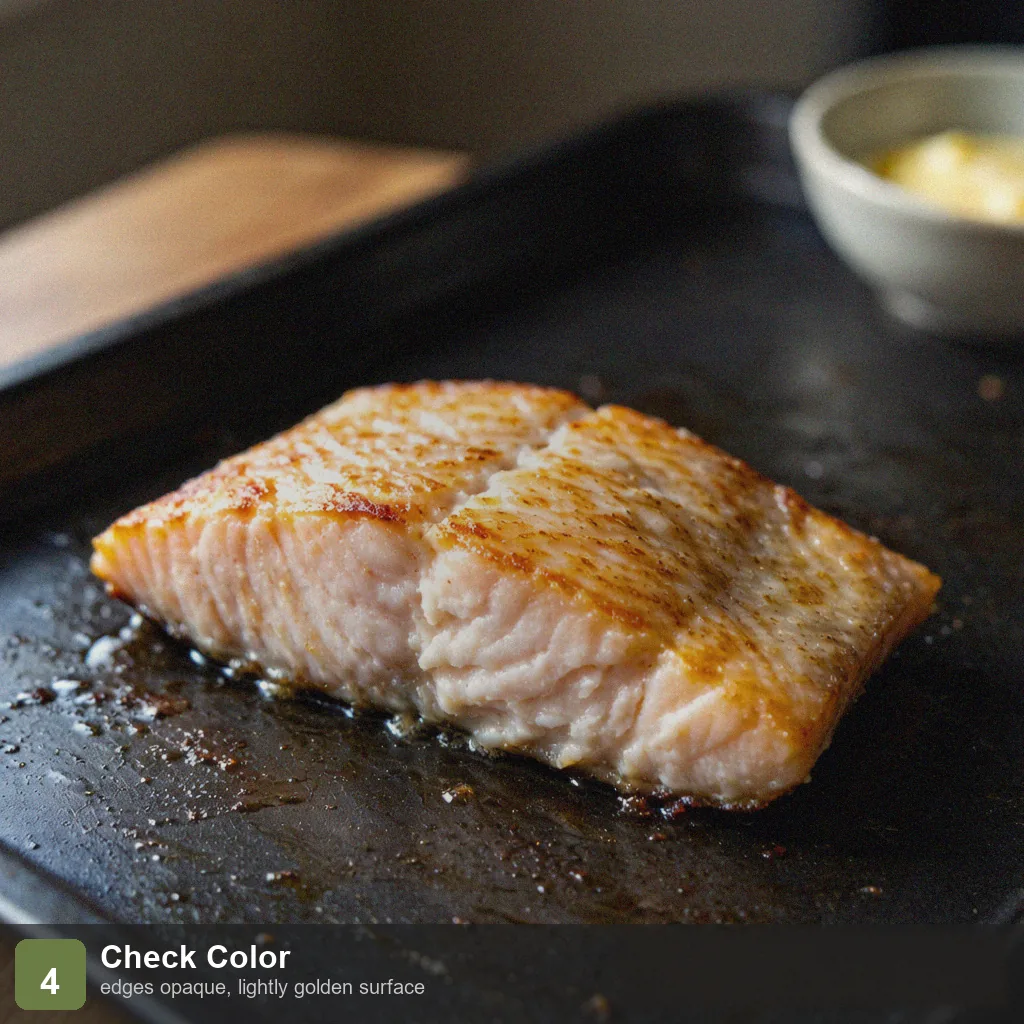
Step 4: Watch the Color
Pull the basket out at the 6-minute mark to check. You want the edges turning opaque white with a lightly golden surface. Salmon cooks fast — don’t let it dry out. It’s done when a fork slides through the flesh easily, with just a hint of translucence at the center.
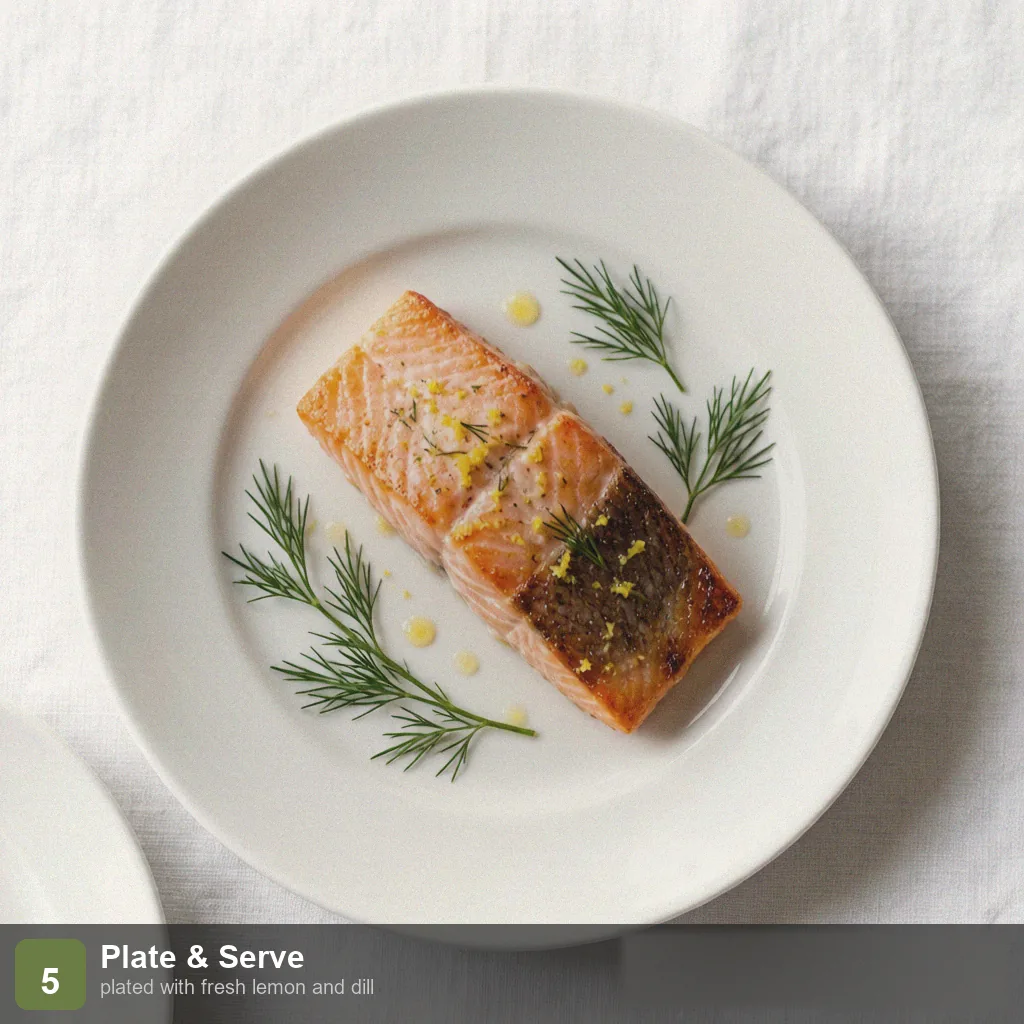
Step 5: Finish and Serve
Lift the fillets out, squeeze fresh lemon over the top, and scatter the remaining dill. Let them rest 1 minute so the flesh sets, then gently separate with a fork. Resting also redistributes the juices so the center finishes cooking off the heat.
Pro Tips for the Best Results
Don’t go past 10 minutes. Salmon is most tender when the center hits 50–55°C (still slightly pink inside). It starts to dry once it reaches 63°C. The air fryer’s residual heat keeps cooking after you pull it out, so take it a touch underdone.
Food safety baseline. The U.S. FDA recommends fish reach a center temperature of 63°C (145°F) to kill parasites and bacteria. If you prefer the 50–55°C “medium-rare” texture, buy sushi-grade salmon from a trusted cold chain. People who are immunocompromised, pregnant, or on a strict sodium plan should cook it all the way to 63°C for peace of mind.
Give the fillets space. Two fillets in a basket built for four is ideal. If you’re cooking for a crowd, work in batches rather than stacking — stacked fish steams instead of roasting and turns mushy.
Former skin-side down. Place the fillets former skin-side down on the parchment so the top face meets the circulating hot air and colors evenly. If you bought skin-on, skin-side down also works — just peel it off before eating to trim the fat.
Dill is the soul. Dill’s clean herbal note pairs with the fish’s oils better than lemon does at “de-fishing and brightening.” No dill? Parsley or chives work too — different accent, still valid.
Salt substitute, optional. With zero salt, a pinch of potassium chloride gives you the “salty signal” without sodium. Skip it entirely if you have kidney issues or a potassium limit.
One-pan sides. Toss a handful of asparagus or broccoli into the basket for the last 5 minutes and you’ve got a complete low-sodium plate. Asparagus carries just 2mg of natural sodium per 100g.
Frequently Asked Questions
Can I use frozen salmon?
Yes, but thaw it fully and pat it very dry first. Half-frozen fillets release too much water and won’t color properly. Overnight in the fridge is the safest thaw.
What if I don’t have dill?
Lemon, black pepper, and garlic already taste great. Swap in fresh parsley, basil, or chives — the aroma walks a different path but the result is still solid.
Will kids eat it?
Most kids accept salmon. If yours objects to the “fishy” note, add extra lemon and a small side of no-salt ketchup for dipping — acceptance goes up fast.
Can I meal prep this?
You can, but reheated salmon dries out easily. Eat within 2 days, reheat at 150°C (300°F) for about 3 minutes, and pair it with brown rice for a tidy bento.
Is this DASH-diet friendly?
Yes. The DASH diet targets roughly 1,500–2,300mg of sodium per day depending on the plan. At 75mg per serving, this air fryer low sodium salmon fits comfortably inside that budget and still delivers the potassium and omega-3s DASH emphasizes.
More Low Sodium Recipes to Try
If you’re building a low-sodium table, these fit right in:
- Air Fryer Low Sodium Cod — another flaky white fish, same zero-salt method
- Low Sodium Sheet Pan Dinner — oven version with chicken and vegetables
- Low Sodium 15 Minute Dinner — an even faster skillet meal
- Bread Machine Low Sodium Whole Wheat Bread — the perfect low-sodium side
- Low Sodium Mashed Potatoes — a creamy, comforting pairing
Nutrition Information (Per Serving, ~140g)
| Item | Amount | % Daily Value* |
|---|---|---|
| Calories | 280 kcal | 14% |
| Protein | 28 g | 56% |
| Fat | 18 g | 23% |
| Carbohydrates | 1 g | 0% |
| Fiber | 0 g | 0% |
| Sodium | 75 mg | 3% |
*Daily values are based on a 2,000 kcal diet. Sodium is an estimate for no-added-salt preparation (USDA FoodData Central: salmon’s natural sodium is about 50–60mg per 100g) — roughly one-eighth of the 600–1000mg you’d get in smoked salmon.
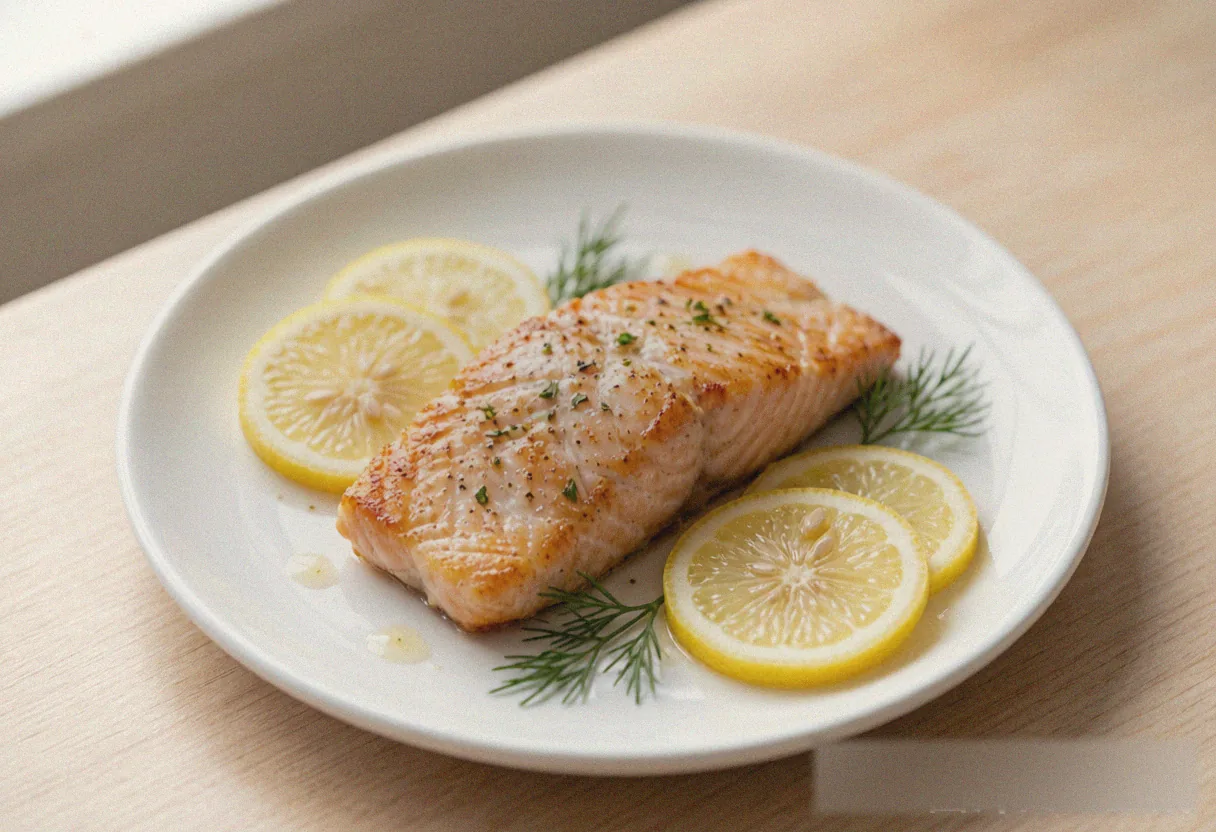
Air Fryer Low Sodium Salmon - Flaky & Salt Free
Ingredients
Method
- Step 1: Pat the Fillets Dry: Use paper towels to pat the salmon completely dry on both sides. Dry surfaces crisp better and help the herbs stick. Check for any stray pin bones and pull them out with tweezers — they're easy to miss and unpleasant to bite into.
- Step 2: Make the Dill-Olive-Oil Rub: Stir the olive oil, dill, black pepper, and grated garlic into a loose paste. Brush it generously over both sides of each fillet, then lay a few lemon slices on top of the flesh. The oil also acts as a barrier so the lean fish doesn't stick to the parchment.
- Step 3: Arrange in the Basket: Line the air fryer basket with parchment paper. Place the fillets flat, former skin-side down, without overlapping. Set the air fryer to 190°C (375°F) for 10 minutes. Crowding the basket traps steam, so give each fillet its own space.
- Step 4: Watch the Color: Pull the basket out at the 6-minute mark to check. You want the edges turning opaque white with a lightly golden surface. Salmon cooks fast — don't let it dry out. It's done when a fork slides through the flesh easily, with just a hint of translucence at the center.
- Step 5: Finish and Serve: Lift the fillets out, squeeze fresh lemon over the top, and scatter the remaining dill. Let them rest 1 minute so the flesh sets, then gently separate with a fork. Resting also redistributes the juices so the center finishes cooking off the heat.