Why You’ll Love This Low Sodium Quick Breakfast
Breakfast is the easiest meal to overshoot your sodium budget — a strip of bacon is 200mg, a bowl of cereal with creamer is 300mg. This low sodium quick breakfast (a 5-minute veggie egg scramble) leans on eggs’ natural umami, adds zero salt, and keeps every plate under 200mg of sodium. Here is why it belongs in your mornings.
- On the plate in 5 minutes. Crack, whisk, and cook — faster than boiling water for oatmeal. You could even sleep 5 minutes longer on a workday.
- Under 200mg sodium per plate. A large egg carries about 70mg of natural sodium; that is the main source here, with a little from the vegetables, and we add no salt. A bacon-and-eggs breakfast runs 600–800mg — this is the leftovers.
- Protein that carries you to lunch. Two eggs give about 12g of quality protein plus vegetable fiber, so you won’t be raiding the snack drawer by 11 a.m.
- Flavor from black pepper and chives. The scramble’s aroma comes from the eggs’ own fats and the bite of black pepper, finished with a sprinkle of chives — satisfying with no salt at all.
Ingredients
- 2 large eggs
- 1 small handful spinach (about 1 cup, roughly chopped)
- 1/2 small tomato, diced
- 1 teaspoon unsalted butter (or 1 teaspoon olive oil)
- 1/4 teaspoon black pepper (freshly ground is best)
- 1 teaspoon fresh chives, minced (or dried chives, optional)
- 0 salt — the low-sodium key
- A pinch of red pepper flakes (optional)
Is an egg’s natural sodium enough? One large U.S. egg naturally contains about 70mg of sodium (USDA FoodData Central), so two eggs are about 140mg, and with the spinach and tomato the total lands at about 175mg — all natural, no added salt. Eggs also carry glutamate, a natural umami compound that releases a savory note when heated and whisked — the science behind “tastes good without salt.” Want a salty signal? Finish with 1/8 teaspoon of potassium-chloride salt substitute for almost no added sodium.
Instructions
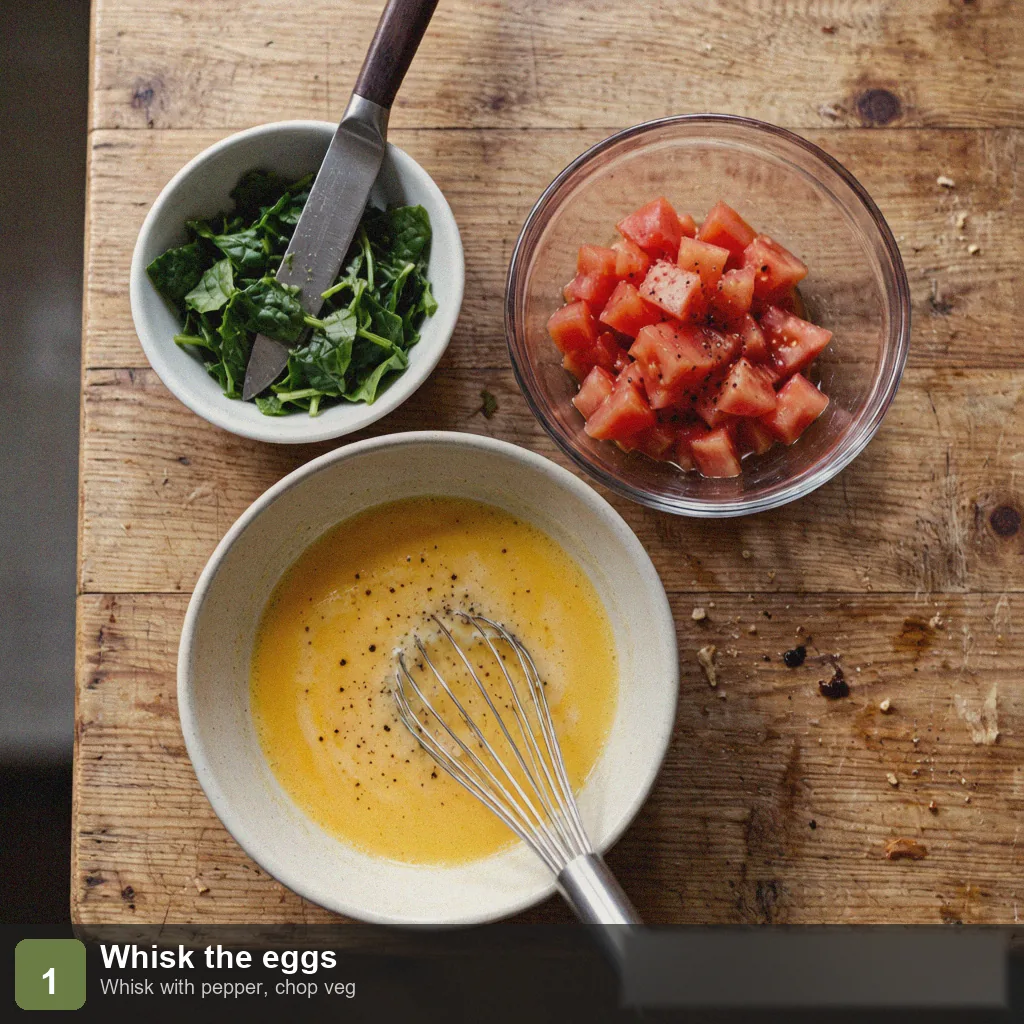
Step 1: Whisk the Eggs
Crack the eggs into a bowl, add the black pepper and red pepper flakes, and whisk with a fork until completely uniform with fine bubbles on top — that is the key to a fluffy scramble, and under-whisking leaves it as a dense lump. Roughly chop the spinach and dice the tomato, then set them aside.
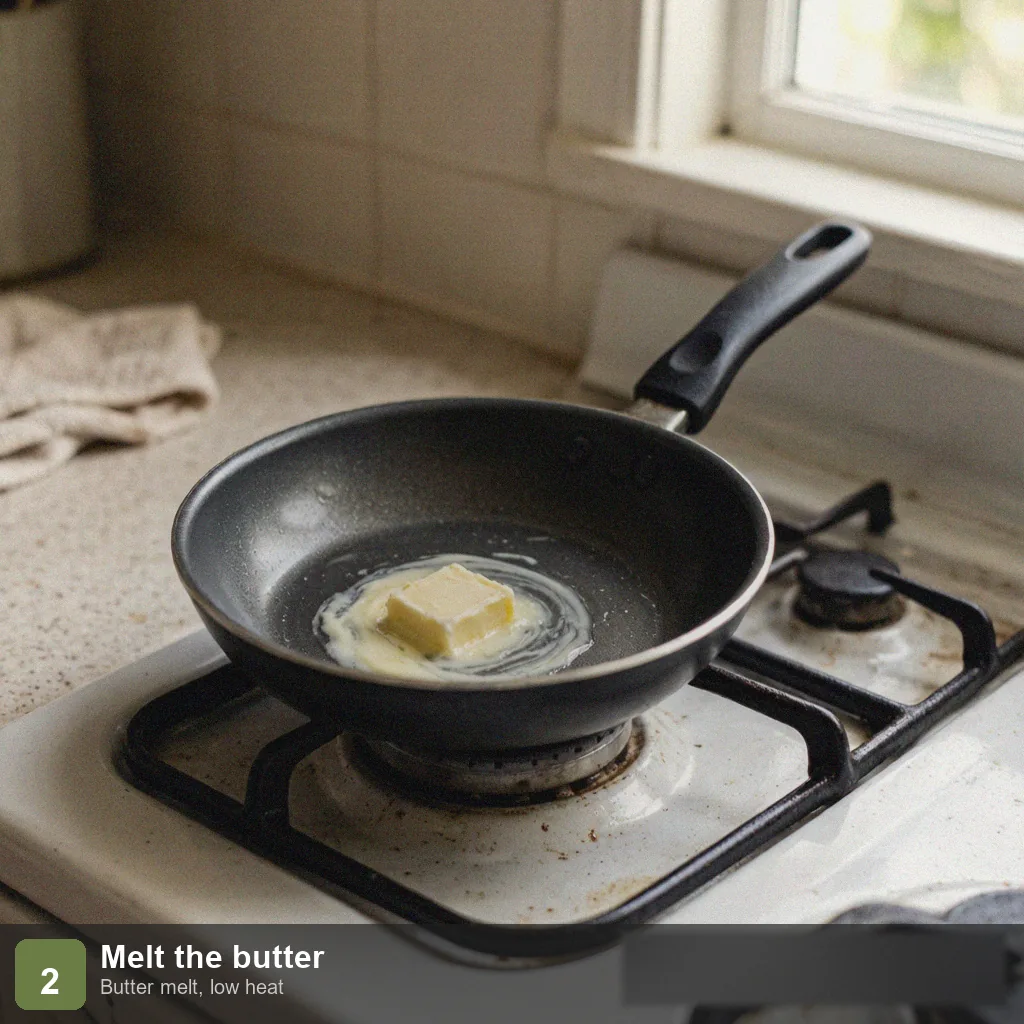
Step 2: Melt the Butter Over Low Heat
Put 1 teaspoon of unsalted butter in a small nonstick pan and melt it over the lowest heat, swirling so the fat coats the bottom. Keep the heat low — a scramble hates high heat and turns tough the moment it rushes.
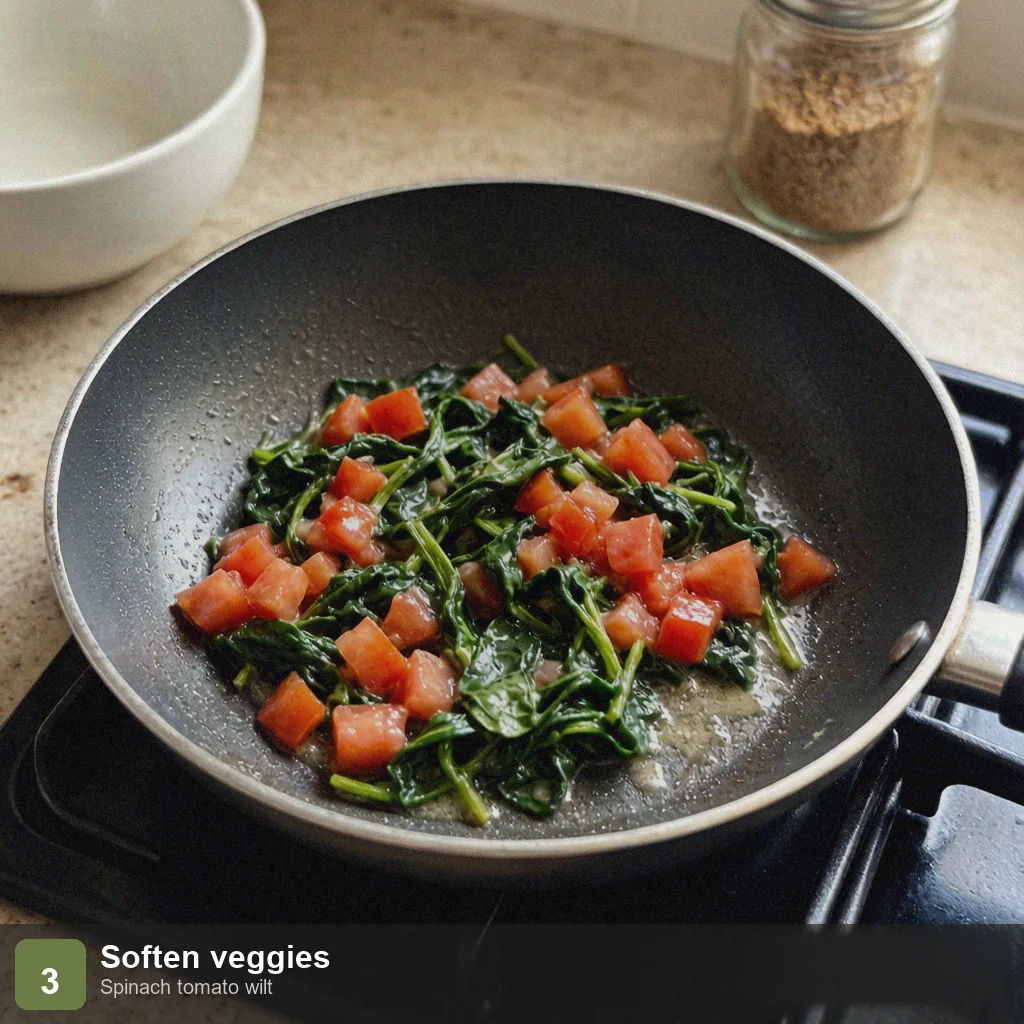
Step 3: Soften the Vegetables
Pour in the spinach and tomato and cook over low heat for 30 seconds, until the spinach just wilts and the tomato releases a little juice. Pre-cooking the vegetables takes away their raw edge and gives the scramble some textural variety.
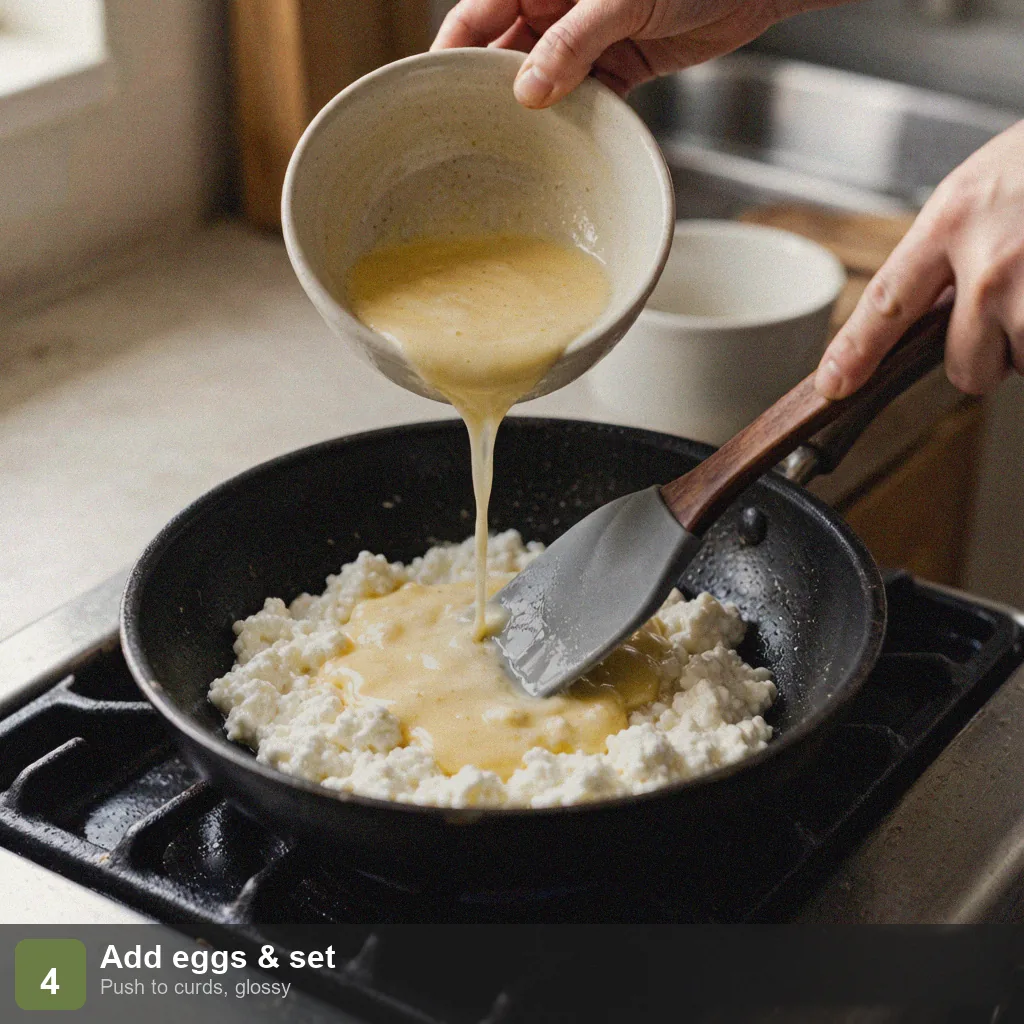
Step 4: Add Eggs and Push to Set
Pour in the egg mixture and immediately use a silicone spatula to gently push it from the edges toward the center (do not stir hard back and forth), letting the uncooked egg flow to the pan surface to set. Push for 1–1.5 minutes until the eggs are about 80% set with a slightly glossy sheen, then turn off the heat — residual warmth finishes the rest.
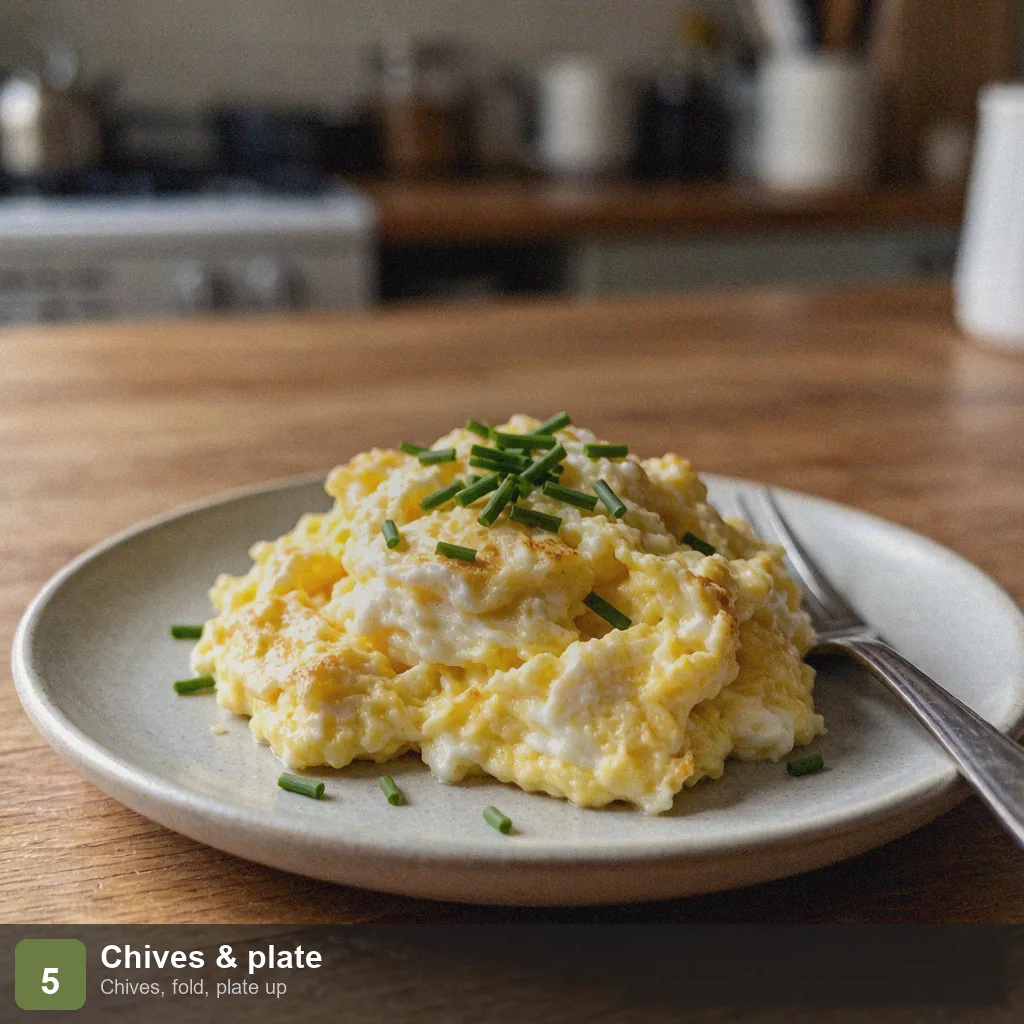
Step 5: Chives and Plate
Off the heat, scatter the fresh chives and fold gently so they distribute evenly. Slide onto a plate; add a little more black pepper if you like. Eat while just warm for the tenderest curds. A slice of low sodium bread makes it a complete meal.
Pro Tips
Timing the heat-off decides tenderness. Never wait for the eggs to be fully set before turning off the heat — by then they are overcooked. Pull them at 80% set with a still-glossy surface and let residual heat take the last 20%. That “one breath short” state lands perfectly tender.
Low heat is a rule, not a suggestion. High heat turns a scramble to rubber in 30 seconds. Nonstick pan plus lowest heat plus constant gentle pushing — miss any one and it toughens. If you are unsure, dial the flame down to “just a faint sizzle.”
Whisk to bubbles. Beat briskly with a fork about 30 times to fold in air — that is what gives the scramble lift instead of a tight blob. Fine, even surface bubbles means you whisked enough.
Don’t overload the vegetables. In this recipe the vegetables are a flavor accent, not the star. More than about 1.5 cups releases water that dilutes the egg and lengthens setting time, leaving a loose scramble. Want more greens? Sauté a separate side plate.
Meal-prep version. On the weekend, cook a container of the spinach-tomato base and refrigerate it. On a weekday morning, pour the eggs straight in and push to set — the whole thing drops to 3 minutes, the kind of “push the trouble forward” trick that makes low sodium stick.
Storage
A cooked scramble weeps and toughens in the fridge, so do not make it the night before. The vegetable base, however, can be prepped and stored over the weekend; see the meal-prep tip above. If you must store leftovers, keep them airtight for up to 1 day and reheat very gently in a pan — never the microwave, which makes them rubbery.
Frequently Asked Questions
Can I use egg whites to cut cholesterol?
Yes — swap the 2 whole eggs for 4 egg whites. Sodium drops further (egg whites have almost no natural sodium) and fat is near zero. The texture turns a bit “rubbery,” so keep at least 1 yolk for aroma and tenderness.
No butter — can I use olive oil?
Yes, 1 teaspoon of olive oil replaces the butter. You lose a little dairy note and gain a fruity one, but it stays tender. Olive oil has a lower smoke point, so keep the heat even lower than the butter version.
Will kids eat it?
Most kids accept a scramble. If yours dislike spinach and tomato, use corn kernels or finely diced bell pepper, or make a plain scramble with a pinch of low-sodium cheese powder. A rare low-sodium breakfast the whole family can share.
Can I make it the night before for a bento?
Not recommended — a refrigerated scramble weeps and firms up. But the vegetable base can be cooked and portioned on the weekend, so your morning is a 3-minute job (see the meal-prep tip).
Is this DASH or renal friendly?
At about 175mg sodium per plate it fits a DASH plan easily. For a renal diet the sodium is low and natural only, but eggs and tomato add potassium — check with your dietitian if on a potassium restriction.
Conclusion
A low sodium quick breakfast does not mean a bland one. Five minutes, two eggs, and a handful of vegetables give you a fluffy, savory scramble under 200mg of sodium — proof that skipping the salt shaker at breakfast is the easiest healthy win of the day.
More Low Sodium Recipes
- Bread Machine Low Sodium Bread — the side for your scramble
- Low Sodium Vegetable Soup — a warming bowl
- Low Sodium Baked Chicken Breast — high-protein meal prep
- Low Sodium 15 Minute Dinner — a fast low-sodium dinner
Nutrition Information (Per Serving, 2 eggs + vegetables)
| Item | Amount | % Daily Value* |
|---|---|---|
| Calories | 190 kcal | 10% |
| Protein | 13 g | 26% |
| Fat | 14 g | 18% |
| Carbohydrates | 5 g | 2% |
| Fiber | 2 g | 7% |
| Sodium | 175 mg | 8% |
*Daily values are based on a 2,000 kcal diet. Sodium is an estimate for no-added-salt preparation (USDA FoodData Central: a large egg about 70mg sodium, vegetables’ natural sodium negligible) — roughly one-quarter of a bacon-and-eggs breakfast at 600–800mg.
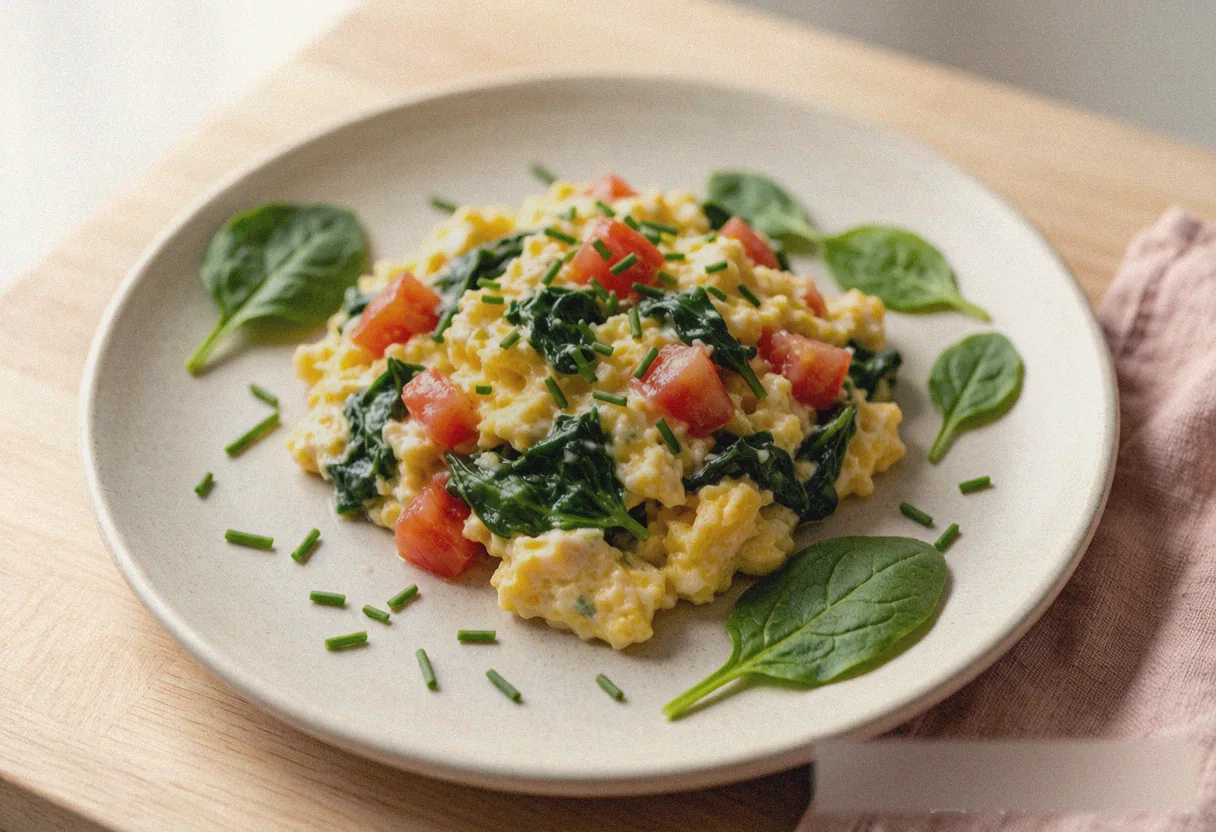
Low Sodium Quick Breakfast - 5 Minute Egg Scramble
Ingredients
Method
- Step 1: Whisk the Eggs: Crack the eggs into a bowl, add the black pepper and red pepper flakes, and whisk with a fork until completely uniform with fine bubbles on top — that is the key to a fluffy scramble, and under-whisking leaves it as a dense lump. Roughly chop the spinach and dice the tomato, then set them aside.
- Step 2: Melt the Butter Over Low Heat: Put 1 teaspoon of unsalted butter in a small nonstick pan and melt it over the lowest heat, swirling so the fat coats the bottom. Keep the heat low — a scramble hates high heat and turns tough the moment it rushes.
- Step 3: Soften the Vegetables: Pour in the spinach and tomato and cook over low heat for 30 seconds, until the spinach just wilts and the tomato releases a little juice. Pre-cooking the vegetables takes away their raw edge and gives the scramble some textural variety.
- Step 4: Add Eggs and Push to Set: Pour in the egg mixture and immediately use a silicone spatula to gently push it from the edges toward the center (do not stir hard back and forth), letting the uncooked egg flow to the pan surface to set. Push for 1–1.5 minutes until the eggs are about 80% set with a slightly glossy sheen, then turn off the heat — residual warmth finishes the rest.
- Step 5: Chives and Plate: Off the heat, scatter the fresh chives and fold gently so they distribute evenly. Slide onto a plate; add a little more black pepper if you like. Eat while just warm for the tenderest curds. A slice of low sodium bread makes it a complete meal.