Why You’ll Love This Low Sodium Vegetable Soup
Store-bought vegetable soup often carries 600–900mg of sodium per serving — one bowl nearly maxes out the day. This low sodium vegetable soup uses no salt at all, drawing flavor from the vegetables’ natural sweetness, a touch of smoked paprika, and fresh herbs, landing at about 160mg of sodium per serving — roughly one-fifth of the store version, and just as warming.
- About one-fifth the sodium of store-bought. Flavor comes from the vegetables and spices, not salt — a savory, sweet bowl that still fits a low-sodium diet.
- One pot, hands-off. Chop, drop it all in, and it’s done in about 40 minutes with no fussing over the stove.
- Freezer-friendly. Make one big pot, portion it out, and reheat a bowl whenever you need hot food fast.
- Fully vegan. No meat, no dairy — a plant-based, low-fat, high-fiber bowl.
Ingredients
- 1 tablespoon olive oil
- 1 onion (diced)
- 2 carrots (sliced)
- 2 celery stalks (diced)
- 1 zucchini (chopped)
- 1 potato (peeled and diced — thickens without adding sodium)
- 1 can (400g) no-salt-added diced tomatoes
- 6 cups no-salt vegetable broth (or water plus a piece of kombu for umami)
- 1/2 teaspoon smoked paprika (a “salty-savory” illusion, almost no sodium)
- 1/2 teaspoon dried oregano or thyme
- Black pepper to taste
- 1 handful fresh spinach (added at the end)
- 0 salt — the whole point of the recipe
- Optional: a pinch of salt substitute (potassium chloride) — skip if you have kidney disease or a potassium-restricted diet.
Why smoked paprika? The brain reads smokiness as “salty-savory” or grilled, so it makes the soup more satisfying without any salt — and it carries almost no sodium. It’s a favorite “flavor trick” in low-sodium cooking.
Instructions
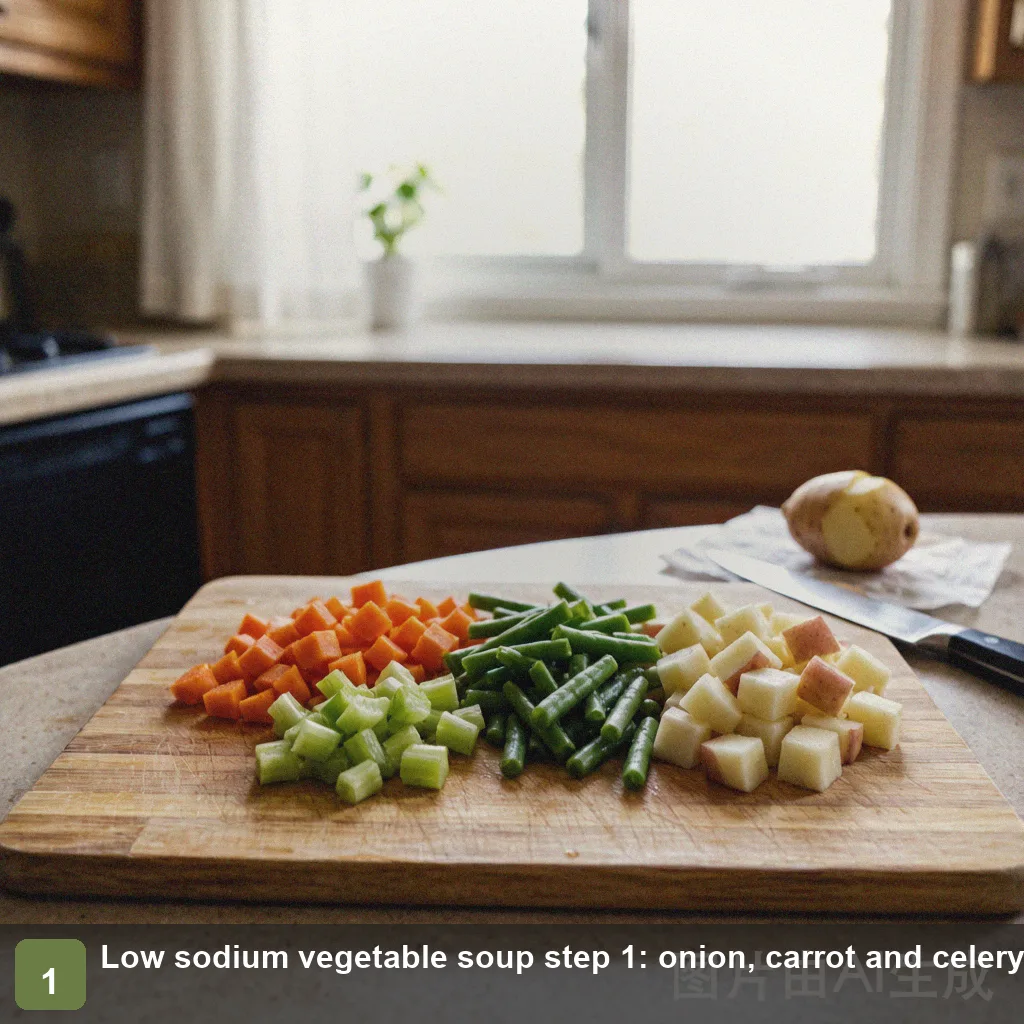
Step 1: Soften the Aromatic Base
Heat the olive oil over medium and cook the onion, carrots, and celery for 5 minutes until the onion turns translucent and soft (releasing its natural sweetness).
Step 2: Add Potato and Spices
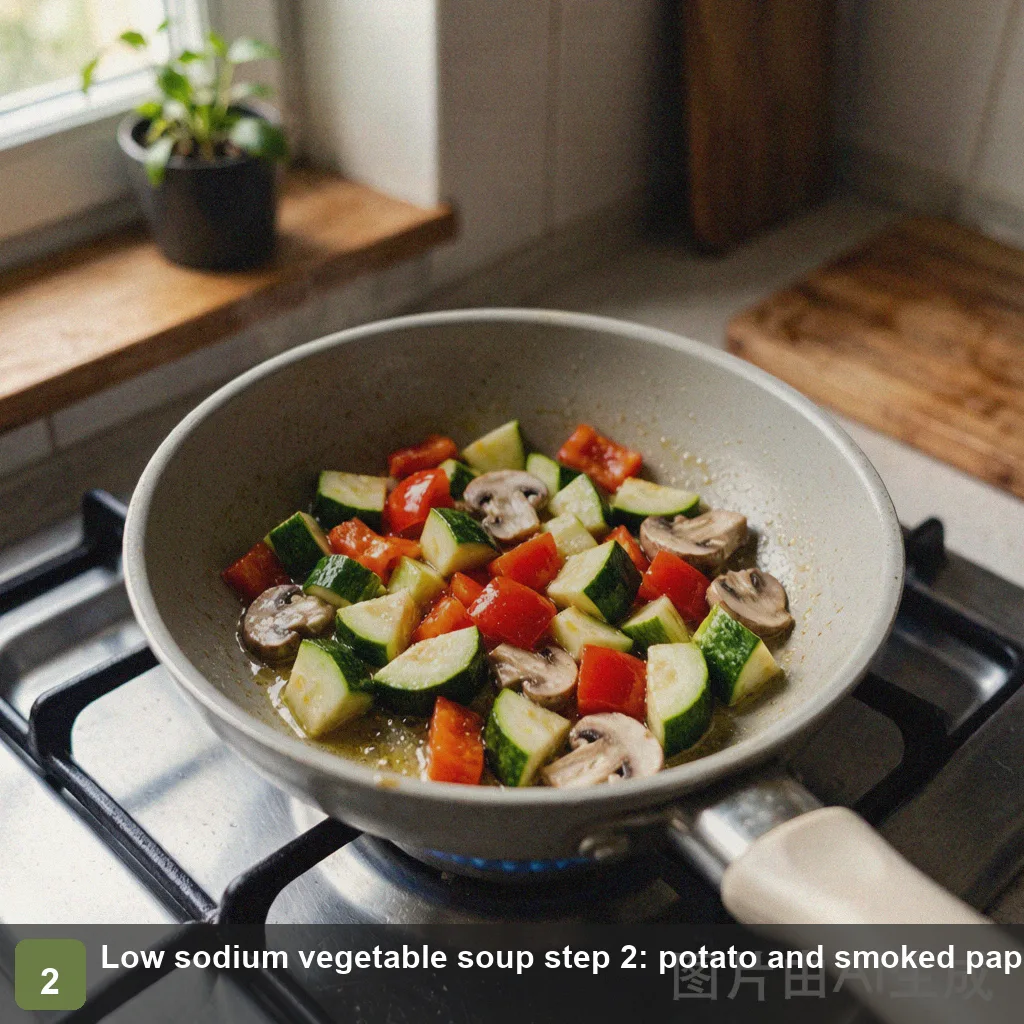
Add the diced potato, smoked paprika, and oregano, stirring 1 minute to bloom the spices.
Step 3: Add Liquid and Simmer
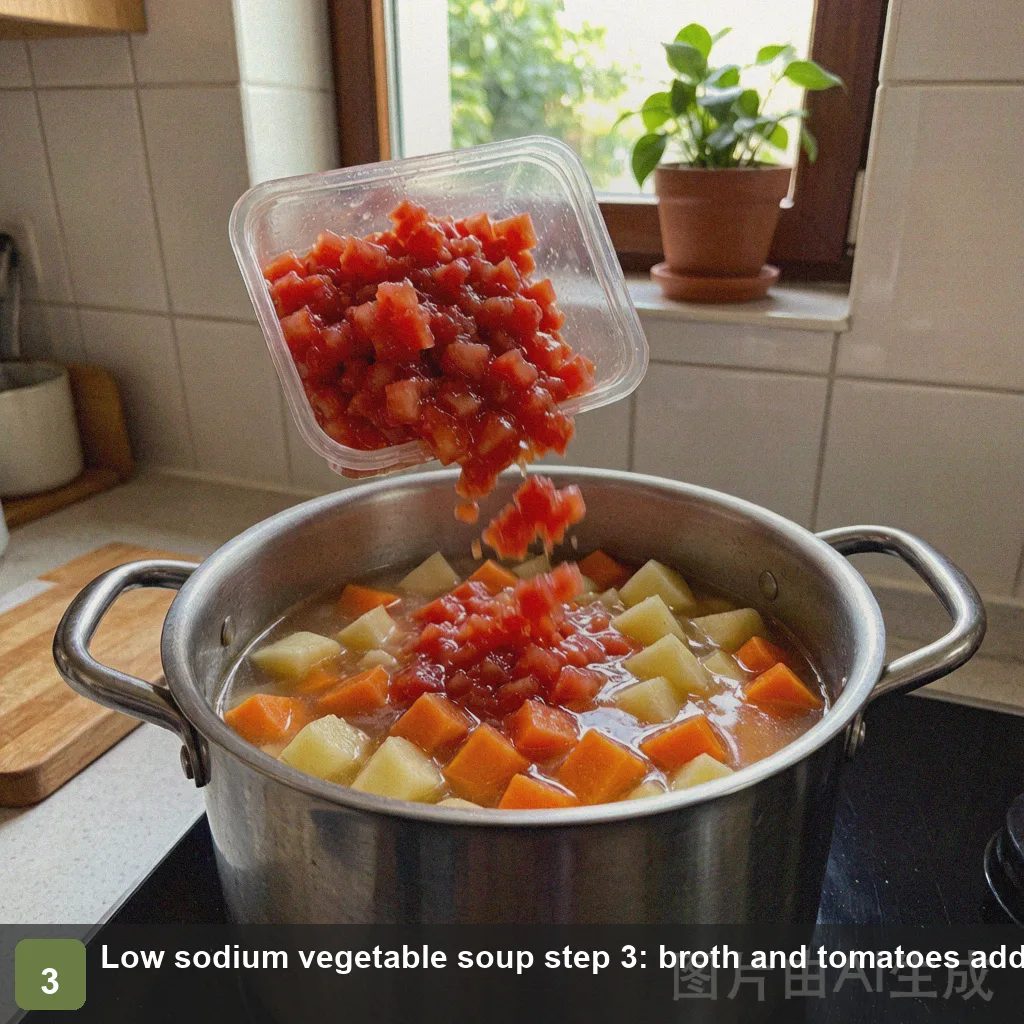
Pour in the no-salt broth and no-salt diced tomatoes, bring to a boil, then drop to low, cover, and simmer 25 minutes until the potato is tender.
Step 4: Add Zucchini and Spinach
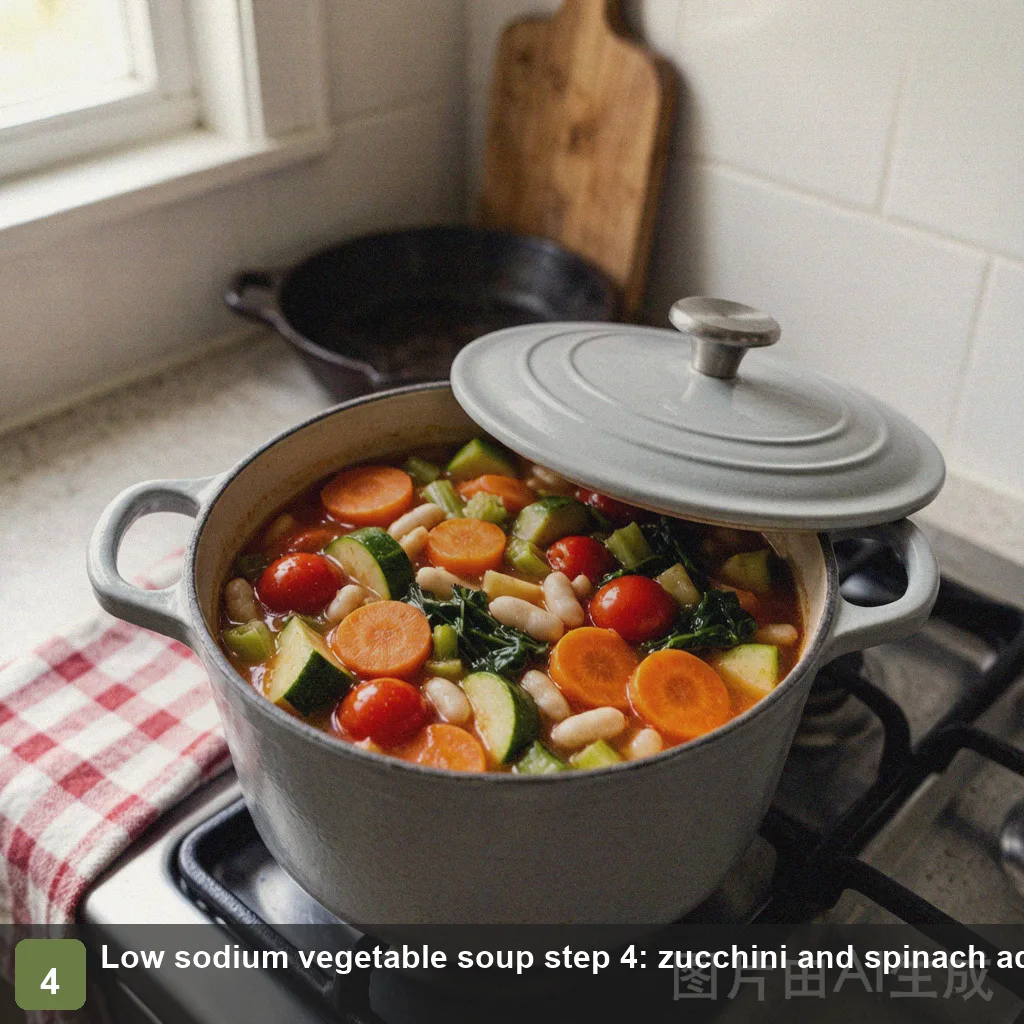
Add the zucchini and simmer another 8 minutes, then stir in the spinach for the final 2 minutes until wilted.
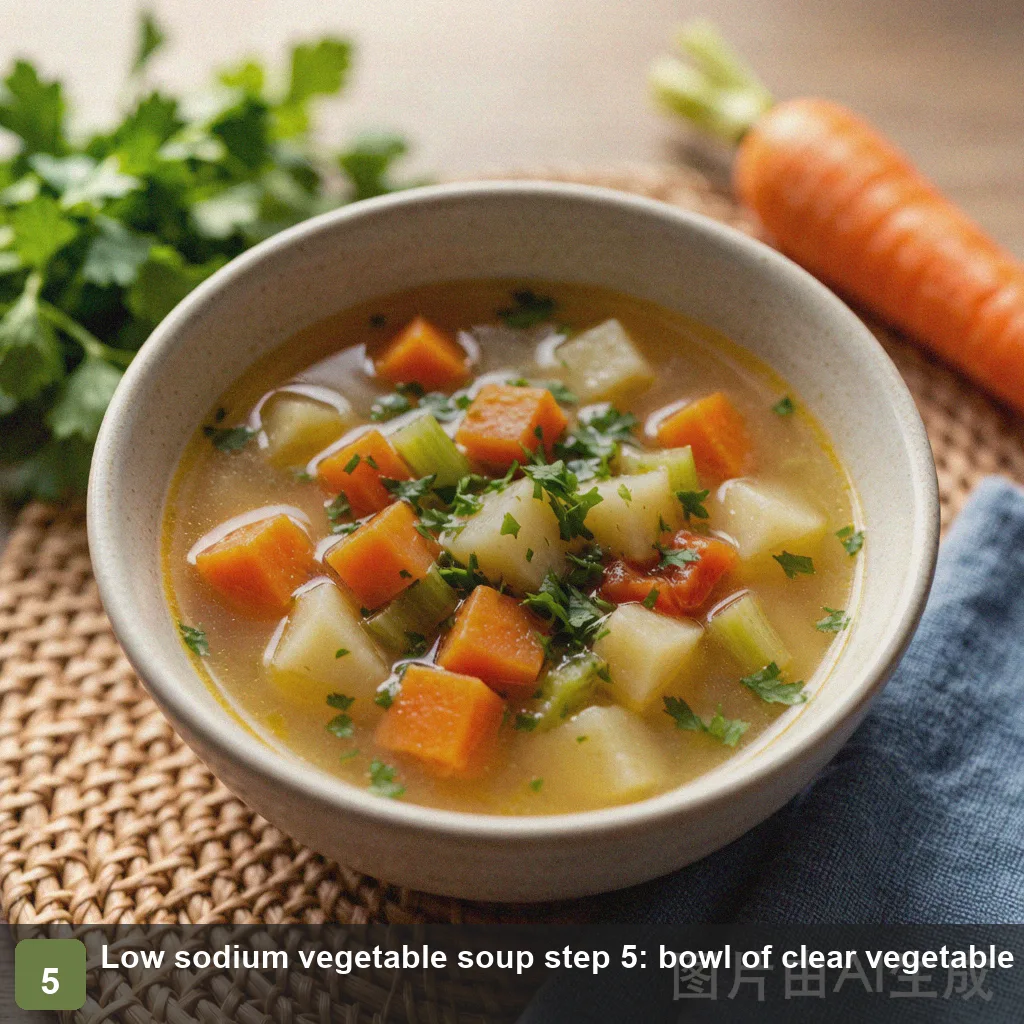
Step 5: Season and Serve
Season with black pepper and taste — the sweet, savory depth comes from the vegetables themselves. Ladle into bowls and top with fresh herbs.
Pro Tips for the Best Results
The broth must be “no salt added.” This is the biggest sodium source. Store-bought liquid or cube broths often carry massive sodium; look for “no salt added” or make your own from vegetable scraps plus kombu. Water and kombu alone also delivers umami.
Potato is a natural thickener. As it cooks down, part of it melts into the broth for a fuller body — a “hearty” feel without any salt.
Spices instead of salt. Smoked paprika, oregano, thyme, and fresh basil are nearly sodium-free but full of flavor; black pepper at the end adds a layer.
Blend part of it for a creamier soup. Purée half the pot with an immersion blender and stir it back in for a texture like cream soup — with zero cream and zero sodium.
Freeze in portions. Cool and freeze in single servings for quick hot meals; vegetable soup holds its flavor well after freezing, making it great meal prep.
Storage and Reheating
Store in an airtight container in the fridge for up to 4 days, or freeze in portions for up to 3 months. Reheat on the stovetop or in the microwave, adding a splash of no-salt broth or water if it’s thickened. This low sodium vegetable soup freezes beautifully without losing flavor, so it’s ideal make-ahead comfort food.
Frequently Asked Questions
Is this sodium-free?
Not entirely — vegetables and broth carry natural sodium. This recipe lands at about 160mg per serving, far below store-bought at 600mg+, which makes it “low sodium,” not “no sodium,” and safe for most sodium-conscious eaters.
Can I use chicken broth?
Yes, but choose a no-salt chicken broth; regular chicken broth is very high in sodium and would defeat the purpose. Vegetable broth is lower in fat.
Is it safe for a renal or dialysis diet?
Watch the potassium — potato, tomato, and spinach are relatively high in potassium. If you have kidney disease, check with your dietitian; you may need to limit certain high-potassium vegetables or use leaching techniques.
Can I make a creamy version?
Yes. Use the “blend part of it” tip above — half puréed, half chunky gives the richest texture.
Conclusion
This low sodium vegetable soup proves a cozy, savory bowl doesn’t need salt to satisfy. With no-salt broth, a potato to thicken, and a hit of smoked paprika, you get a warming soup at about 160mg of sodium that freezes for a week of easy meals. Keep the broth unsalted and let the vegetables do the seasoning.
More Low Sodium Recipes to Try
Build a low-sodium table with these:
- Low Sodium Baked Chicken Breast — a lean main to serve with the soup
- Low Sodium Stir Fry Chicken — another fast, no-salt option
- Low Sodium One Pot Meal — equally hands-off
- Low Sodium Mac and Cheese — a kid-friendly low-sodium staple
- Low Sodium Complete Collection — every heart-healthy recipe in one place
Nutrition Information (Per Serving, 1 of 6)
| Item | Amount | % Daily Value* |
|---|---|---|
| Calories | 120 kcal | 6% |
| Protein | 3 g | 6% |
| Fat | 4 g | 5% |
| Carbohydrates | 19 g | 7% |
| Fiber | 4 g | 14% |
| Sodium | 160 mg | 7% |
*Daily values are based on a 2,000 kcal diet. Sodium is an estimate for no-added-salt preparation (USDA FoodData Central: vegetables are naturally low in sodium, no-salt broth near zero, no-salt diced tomatoes under 30mg/half cup) — roughly one-quarter to one-fifth of a store-bought vegetable soup. Those with kidney disease should watch potassium intake.