Bread Machine Bagels
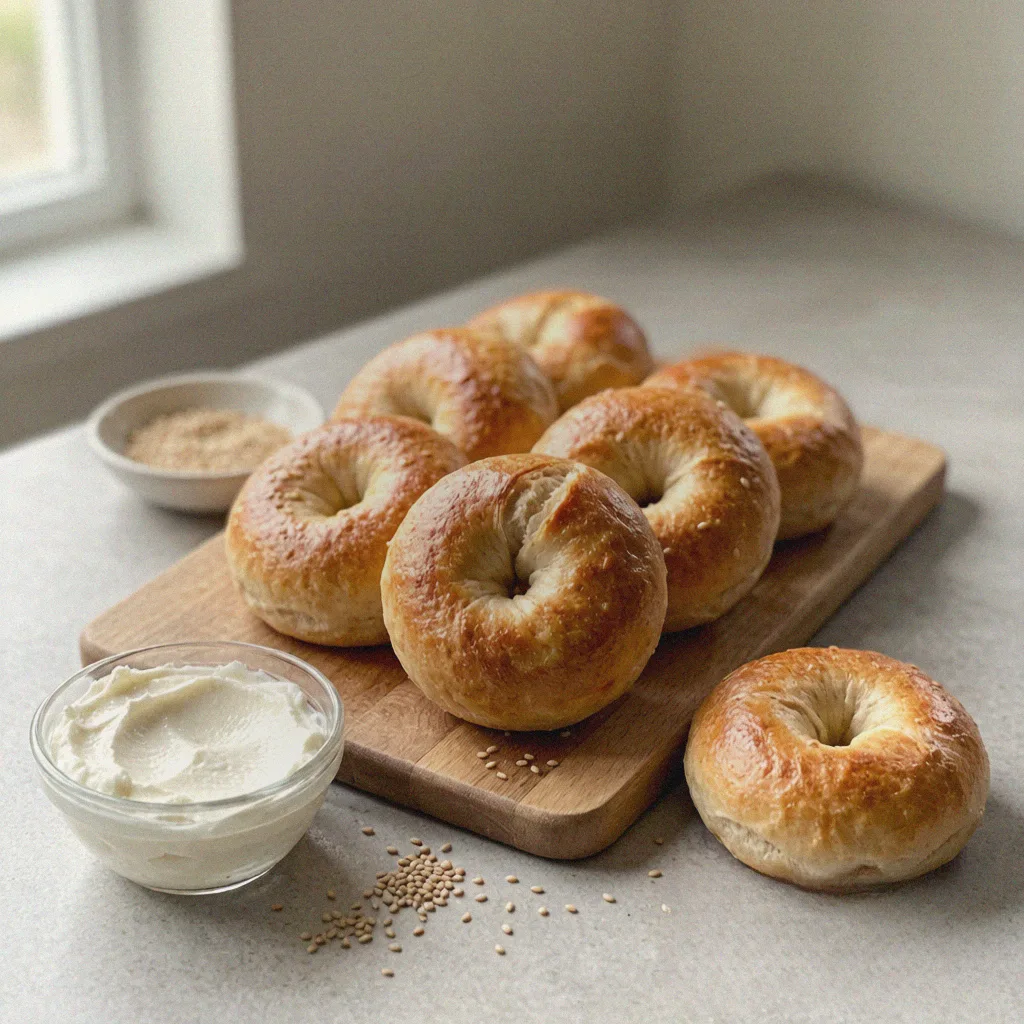
Store-bought bagels are expensive and often too salty. These bread machine bagels let the machine handle the kneading and proofing while you shape, boil, and bake. The result is a chewy, glossy homestyle bagel with that signature crisp crust — way easier than doing it all by hand. Bake a dozen on the weekend, freeze the extras, and enjoy deli-quality breakfasts all week topped with smoked salmon or cream cheese. The smell of fresh bread filling your kitchen? That’s just a bonus.
Why You’ll Love This Recipe
- Machine does the hard work: The bread machine handles kneading and the first rise. No hand-kneading skills required — even total beginners get great results.
- Genuinely chewy: The boil-then-bake method creates that gelatinized crust that gives bagels their signature chew. It replicates the deli texture at home.
- Savory or sweet: Plain, sesame, whole wheat — customize however you like. One batch, endless variations.
- Batch-friendly: Freeze the extras and reheat anytime. Way cheaper than buying fresh bagels every day.
Ingredients You’ll Need
| Ingredient | Amount (about 8 bagels) |
|---|---|
| Bread flour (high-protein flour) | 300g (2½ cups) |
| Warm water | 180ml (¾ cup, about 35°C / 95°F) |
| Sugar | 1 tbsp |
| Salt | 1 tsp |
| Instant yeast | 1 tsp |
| Malt syrup (or honey) | 1 tbsp (for boiling water) |
Substitutions: Swap half the bread flour for whole wheat flour for whole grain bagels; reduce sugar to 1 tsp for fewer calories; no malt syrup? Use honey in the boiling water instead — it adds shine and helps the crust color beautifully.
Allergy alert: Contains gluten (bread flour). Sesame seeds sprinkled on top are a common allergen and can be omitted.
How to Make Bread Machine Bagels
Step 1: Dough Cycle
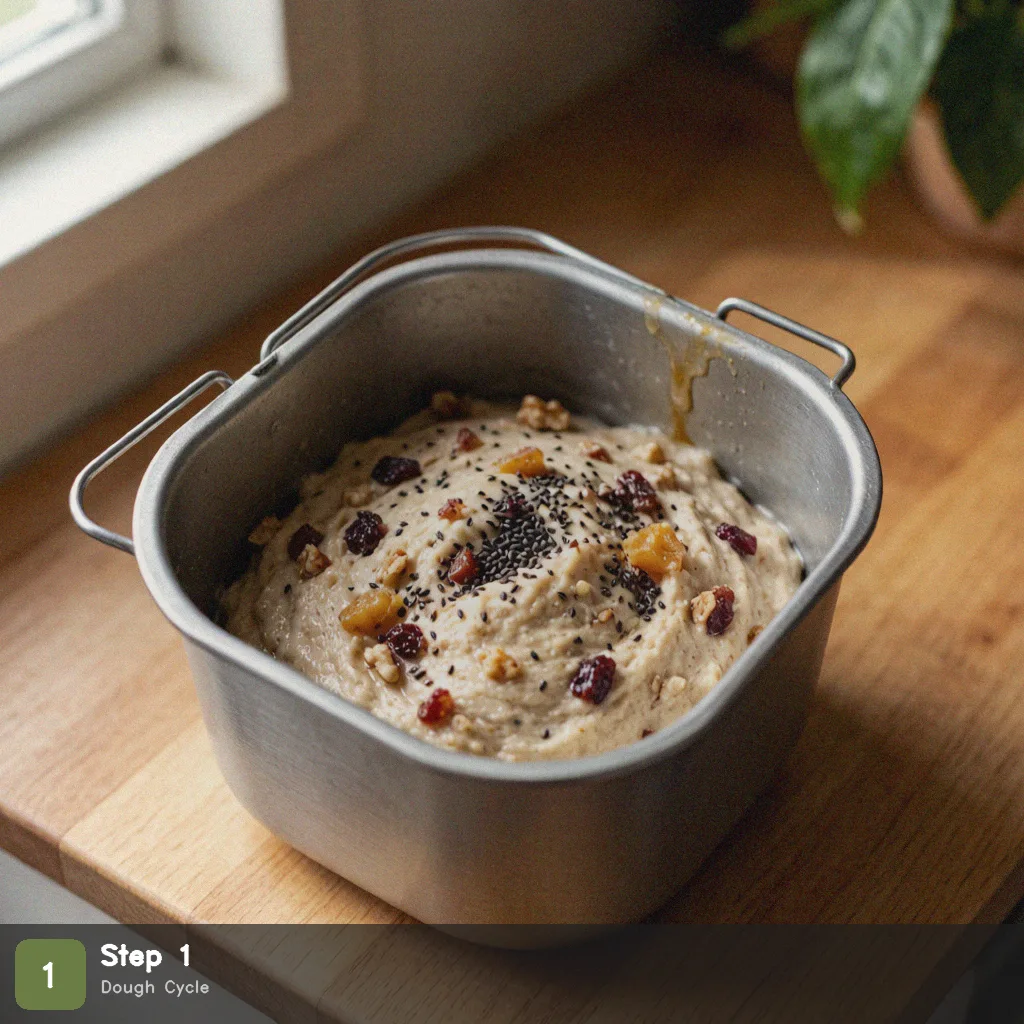
Add all ingredients except the malt syrup (for boiling) to your bread machine pan in the order recommended by your manufacturer. Select the “Dough” cycle and start. Let the machine knead until the dough is smooth and passes the windowpane test — about 1.5 hours total including the first rise. Well-developed gluten is what makes bagels chewy and tall.
Step 2: Divide and Shape
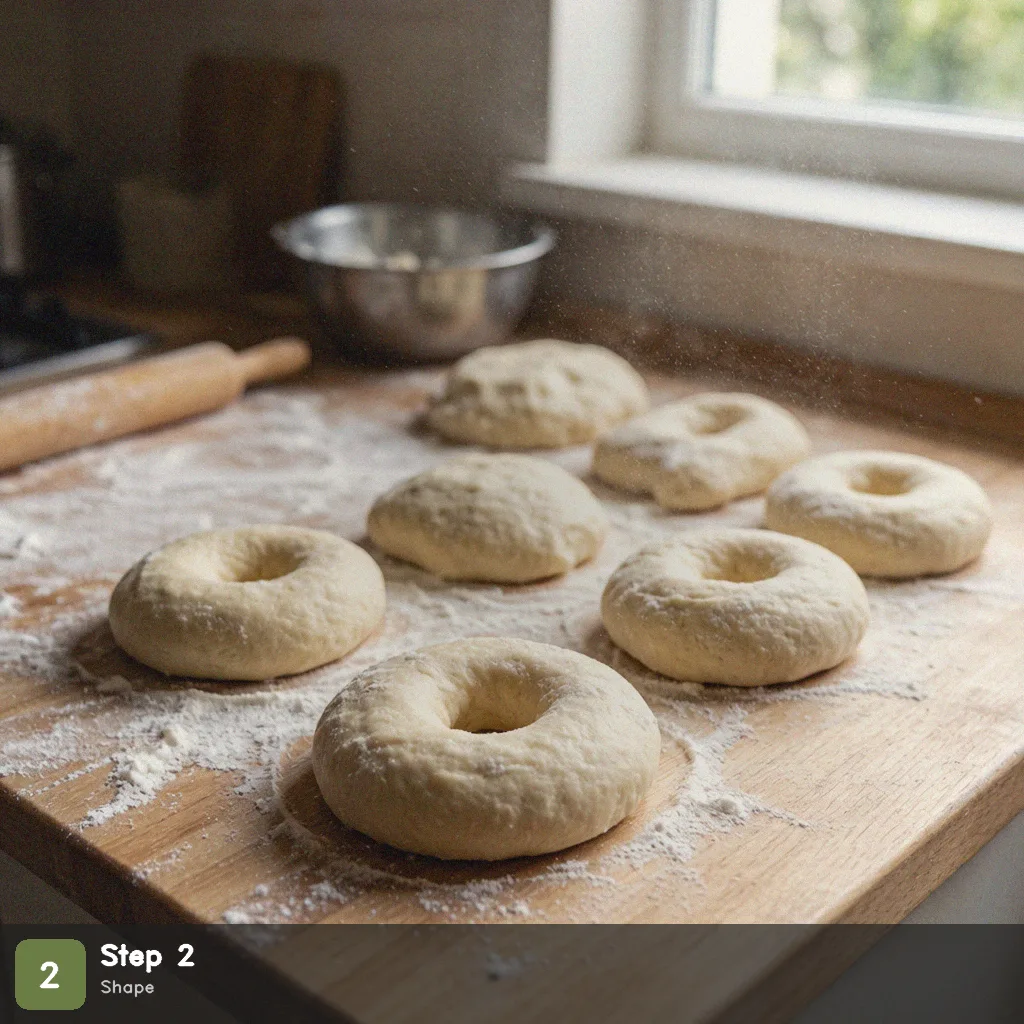
Turn the dough out onto a lightly floured surface and divide into 8 equal pieces. Roll each into a smooth ball, cover, and let rest for 10 minutes. Poke a hole through the center of each ball and stretch into a ring shape (like a donut). Make the hole slightly wider than you think — it will shrink during proofing and baking.
Step 3: Second Proof
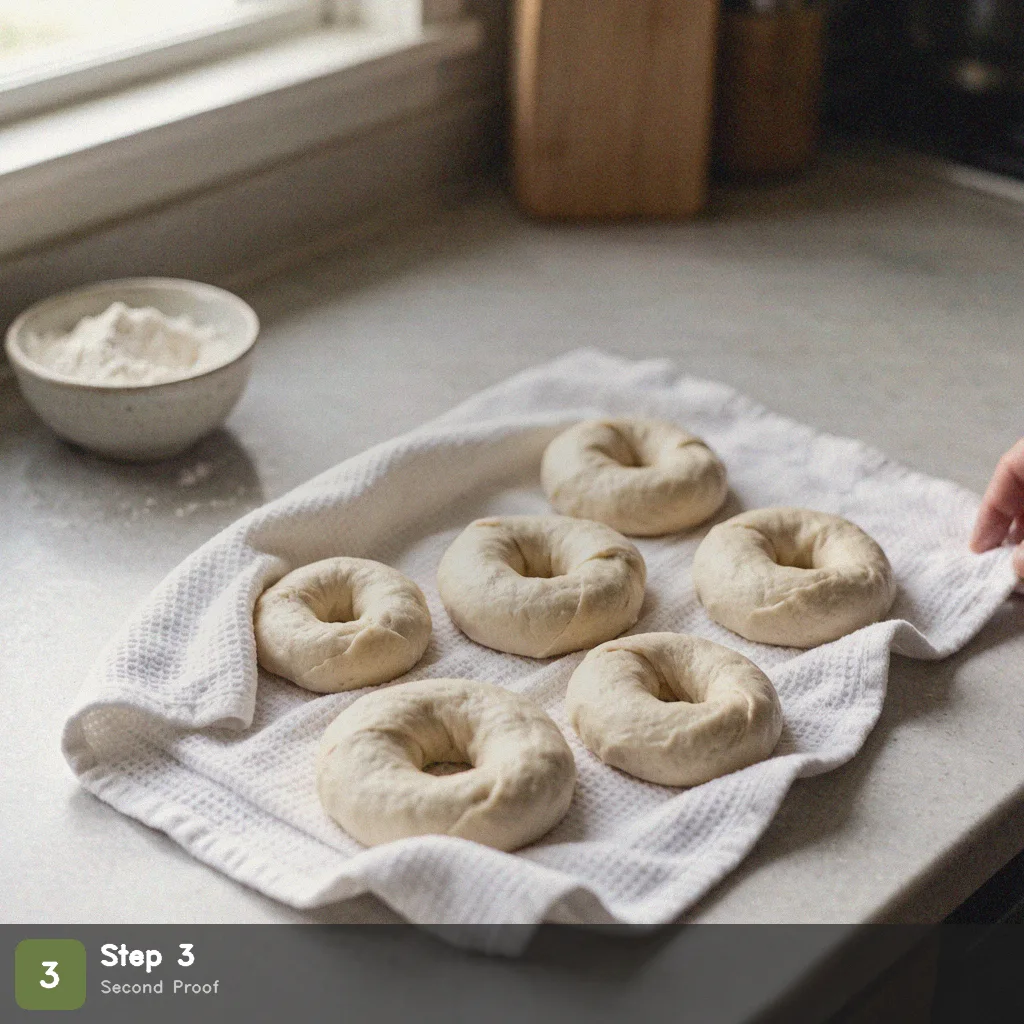
Cover the shaped bagels with a clean kitchen towel and let them proof for 20 minutes until light and puffy to the touch. This step determines whether your final bagels are airy and open or dense and tight.
Step 4: Boil
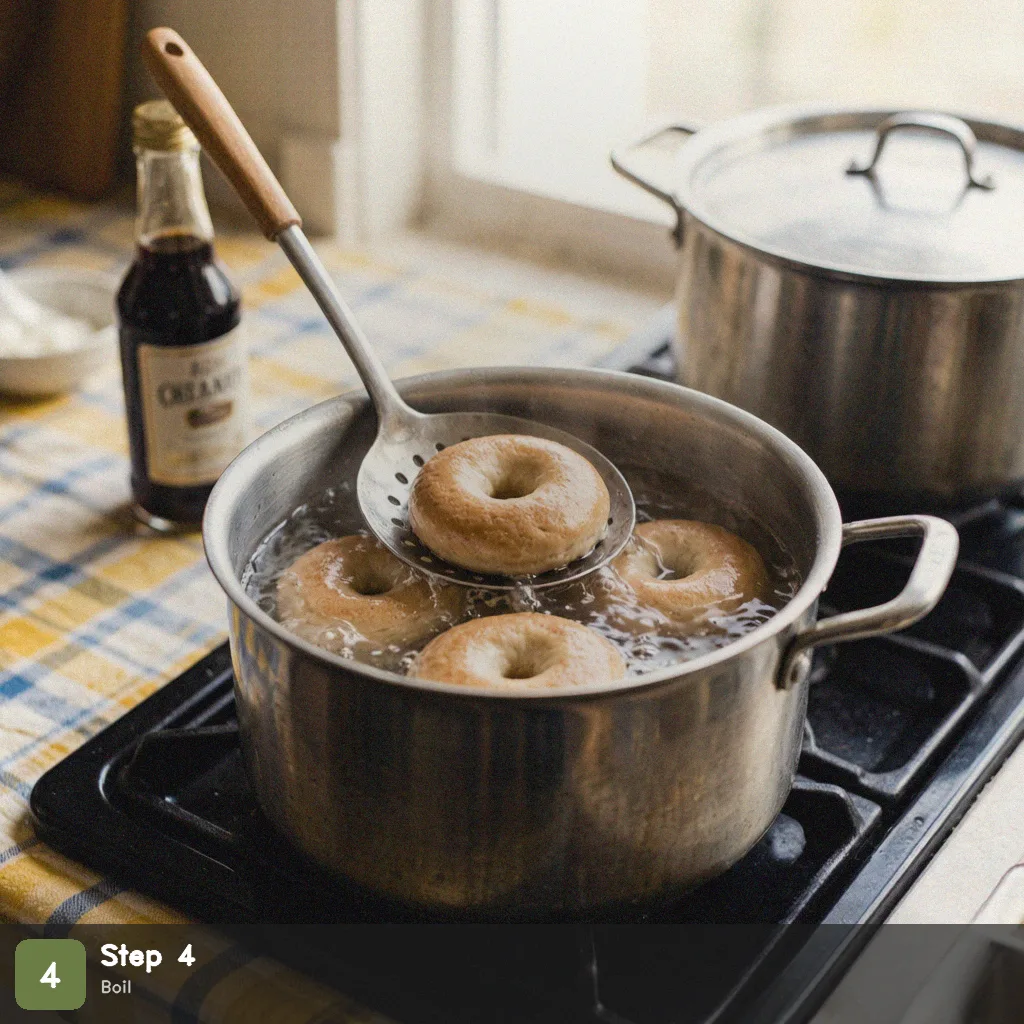
Bring a large pot of water to a boil and stir in the malt syrup (or honey). Working in batches, boil each bagel for 30 seconds per side, then remove with a slotted spoon. This step creates the shiny, chewy crust — skip it and you’ll end up with plain bread rolls, not bagels.
Step 5: Bake
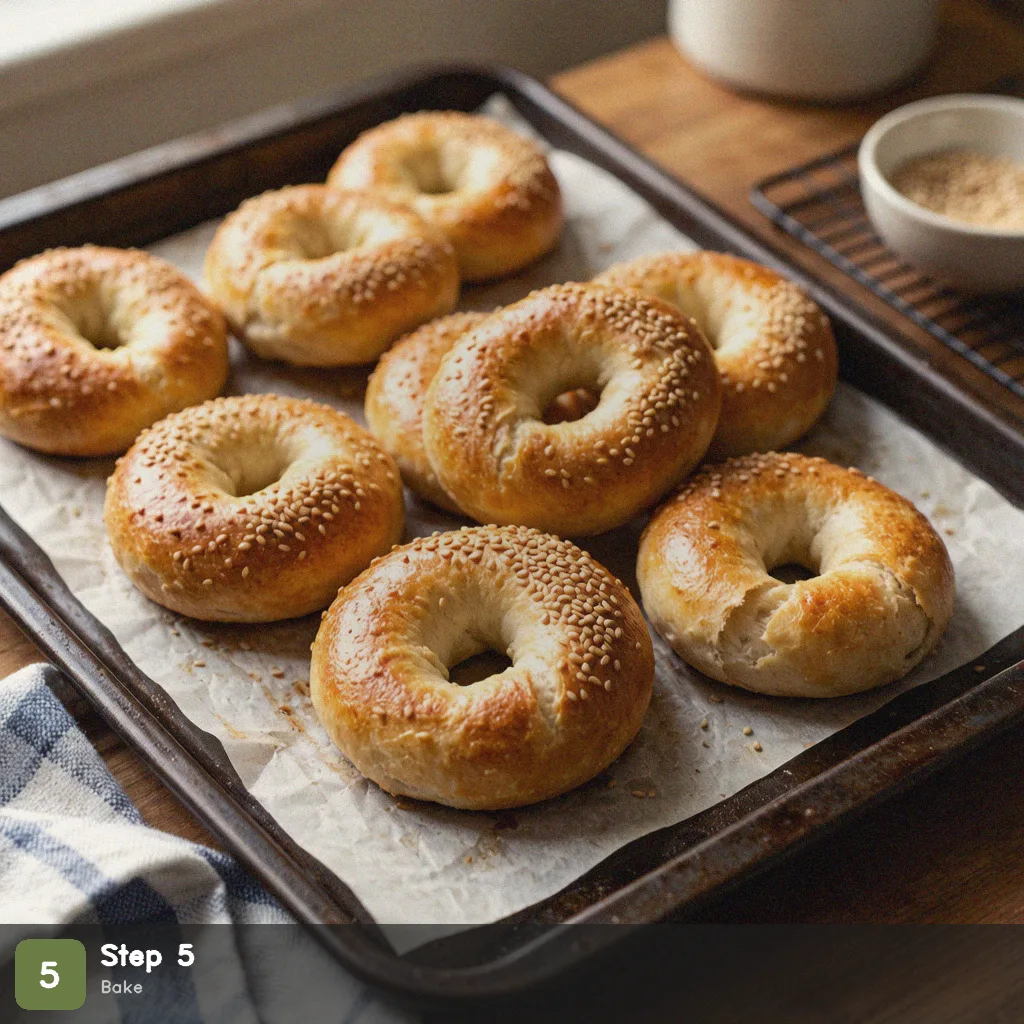
Transfer boiled bagels to a lined baking sheet. Sprinkle with sesame seeds or other toppings if desired. Bake at 200°C (400°F) for about 20 minutes until deep golden brown. Tap the bottom of a bagel — if it sounds hollow, it’s done. Let cool on a wire rack — they’ll continue to set and become chewier as they cool.
Pro Tips for the Best Results
- Sweeten the boiling water: Malt syrup or honey gives the crust a beautiful shine and chewiness. Plain water works but produces a dull, matte crust.
- Make the center hole generous: Both proofing and baking will cause the hole to shrink. Start with a hole about 3cm wide for the best results.
- Don’t over-boil: 30 seconds per side is plenty. Boiling longer makes the dough waterlogged and misshapen, and the texture gets tough.
- Don’t rush the second proof: A proper rest after shaping makes the dough easier to handle and produces a lighter crumb. If you’re pressed for time, give it at least 15 minutes.
- Freeze for later: Slice baked bagels in half and freeze. Reheat directly from frozen in a toaster or oven — they’ll taste almost as good as fresh-baked.
Frequently Asked Questions
Q: Can I make these without a bread machine?
A: Yes. Knead by hand or with a stand mixer until the dough passes the windowpane test. The bread machine just saves effort — the recipe works either way.
Q: Why did my bagels deflate after boiling?
A: Usually over-proofing or rough handling before boiling. Don’t let the second proof go past 30 minutes, and handle the bagels gently when transferring to the boiling water.
Q: Can I make sweet bagels?
A: Absolutely. Add raisins to the dough, or brush with melted butter and dip in cinnamon sugar right after boiling. The cinnamon-sugar version is a family favorite.
Q: Is malt syrup mandatory?
A: Not at all. Honey or even plain sugar dissolved in the boiling water works. Its job is browning and adding chew. Plain water still produces real bagels — just less shiny.
Q: Can I make these ahead?
A: Yes. After boiling and baking, freeze for up to 1 month. Reheat in a toaster or oven before serving. Weekend prep means grab-and-go breakfasts all week.
More Bread Machine Recipes to Try
- Bread Machine French Bread
- Bread Machine Soft White Bread
- Bread Machine Pizza Dough
- Bread Machine Dinner Rolls
Bread Machine Bagels
Ingredients
Method
- Step 1: Dough Cycle: Add all ingredients except the malt syrup (for boiling) to your bread machine pan in the order recommended by your manufacturer. Select the "Dough" cycle and start. Let the machine knead until the dough is smooth and passes the windowpane test — about 1.5 hours total including the first rise. Well-developed gluten is what makes bagels chewy and tall.
- Step 2: Divide and Shape: Turn the dough out onto a lightly floured surface and divide into 8 equal pieces. Roll each into a smooth ball, cover, and let rest for 10 minutes. Poke a hole through the center of each ball and stretch into a ring shape (like a donut). Make the hole slightly wider than you think — it will shrink during proofing and baking.
- Step 3: Second Proof: Cover the shaped bagels with a clean kitchen towel and let them proof for 20 minutes until light and puffy to the touch. This step determines whether your final bagels are airy and open or dense and tight.
- Step 4: Boil: Bring a large pot of water to a boil and stir in the malt syrup (or honey). Working in batches, boil each bagel for 30 seconds per side, then remove with a slotted spoon. This step creates the shiny, chewy crust — skip it and you'll end up with plain bread rolls, not bagels.
- Step 5: Bake: Transfer boiled bagels to a lined baking sheet. Sprinkle with sesame seeds or other toppings if desired. Bake at 200°C (400°F) for about 20 minutes until deep golden brown. Tap the bottom of a bagel — if it sounds hollow, it's done. Let cool on a wire rack — they'll continue to set and become chewier as they cool.