Bread Machine Pizza Dough
The biggest barrier to homemade pizza is kneading the dough — 15 minutes of hand-kneading, an hour of proofing, then more kneading and more proofing. Most people give up before they even start. Bread machine pizza dough eliminates all of that: pour in the ingredients, press one button, and 90 minutes later you have a perfectly kneaded, fully proofed dough ready to roll out.
The bread machine handles the hardest part — developing the gluten network that gives pizza crust its signature chewy, tender texture. Store-bought pizza bases are dense, flat, and flavorless. Homemade dough that’s been properly proofed has a subtle yeast aroma, a tender chew, and crisp edges that no supermarket product can match.
Why You’ll Love This Recipe
- Zero kneading. The bread machine’s paddle does all the work — 15 minutes of consistent, even kneading to fully develop the gluten. You never touch the dough, never get flour on your hands.
- Ready in 90 minutes. The machine handles kneading (15 min) and proofing (75 min) automatically. During the proofing time, you prep toppings, slice vegetables, and grate cheese. The timing lines up perfectly.
- Light-years better than store-bought. Supermarket pizza bases are stiff, dense, and have no fermentation flavor. Homemade dough has a subtle yeast aroma and wheat fragrance, with a chewy-tender bite that’s the soul of great pizza.
- One batch makes two pizzas. This recipe yields enough dough for two 12-inch pizzas. The whole family picks their toppings, builds their pizzas together, and eats together — the best interactive dinner there is.
Ingredients You’ll Need
- 1 cup warm water (about 40°C / 105°F — warm but not hot)
- 3 cups bread flour
- 2 tbsp olive oil
- 1 tsp salt
- 2 tsp granulated sugar
- 2 tsp active dry yeast
Bread flour is essential.** Pizza dough needs a chewy texture, which comes from the gluten network. Bread flour’s 12–14% protein content forms strong gluten — the crust bakes up “tender and chewy” rather than “brittle and crumbly.” All-purpose flour has less protein, weaker gluten, and produces a softer, cracker-like crust. If all-purpose is all you have, add 1 teaspoon of vital wheat gluten to compensate.
How to Make Bread Machine Pizza Dough
Step 1: Add All Ingredients to the Pan
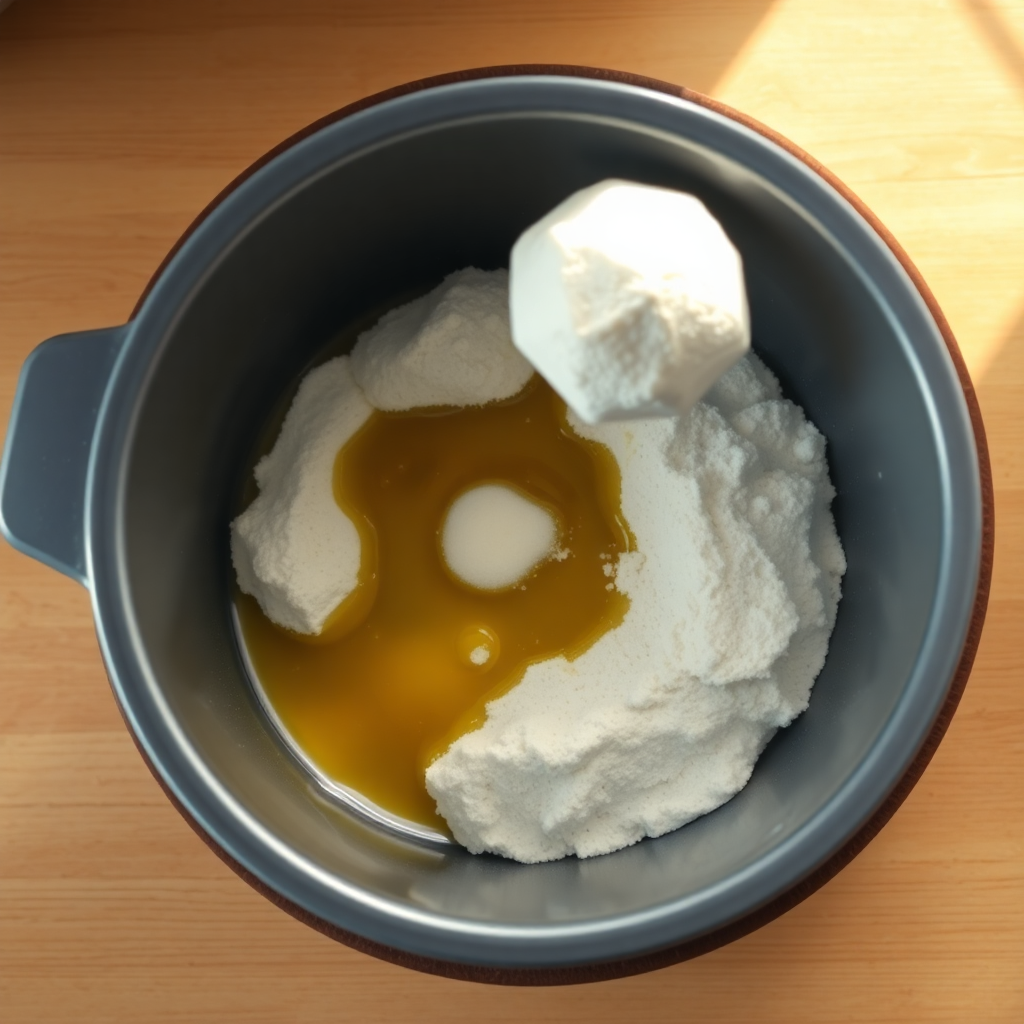
Follow your bread machine’s recommended ingredient order. Most machines specify liquids first: pour in the warm water and olive oil, then add the flour, salt, sugar, and yeast. Make sure the yeast sits on top of the flour — don’t let it touch the water or salt directly. Salt and yeast in direct contact inhibits fermentation.
Step 2: Select the Dough Cycle
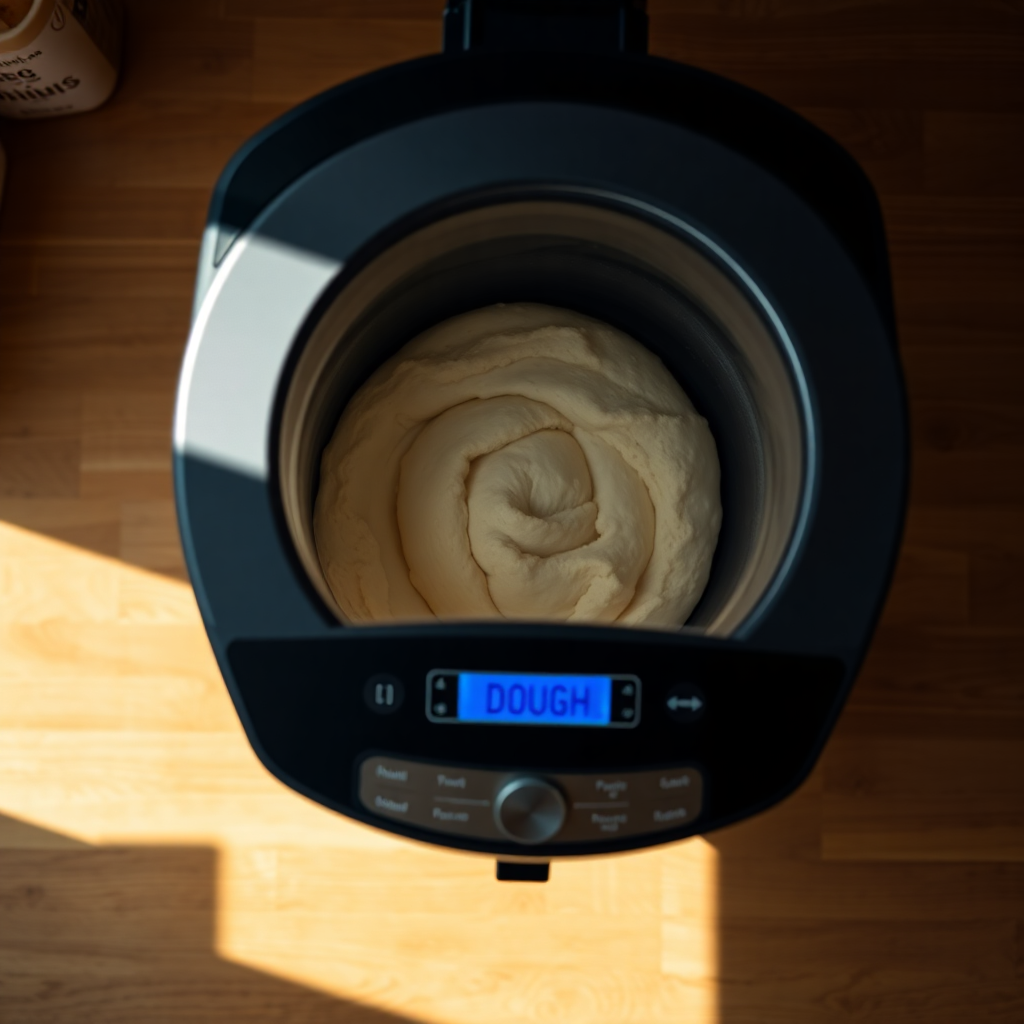
Choose the “Dough” or “Pizza Dough” cycle. This cycle only kneads and proofs — it does not bake. It typically runs about 90 minutes (15 minutes kneading + 75 minutes proofing). Press start. The machine handles everything: knead, proof, done.
Step 3: Remove the Risen Dough
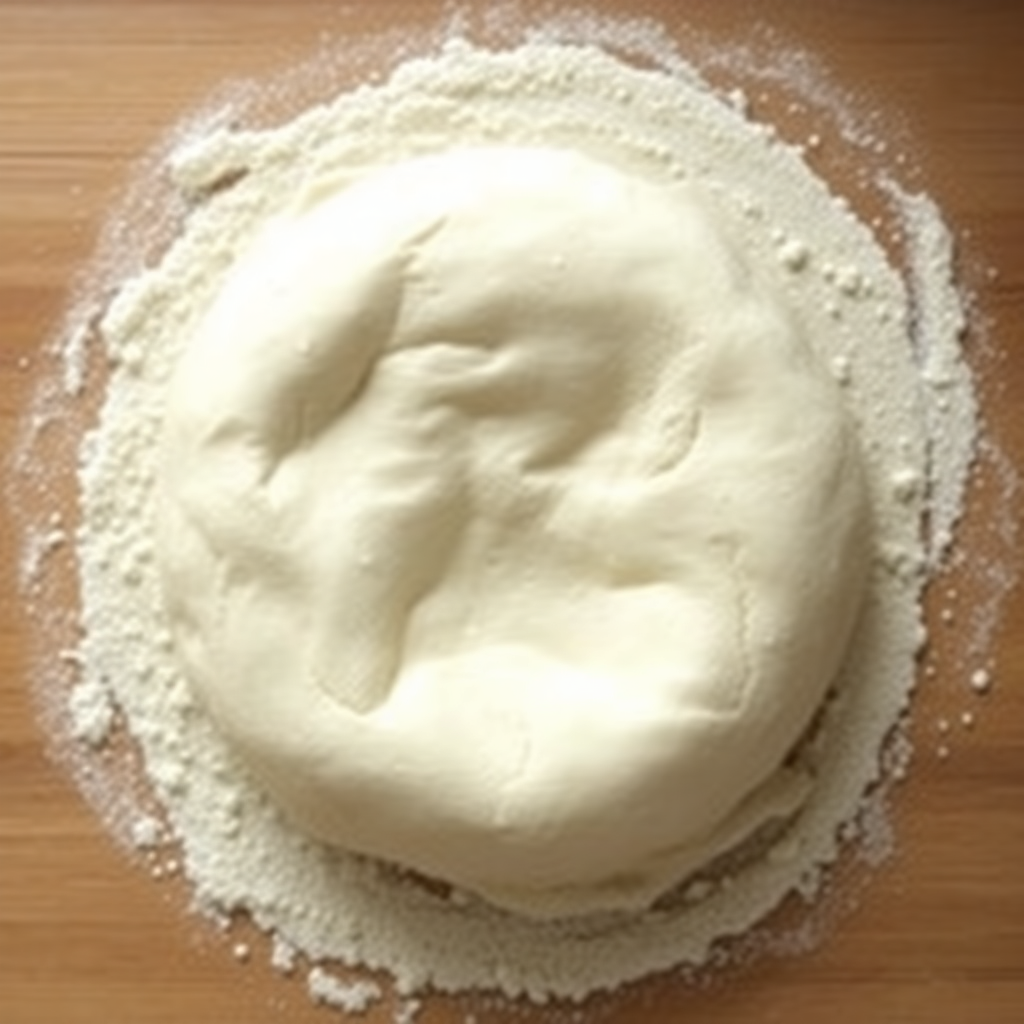
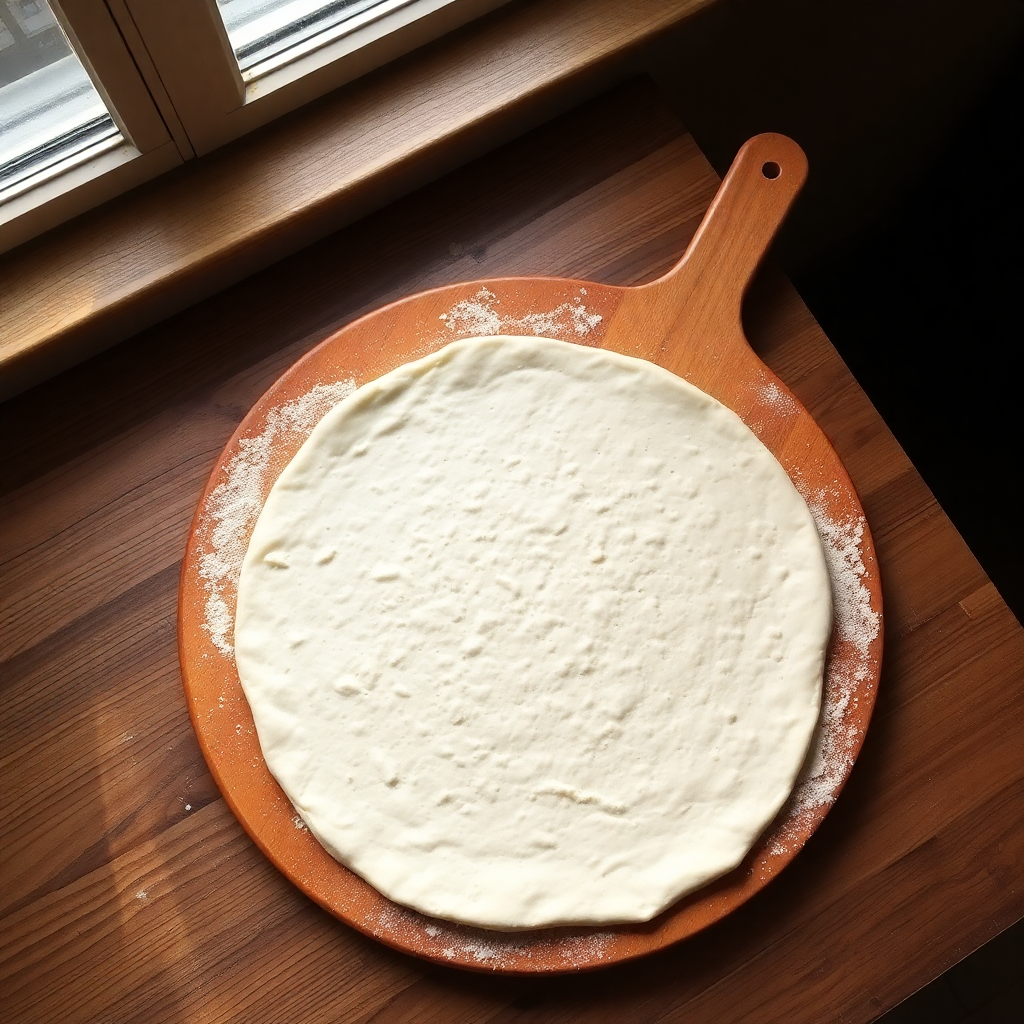
After 90 minutes, the dough should have doubled in size. Remove the pan (the dough isn’t hot, but the pan may be slightly warm). Invert the dough onto a floured surface. It should be soft, smooth, and spring back slowly when pressed with a finger.
Step 4: Roll Out into Rounds
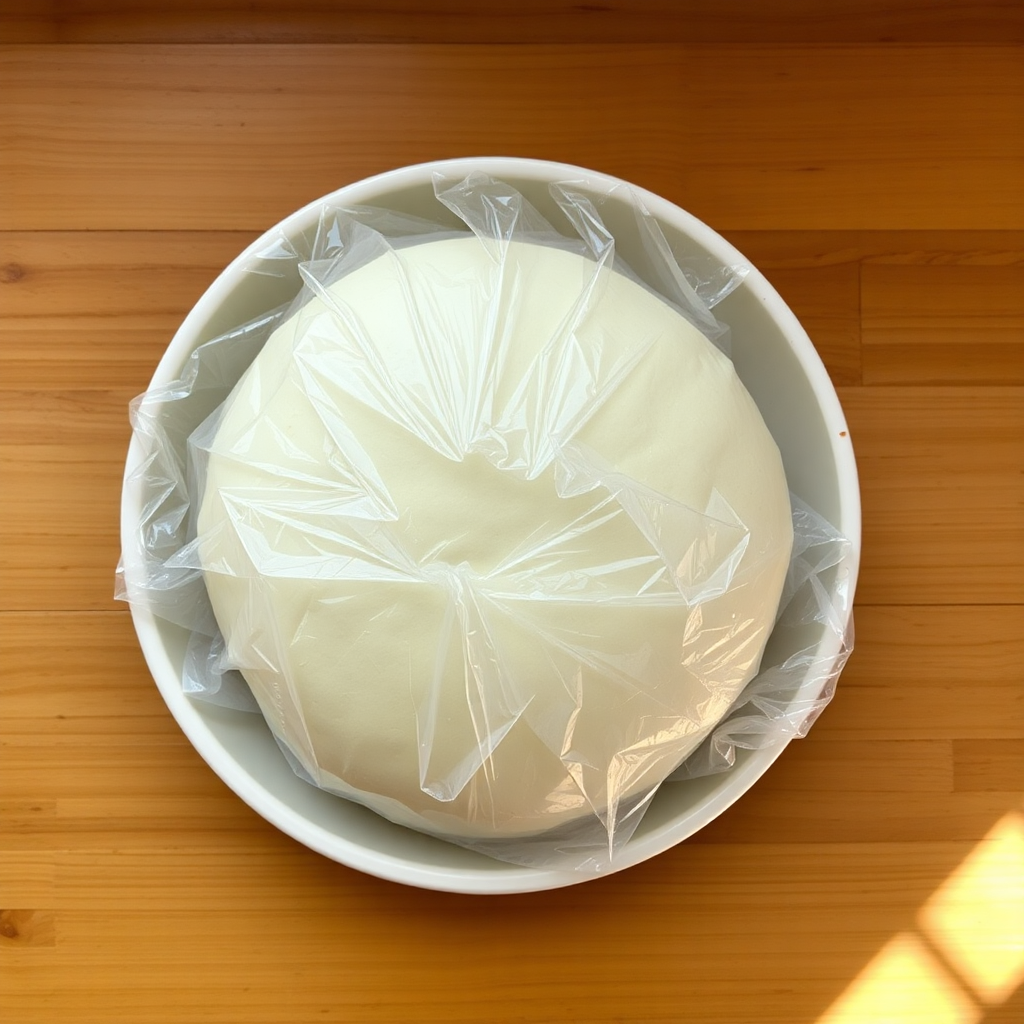
Divide the dough into two pieces (one per pizza). Take one piece and roll from the center outward with a rolling pin, forming a circle about 12 inches (30cm) in diameter. It doesn’t need to be perfect — irregular shapes look more “homemade.” Leave the edges thicker to form a raised crust, and roll the center thin. Prick the center with a fork a few times to prevent bubbling during baking.
Step 5: Top and Bake
Spread a thin layer of tomato sauce in the center, sprinkle with mozzarella cheese, add your favorite toppings (pepperoni, mushrooms, onions, bell peppers, etc.), and top with more cheese. Bake in a preheated 450°F (230°C) oven for 12–15 minutes, until the cheese is melted and bubbly and the crust is golden.
Pro Tips for the Best Results
Water temperature is the lifeline of yeast. 38–43°C (100–110°F) is the optimal range — too cold (below 30°C / 86°F) and the yeast stays dormant; too hot (above 45°C / 113°F) and the yeast dies. The simple test: stick your finger in the water — it should feel warm but not hot. If you’re unsure, use a thermometer. It’s a kitchen tool worth investing in.
The Dough cycle only kneads — it doesn’t bake. Make sure you select “Dough” mode, not “Basic.” Dough mode = knead + proof, no baking. Basic mode = knead + proof + bake — if you select this by mistake, you’ll open the machine after 90 minutes to find a round bread-ball instead of pizza dough.
How to tell when proofing is done. The dough should have doubled in size. Dip your finger in flour and poke a hole in the dough — if the hole doesn’t spring back and doesn’t collapse, proofing is complete. If it springs back immediately, proof for 15 more minutes. If the dough collapses when poked, it’s over-proofed — the crust will taste slightly sour.
Don’t roll too thin. The ideal center thickness is 3–5mm (about ⅛ inch). Too thin and you get cracker crust; too thick and you get pan bread. 3–5mm produces the classic “crisp outside, tender inside, with a satisfying chew” texture. Leave the edges about 1.5cm (½ inch) thick so they puff up into golden crusts.
Oven temperature must be high. 450°F (230°C) is the minimum — if you have a pizza stone, go up to 500°F (260°C). High heat instantly dehydrates the surface, creating a crisp crust while keeping the inside tender and puffy. Low heat dries the dough slowly, producing a hard, dry base instead of crisp-tender. Always preheat the oven for 30 minutes before baking.
Frequently Asked Questions
What if I don’t have a bread machine?
Knead by hand. Mix flour, salt, sugar, and yeast. Add water and knead for 10 minutes until the dough is smooth and elastic. Place in an oiled bowl, cover with plastic wrap, and proof in a warm spot for 1 hour until doubled. Then follow steps 4–5 to roll and bake. Hand-kneaded dough works just as well — it just takes 10 minutes of physical effort.
Can I use whole wheat flour?
Yes, but you need to adjust. 100% whole wheat flour has weak gluten and high water absorption — the dough will be dry and tight. Use a 50/50 blend of bread flour and whole wheat flour, and add 2 tablespoons of extra water to compensate. Whole wheat crust has more fiber and a nuttier flavor, but it’s denser and less puffy than white flour crust.
Can I make the dough ahead and refrigerate?
Yes, and cold dough is actually better. Place the kneaded dough in an oiled sealed bag and refrigerate for 24–72 hours. This is called “cold fermentation” — the low temperature slows the yeast, producing more complex flavor compounds. New York’s top pizza shops cold-ferment their dough for 3 days. When ready to use, remove from the fridge 1 hour ahead to come to room temperature, then roll and bake as usual.
My pizza base isn’t crispy. What’s wrong?
Three likely causes: ① Oven temperature too low (ensure 450°F / 230°C minimum); ② Too much sauce on the dough (sauce is water — it steams the bottom soft. Spread a thin layer only); ③ No preheated baking surface. Solution: put your baking sheet or pizza stone in the oven during preheating, then slide the pizza directly onto the hot surface — the bottom instantly contacts high heat, forming a crisp crust.
More Bread Machine Recipes to Try
If you love using your bread machine for dough, try these:
- Bread Machine White Bread — The classic sandwich loaf
- Bread Machine Whole Wheat Bread — Healthy, fiber-rich daily bread
- Bread Machine Banana Bread — Sweet quick bread
- Bread Machine Cinnamon Raisin Bread — Aromatic breakfast bread
Nutrition Information (Per Dough Portion, ~¼ Recipe, Without Toppings)
| Nutrient | Amount |
|---|---|
| Calories | 220 kcal |
| Protein | 6 g |
| Fat | 5 g |
| Carbohydrates | 38 g |
| Dietary Fiber | 2 g |
| Sodium | 290 mg |
_Data source: USDA FoodData Central. Values are approximate._